[upbeat drum based song]
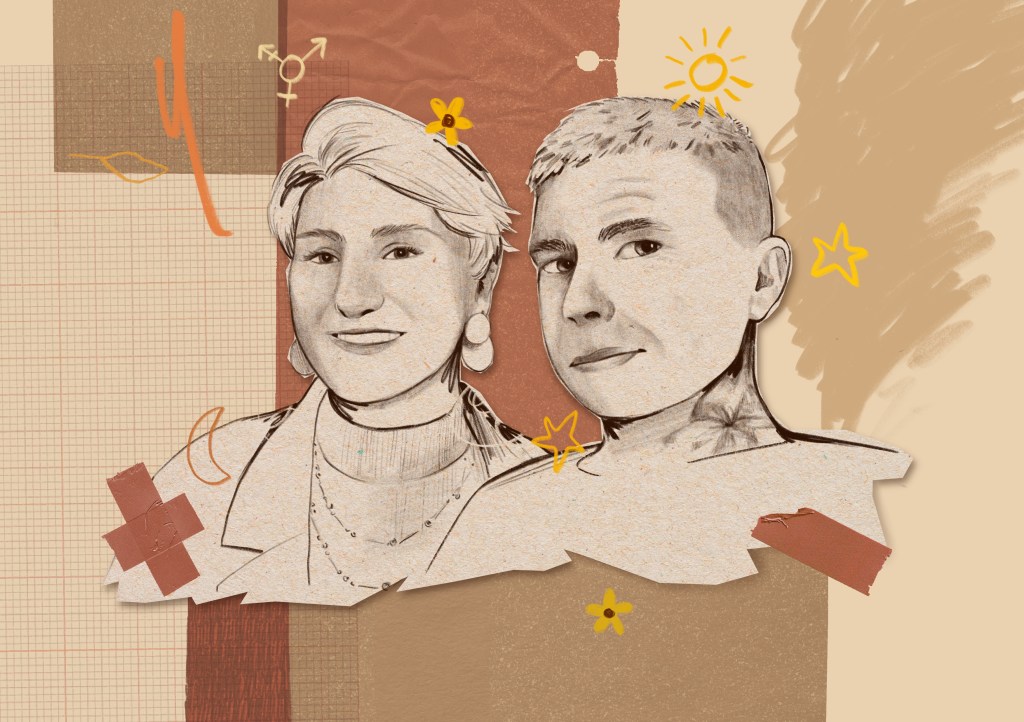
LEO: Hello everyone and welcome to Changing the Frame. We’re your hosts. My name is Leo Torre and I use he/they pronouns.
INDIGO: My name is Indigo Korres and my pronouns are she and her. We’re a podcast that discusses trends and non-binary experiences in the film industries. Every episode will count with the appearance of a trans and/or non-binary multimedia artists in the film industries to talk about their work. We are really excited to share these amazing talks and discussions with you all.
LEO: Today we have two incredible guests, Bea Goddard and Dr. Jack Lopez. Bea is an upcoming filmmaker from West Yorkshire and an MA Film Directing graduate from Edinburgh College of Art, currently working in TV production for Sky Sports Boxing. Their directorial debut came with a multi-award winning M(OTHER)HOOD, which premiered at the BFI Flare, the largest LGBTQIA+ film festival in Europe. The film has since screened at festivals internationally and on TV as part of Brighton Pride outside of work, Bea is usually found in a boxing gym or running in the hills.
INDIGO: And Dr. Jack Lopez is Associate Dean EDI at the University of Bradford and medical anthropologist where he champions LGBTQIA+ inclusivity in academia. He’s a member of the Health Strategy Board for Transactual UK. Jack Lives as a proud queer trans man with his four children in the valleys of West Yorkshire. He’s a keen amateur boxer and a lover of music, dance, tattoos, and open water.
[upbeat drum based song]
LEO: This is changing the frame.
[upbeat drum based song fades]
INDIGO: Hello, everyone. Thank you so much Bea and Jack for joining us today. Honestly, we’re so excited about this cause we watched M(OTHER)HOOD the other day and it was just incredible, it was so sweet. So to start off, I was just wondering if you could introduce yourselves and tell a little bit about what you both do in terms of career and personal life as well.
JACK: I’d say age before beauty, you can go first.
BEA: Um, so I’m the baby according to Jack. So I’m Bea Goddard. I’m a filmmaker, originally from West Yorkshire, living all over Scotland and London now. But I recently graduated from Edinburgh College of Art and Motherhood was my thesis film, and it’s gone on to screen so far at BFI Flare and Translations, which is Seattle’s Trans Film Festival. I now work for Sky Sports, but I’m still doing my own filmmaking on the side, cause you can’t keep me away.
JACK: Hi, my name is Jack Lopez. My pronouns are he/him. My life isn’t as exciting as Bea’s. I work at Bradford University, where I’m associate Dean in equality, diversity, and inclusion. I’m also a medical and social anthropologist, so I’ve been teaching in higher education for about 13 years now. That’s, that’s the not so exciting bit of my life. The other side of my life is that I am a lone parent with four children. I like to go boxing quite a lot because my four children and my job are very stressful and that’s actually how Bea and I met as well, years ago at our local boxing gym. So when we’re not filming together, we like to get in the ring and try and hit each other occasionally as well.
INDIGO: That’s so cool.
LEO: Yeah. I do think that being, you know, involved in teaching and stuff is very exciting and important, so like, I’m gonna disagree with you on that one… Would you guys like to talk a lot more about, you know, if you met in the ring and stuff, how did you go about filming this? How did you come up with the idea of doing M(OTHER)HOOD together?
BEA: Um, I think… We’d been friends for about three years before making the film, I would say. Jack used to give me lifts home from boxing. So, I recommend not learning to drive, if you wanna make friends. And we just got chatting and I think worked out that we fitted in with each other in a, a potentially different way to maybe how we got on with other people at the club and stuff. And then through lockdown, we used to go on these really long walks and talk about all sorts of stuff and have sort of, um… I used to, I loved our walks in lockdown because, it was… I was having like a really kind of intellectual conversation about sort of identity and as well as having a total laugh with my friend when I was locked in a house with my parents and Jack was locked in a house with his children. Um, and I started thinking about it before going to Edinburgh, but I had a tutor when I was trying to come up with my thesis idea who, who basically said, “who’s the most interesting person, you know, why don’t you make a film about them?”. And I was instantly like, well, Jack is, cause I learn something every time we have a conversation. And Jack would, you know, was telling me all these stories about just brilliant things that the kids were saying kind of about gender identity. And obviously for them they’re just saying funny things, but kind of, I think it felt slightly more profound, you know. I think the direct quote, it’s in my director’s statement, so I should know it off my heart, but it’s something like, Diego jumped on Jack and was like, “you’re a man with boobs!”. Or something ridiculous like that. And I just was like, that’s it. Yeah, that’s, that’s what I wanna capture. That…. kind of the joy of the lack of filter that kids have, that I think queerness is kind of a filter that society puts on children rather than them inherently having that. And I think that’s something I learned from Jack, which is why I wanted to make the film.
JACK: Yeah, I think it’s, it was, it was all, it was timing as well. It was very serendipitous, wasn’t it? Because it was, was, when was it, was it still 2020? Was it still then?
BEA: Yeah, I think we started production in autumn 2020.
JACK: Yeah. Yeah. So it was, it, it, for me, it, my, my medical transition, only started just before the first lockdown. So I was really, really ar early on in, in, in medical transition. And it was, I’m probably one of the only people that really appreciates lockdown happening when it did because I’d moved house a month before, myself and the children were just kind of going on this journey of, of how I was gonna start changing for the outside world. So we were really, really at the beginning and kind of being in the house together all that time actually gave me the opportunity to start to try and have conversations with, with the kids and try and navigate how this was gonna work and how people from the outside were gonna start to see us as a family. How did they feel about it and, and that kind of stuff. And, as, as Bea found out when they, they came to film as well, it’s, it’s actually not, it’s not as simple as just sitting down with the kids and going, so how’d you feel about this? Cause they’re like, they’re just thinking about what’s on tv. You know, who’s nicked, who’s sweets, you know, and who’s annoying who… They really just want a continuous grown up in their life, you know, and to feel safe. But, but the rest of the time it, it, it, it’s not that simple. So I think it’s, it was really interesting for, for me to have somebody come in the house and kind of for me to try and, and, and sit on the sidelines and actually just sit back and listen to the way that the kids talked as well. So it’s, I’ve, I still have very, very mixed feelings about it, but I know that it’s because it was so early on in my transition. So when I watch it, for me it’s a, it’s, it’s absolutely gorgeous seeing the children and listening to, to, to how they are together and how they navigate stuff. At the same time, I kind of tell myself that when I go back in another five or six years and watch it, it, I think it’ll be easier for me to watch because I can’t, I can’t not just pick at every bit about me and what I look like at the time.
INDIGO: It’s so lovely to hear your friendship together and how you came up to this with this idea for this film. I was just wondering if you could talk a little bit about how the collaboration process was like throughout, not only the pre-production, but also the distribution process, and how did you choose to send those to, like BFI Flare and Translations?
BEA: So there was one point where Jack did have to tell me to stop asking his opinions. And I was, I kept, I, this was in like the pre-production stage and I was like, what do you think of the name? What do you think of this? What do you think of this? And Jack was like, B it’s your film. Stop asking me questions. So I, I really, you know, I, I think it’s, I’m so honoured, you know, that Jack trusted me with, you know, his family and I hope I’ve done it justice. So I think there definitely was, it was really, really important to me that we were kind of, there was the collaboration on it, you know, with the understanding, obviously I’m the director, but it being a film about a friend, I think it meant that I was particularly, you know, probably even more careful when it came to who was gonna see the film, how I was gonna portray things than you potentially could end up doing, if it was a film about someone you sort of went in to make a film about rather than it developing out of a friendship. So it was quite important to me, particularly for the kids’ sake, pretty much to just be aware of where the film was screening. And so especially with the earlier screenings to kind of gauge reaction of it, it was quite important to me. You know, there’s a film festival in our hometown and I was like, I actually don’t think that that’s the right place for it. Jack’s shaking his head. You know, there’s, it, it those… I had to do quite a lot of thinking about that side of the distribution and it was, I think that was the most important thing for me was, okay, well is anyone potentially gonna see this and give the kids grief because they don’t necessarily understand or they’ve, you know, learnt different things. So that was the most important thing for me when it came to distribution and which festivals we’re applying to. And also kind of, especially with the earlier release, making sure it’s very queer focused festivals. You know, partly cause they’re the ones that want the film, but also because they’re the audiences that I think will gain the most from seeing the film within how it impacts their views of their selves and, you know, their sort of possibilities for what they can do with their lives and stuff, which really mattered to me.
JACK: I think we, we spent quite a bit of time at the beginning having conversations on, I think it was the, the dilemma for me at the beginning wasn’t, you know, I, I, I was perfectly happy for somebody to, to, to come in because I, because of knowing Bea first, but also knowing about their intentions and what they wanted to do. It was, it was fine for me as an adult and then it was like, right, but how do I communicate this to, to the kids so that they understand what it is they’re getting into. And my, my children spread across, you know, various ages. So I’ve, I’ve, I’ve got early teens and, and little ones and that, that had two different kind of, things around it, cause when you’re talking to the little ones, it’s more like a game, you know? Because also we, we combined it, we filmed it over school holidays as well, where I kind of needed some childcare as well. It’s like, if you’re gonna look after my kids yet, come in, do whatever you need to with them. I need a break. But with the smaller ones, it’s like, well it’s, it’s almost like a game, you know? You know, they know Bea. Bea’s gonna come around, Bea’s got cameras, gonna play with this, gonna do that, you know, what, what are they gonna do with it? And, and for them it was, it was all about a game. It was just like them, you know, getting to play with the cameras and, and, and, and liking it. But they, we still have to think about, well, do they truly understand what’s, what’s gonna happen here? And the other people are gonna see it. With the older two, especially with my, my eldest who at the time wasn’t, you know, it wasn’t, wasn’t in a great place in terms of, of of, of their, where they were at in adolescense and they were more concerned about whether they wanted to be involved. And, and that, that was more of a difficult conversation, because I really wanted to encourage them to do it, but I didn’t wanna force the kids to do anything that they weren’t happy with. And we, we found, you know, we, we basically found compromises around that, didn’t we? So with my eldest, it was more about, you know, they were fine about having their voice in it. They didn’t necessarily want their face in it. So the camera, if you, you know, if you watch the film, you’ll see that the camera angles are quite cleverly kind of not, not necessarily showing the older ones. And that was a choice that, you know, they, they weren’t comfortable with that. And it’s interesting that, cause you do know your own children and, you know, eventually some things might be okay. And it’s interesting that as soon as the film is made and it’s out there, and now they’re finding out that it’s, you know, gone to a couple of film festivals. Now they’re interested, now they wanna be in it. Now, I, I, so I kind of had that face along the lines, but it was about constant discussion with the children as well and making sure they’re, they’re happy about that. Because, you know, I’m an autonomous adult, I can make these choices. With the, with the kids it was a slightly different thing. Um, my second eldest child had forgotten that he’d even done it by the time it came out at BFI Flare. Cause I showed him the flyers with BFI Flare. It was like, look, I’m going down to see this film, it’s gonna be in the cinema. And he just looked at it and went, “oh, who’s in it?” And it’ s like, Welcome to the world of 12 year old boys. But, but yeah, it was, it was just about that discussion and for me, I, I really didn’t want to, not that I didn’t wanna have anything to do with it in terms of the decision making and what these focus was, you know, it’s their project, it was their thesis. I just was there to be a vessel for that. And I, I didn’t actually wanna have to make any decisions about it either. I think it’s, I have enough decision making to do in my life. I’d rather that they just, they, they just came and, and worked. But you spent a bit of time with the kids first, didn’t you? Do you wanna talk a little bit about how you kind of got the kids involved?
BEA: Yeah, so that was probably the most fun part of the whole process for me. Was cause I felt like I got to be a kid again in making the film, which is kind of what I wanted. And one of the reasons I love making films with, you know, younger people is cause they see the world in a, in, you know, in a different way cause they’ve got very different, yeah, just view on things. They’ve not internalised so much of the stuff that I think a lot of older people have. And so it was really important to have, especially the first day, I think we used one shot from the whole of the first day in the film, and it was, I’m pretty sure it was a shot where I’d gone to the toilet and I’d left the camera just running on the table by accident, and it ended up being one of the best conversations. That’s Jack and Frida arguing about whether frida’s a dude or not. Or not arguing, but you know, there’s, there’s a really playful conversation about whether you have to be a boy to be a dude. I wasn’t even in the room. But yeah, basically most of the first day we, I was kind of, I, I, I had three cameras that we were using. I think one of them, we didn’t even use any of that camera in, in the final film. But the second eldest predominantly used one camera and the second youngest… so the middle two predominantly used two of the cameras, that were my first two cameras that I had growing up. And I just sort of let them run free with them cause I was like, I, I wanna show them that I trust them, you know, with this quite expensive equipment and stuff and show them that, that it’s all, we’re all working on this together sort of thing. And I think that’s probably my favorite part of the film is, you know, Frida’s cinematography of Jack, which I think is probably Jack’s least favorite part of the film cause it’s a lot of closeups on his face.
JACK: Yeah, it’s not very flattering. It’s a lot, lot, lot of closeups of a double chin and up my nose just cause of the height.
BEA: Yeah. But I love it.
LEO: That is so sweet. It’s like the angle of adoration, you know, like the camera pointed at you, like you’re the sun or something. It’s very interesting to hear about the filming style and how you like, let it all be very organic and see how it developed because Indigo and I were discussing how you use like very observational documentary approach to it. Like you just let it roll and see where it went. And we were thinking like, would it have worked to film this in a different way? Was it specific to your uni thesis to like, film it this way? Or did you consider any other types of filming for it?
BEA: I think I had to fight quite hard to be allowed to film it in that way.
LEO: Really?
BEA: Like every single, every single tutor or professional I spoke to about how I was like, I wanna make this super observational. I wanna just give the kids the cameras. You know, I wanna, I wanna film it as if I am one of the kids kind of thing with quite shaky footage and a lot of, you know, shooting, sort of pointing upwards towards Jack. Again, sorry about that, Jack. You know, get, basically getting down on their level from a cinematography perspective. And there’s, there’s a really brilliant French film. I can never remember if it’s Être et avoir or Avoir et être, but that’s by Philibert. That it’s all these kind of primary school kids basically in this rural town in France and he uses a lot of basically filming from the height of like a kid’s chair. And that really influenced my sort of decisions when it came to the cinematography. And I think a lot of the sort of, you know, the academics and the tutors I was talking to were sort of worried I wouldn’t be able to pull it off kind of thing cause cinematography is definitely not my background. But I just couldn’t see a different way of making the film and making it the film I wanted to make. I think it was, yeah, it was really important to me that I captured the chaos of being in a house with four kids. And I think that doesn’t land for everyone. I think, you know, some people find it quite overwhelming, the film, cause it is very chaotic kind of visually, especially if you’re watching it on a smaller screen. On a big cinema screen it is actually slightly easier to watch in terms of the almost like seasickness element of it. So everyone should watch it in the cinema, please. And it’s the same with the audio. You know, it’s definitely, it’s sort of perfectly imperfect kind of style is what I was going for. And I think there are certain styles of filmmaking, you know, if it, if it had been really kind of polished and like, you know, sit down interviews or really formal ways of… so we did a lot of making kind of plaster scene models was one of the ways we’ve kind of facilitated conversation and creativity with them. And I think if that had been, you know, all using tripods and all really formal and really perfectly lit, I just don’t think it would’ve captured the… I was about to use the word authenticity, but I really don’t like that word, of the sort of family environment.
LEO: Yeah, more so like maybe the naturalness of the whole thing?
BEA: You know, it’s a film, there’s no such thing as capturing reality, but…
LEO: Even like, you didn’t… you didn’t actually use any subtitles or voiceover or anything like that as well. It’s all like the story told by the kids. And, and Indigo and I were discussing that for sure. You did… I think… I personally think you did really good capturing it like that.
BEA: Thank you!
JACK: I, yeah, I’d like… when I watched… I think it’s because it’s so… this is what I felt when I saw it, it really felt like a representation of the banal, bizarre conversations that go on in my house. And the fact that you can’t have, you know, there’s no way that you can have any form of linear narrative. You know, you, you’ve, you’ve got a household of an adult and four children who consistently need to be heard. So the way that they do that is to talk on top of each other and get your attention, you know, as a, I’m well attuned as a parent now to having four or five conversations at once. You know, there’s, there’s all that, you know, whilst they’re jumping on top of you. And I don’t think, you know, I think, I think you’re right there. And also knowing my children. I don’t think, I think it would’ve been a really difficult way to work with them to try and have it really structured, because that’s not kids, that’s not, that’s not kids in the every day, and that’s not kids during a pandemic either, when their world has all gone a bit weird, you know? And it, it’s, they were, they seemed so comfortable after a while that, that, yeah, I, I can get that thing where if you are watching it and, it’s kind of, everybody’s moving all over the place, but I just, I think from a kind of, I, you know, I, I don’t know that very much about filmmaking and styles, but it reminded me very much of, you know, I’m, I’m an anthropologist and that’s what I do in the field when I do research as well. It’s, that’s why it’s always difficult to talk about my research methodology as an anthropologist, because I literally just roll to, to, to wherever I’m going and, and just hang out and do stuff and see what happens and, and spend time building on that. So I think that’s why I very much understood the process from that point of view. Um, and that I really appreciated that as well. Cause I don’t think, I don’t think the kids necessarily would’ve cooperated if you’d have tried to have done something really structured.
BEA: I think what you said, what you said about, capturing the banality and those conversations is quite funny cause that’s one of the conversations I had with a tutor, while I was making it, is this tutor literally said to me, but this, I don’t understand why I’d want to see that, because that’s what my life is like as a parent with, with young children. And I was like, no, that’s the exact point. The point is that it’s, it doesn’t matter, you know who your parent is. Kids still have these kinds of conversations with their parents and it was, it took a while to kind of convince the tutor that it was really important to have those slightly more mundane elements in the film.
JACK: Yeah. I think your tutors were really wanting trauma for a while. Were like, it’s just a queer trans family. Where’s trauma? It’s just like, can we not just be happy like everybody else?
INDIGO: It’s really interesting to hear about all these conversations that you had in the house and Jack, it’s really interesting to hear why you accepted to have such intimate aspects of your life filmed. I was just wondering how you felt throughout the process of making the film and afterwards, like rewatching it, now two years after. But, also you had, you just had surgery at that time, so how was that for you? Because it is a very intense process, cause when I had surgery I literally just stayed in bed for like three weeks and I couldn’t talk to anyone but you had to take care of your kids and stuff and make a film at the same time. So I was just wondering how all of that went.
JACK: Yeah, I think if, if you kind of know me, it probably wouldn’t seem such a weird, strange thing. I, I, yeah, I think it’s elements of signs of being an adult with a lot of ADHD traits, just that I need to be very busy all the time and I can’t sit down. I actually found it a brilliant distraction because I know, you know, that I was not gonna have the luxury of having surgery and being able to go home and rest, that that wasn’t an option, although, don’t tell my surgeon that because that’s why I had to promise them that I would do. But that’s not reality. You know, I, I even, but also that’s not me as a parent. Even though there was somebody in the house, I, it was more stress for me to try and hide in my bedroom because I can hear what’s going on downstairs and I’d rather just get up and go and deal with it. Because I know that my children will take any opportunity to get away with a lot of things if I’m not there and if there’s somebody different looking after them. So it was like, yes, we can eat sweets 24 hours a day and I am allowed to have this for breakfast. So in some ways it actually served it as, as a distraction. And I was also, you know, I’m very lucky in that I’m an incredibly healthy person. Very, very strong. So I came out of surgery not feeling like I’d had surgery. You know, I, I wasn’t even on painkillers from the minute that I got home. I was just, I’m just hardcore, basically.
LEO: It’s probably all the boxing.
JACK: Yeah. It’s all, all the boxing. And actually probably the relief I was so, you know, after waiting for such a long time, I was so, I, I had so much euphoria. You know, aside from the fact that I was bandaged up and stuff that it was, I didn’t care, you know, at that point I could take on the world. So, so that really helped. And it, it, it just, so it was a nice distraction. There were, there were times that, you know, it’s like I, I mentioned before and when I, when I saw bits and, and, and Bea was, was very good in kind of sending me screenshots and things as they were working on it and, and going along. And I just had to try and remove myself from being, from watching myself in a kind of way. I had to try and focus on what Bea was trying to do with the film because of where my mindset was at the time. You know, my, my, my voice hadn’t dropped in the same way. Or it’d be, it’d be really small things that I suppose somebody who isn’t trans wouldn’t quite understand. But, you know, and Bea, did a shot at some point where I was doing the washing up. And I was there kind of washing away and, and, and, and I think these, these comment on that was like, oh, your, your, your tattoos look really good when you’re, when you’re washing up. It just looked really cool. Cause the lighting’s nice, but all I was thinking was my hands look really small, my hands look really small. All of a sudden I was just getting huge dysphoria from seeing my hands on screen cause they were really small and it, it’s, it’s, it’s interesting the things that you focus on. So just that uncomfortable element of it. And, and you know, and, and that’s why I, I too am am very glad that they chose not to kind of, put it forward for like our local towns film festival and stuff, cause we live in a really small town. I feel that people know enough about my life as it is, didn’t really want that focus. So I’d I’d say it’s, it’s not been an easy process, but I think the fact that I already had a friendship with the person that was making the film, that I thoroughly trusted them in the way that they were, kind of in the way that they understood. We’d had so many conversations about the kids that I know, that they understands me, understands my children. But yeah, it was, it was lovely and also difficult at the same time. I suppose it’s the only way, which is a bit like just living life as a queer person, really.
INDIGO: For sure.
JACK: Lovely and difficult.
INDIGO: Talking about identities, this question would be for the both of you. Do you feel like making the film has helped you explore your identity deeper in any way? Both Jack being filmed and Bea doing the filming?
BEA: I think for me it might sound a bit ridiculous, but having made this film and it be such a focus of my life for like a year and a half now, maybe longer, it’s given kind of me in a, a way of having conversations with people in my life who didn’t necessarily understand my identity. As someone who doesn’t necessarily prete… present particularly androgynously or anything like that, and sort of being able to like have those conversations with, you know, with family members and stuff for them seeing the film and then they can ask me questions and it just, it, it’s kind of facilitated a much more easy way of having those conversations that I can get a bit awkward in and stuff. And I think just, you know, spending loads of time with Jack, just being able to be totally comfortably myself around Jack really helps me, you know, be confident in myself anyway. And I think it’s, you know, not everyone can say that about their friends, but, you know, having, I think that’s probably been the most important thing for me is being able to have that confidence to sort of shout about who I am because you know, I’ve got someone to look up to. Sorry, Jack, for being so nice.
INDIGO: That’s so sweet.
JACK: No, I don’t think, I think I’ll just keep… they just keep saying these things. I think, I dunno, I suppose in terms of my, my identity as, as… as a trans-masculine person, as a, as a, it, it… I already kind of knew who I was. So I think for me it’s impacted on my identity as a parent more than anything else because you don’t get to see yourself parenting. And you don’t get to see, and, and also the… the beautiful editing that has taken place that, that doesn’t capture the, the, the more shouty side of, of me as a parent. But actually that’s good because I think, you know, both myself and the children, can… it’s really easy to think about the negatives a lot of the time. And you know, as with, with most people who have kind of primary caregiving responsibilities, it’s really easy to beat yourself up and just think, you know, I’m just a rubbish parent, or I, I lose my temper all the time and I, you know, I dunno what I’m doing. And, and everything else that, that goes on, on along with parenting is just, you know, guilt from, from day one. I don’t think it matters what kind of parent you are, whether you’re biological or not, you are just caregiving and you instantly are made to feel guilty about it. And it’s, it, it was really nice to see the nice side of, of me as a parent and, and actually look at that and go, oh, I’m alright and we’re not doing too bad actually. And, and we are, we are…. yeah, there’s, there’s a way of communication that I wasn’t noticing how I am with the children and being able to kind of almost remove yourself from that, sit on the outside and, and see it was, was really, really sweet. So I think more than anything it, it, it’s, it’s, it’s made me feel better in terms of the, the parenting side of my identity and, and also embracing my family as well. Because, you know, as much as the, the cishet world is a bizarre place with some very strange ideas, the queer world is also a very difficult place to be a parent. I think as well, because we’re so segregated. You know, age is segregated. You know, young queer people don’t hang out with older, queer people you know, , trans and non-binary people kind of are in or out of many different areas. It’s really difficult to, to, to be a parent and, and have children and have those conversations. There’s a lot of trauma around people that think they can’t have children or don’t want children, or, you know, people of my generation in their forties and fifties don’t have so many children, so they have quite significant ideas about, you know, all, all that kind of stuff. So I’ve, it, it’s, I’ve always ended up compartmentalizing a lot of parts of my life. Like at work, it’s, you know, at, at work, whether it’s your toning down, your queerness at work, am I toning, you know, am I toning down my, my role as a parent when I’m in queer spaces? You know, all that kind of stuff. And it, and it’s, it’s, it’s allowed me to, to reflect on that and just say, no, I’m, I’m actually proud of my family and I’m, I’m really proud to be a, a lone parent. And, you know, and I, I shouldn’t have to hide that when, when I’m in queer spaces either.
LEO: All these overlappings of identities, like they’re part of you all the same. And it’s very important to like share that in like a film, like motherhood. Is there anything else that makes this film so important to make and to like put out in the world, do you think?
BEA: It’s really funny. I did. I forgot that it was funny.
LEO:Yeah, we need more soft comedy, but like a family focus for sure.
BEA: I genuinely forgot that it was a funny film until I, you know, there were definitely jokes, but I don’t wanna spoil if anyone, you know, hasn’t, hasn’t seen it, but there’s a certain element involving a kitchen appliance and a small child, that I knew that was funny, you know, when I was filming it, I was like, yes, thank you, Diego. But yeah, and then I was like, oh God, no. But, I think that was one of the things I really, sort of, one of the great things about seeing the film with an audience at Flare in March, was that everyone was laughing at jokes that like I’d edited together and that the kids had made and… it just, I dunno, I really recommend making funny films, because when you’re sat in the audience, you can tell if people like it, because they laugh. I think… I think that’s what’s most important to me is that it just makes people smile. And, you know, I think, you know, I think comedy has a, you know, the same amount if not more power than, sometimes than kind of more darker pensive cinema can do. Because of the way that sort of, there’s a bit of an onslaught of kind of trauma. Yeah.
JACK: And no, nobody dies in this film, so we’re winning from that school.
BEA: Because this is the thing is I was having this conversation with, you know, a tutor that I absolutely, completely respect and was one of the most, kind of the biggest supports against a lot of… I did have to struggle through making the film with a lot of the kind of academics I was working with and their views on what parenting was and these sorts of things. And I had this one tutor, and I remember her saying to me, I was talking about how there’s, there’s not enough happy queer films, especially films about trans people. And she was like, oh, you should watch Southern Comfort. And I was like, oh, the one about the trans man with cancer. And I was like, yes, it is a happy film in a lot of ways, but someone does still die. Like, even when I’m being suggested Happy films are cinematic references, someone’s still dying in it.
LEO: There’s still sadness and horror in them.
JACK: Yeah. It’s just like, we’re just not allowed to live essentially on screen.
BEA: Yeah. Yeah, that was some, that’s, I think the most important thing to me is joy, queer joy.
JACK: I don’t… I find that a really difficult question to answer because I cannot remove myself from, from the film and what, and what it means to me. You know, and I, I love the fact that I, I really love the fact that it’s gone to queer film festivals, but I also would really like to have conversations with kind of cishet people to see… For, for, for precisely the reasons as, as to what Bea was explaining about the challenges that they had from their tutors in terms of, you know, what, where they were imagining this type of family to be. I think of the teaching that I, you know, I teach a lot of medical students, social workers, nurses, people in from, from medicine and health and social care. And I can’t… I use a lot of media in my classrooms to have these kinds of discussions and for me it’s the type of film that’s perfect. You know, for the lecture theater, it’s 15 minutes long, you could sit there and have, and use it to instigate some really interesting conversations , particularly with, with, with health and social care kind of people who are working with families and will be going into all these kinds of assumptions with the different types of families they’re gonna work with. So, I suppose, I can’t help but, but not look at it from that point of view as well. I think.
INDIGO: Yeah. I completely relate to being in terms of like academics and stuff. Cause I had a screenwriting class for my course last semester and I remember trying to write something that relates to trans joy. But my lecture was always like, you need the drama. You need like someone to die. You need something bad to happen so you can engage the audience. And I was like, can I not just create a film that, you know, have loads of trans people talking about their transition and stuff?
JACK: Yeah. Just, does joy not engage people?
INDIGO: Yeah, exactly. Like, and that’s what we need the most in our community. Like, we need to see more people having trans joy and loving themselves, you know? And I feel like M(OTHER)HOOD really did a great job in showing that through parenting. So it was great. So my question would be to be how is your way of exploring gender through filmmaking different than other filmmakers? And I feel like definitely your identity might have something to do with that, so I was just wondering if you could talk a little bit about that as well.
BEA: I think, this, you know, this is not distinct from every single filmmaker obviously. And obviously very influenced by other, other kind of creatives in general, not just filmmakers. But I think it’s really important to me when I’m talking about a topic like gender identity, which is something I do want to continue making films about because I don’t think I’m done with it yet. I think having my kind of personal, sort of questioning about what my future could look like and things like that, I think that was a really important part of sort of my motivation with making the film and, you know, keeping me going with making it, but also with sort of trying to answer questions or you know, put points towards an answer of a, you know, of questions that I’m sort of asking myself as well. And because I think it is, it’s impossible to make a film without putting yourself in it somehow, you know, even just from the fact that you are the one holding the camera. You know, even when I, you know, Frida’s running around with the camera filming Jack’s chin. I think, you know, I’m giving Frida that camera and I’m going, oh, why don’t you go film Jack? You know, not always, but, you know, that was, you know, usually her choice of what she filmed. Except that she did film her tablet watching a YouTube video at one point, which wasn’t my choice. But I think completely accepting that my view is, you know, very much gonna come into the film and being just totally open about the fact that I know that there’s a bias, you know, there’s no such thing as objective filmmaking, I think. But, I think the most important thing for me in thinking about future projects and thinking about this project is being a part of what I am making a film about whether that’s… I’ve made films a, a few films about boxing in the past and that’s always been sort of my, that’s always been my world kind of growing up. So I very much felt comfortable and like I had a right to make those films. So it made the films better, I think, because I had more confidence going into it. And I think it’s the same with, with making films about gender identity. There’s a sort of simultaneous thing of, you know, I can’t completely relate and understand someone else’s experience with their gender. There is an, you know, there is that element of an outsider looking on and that’s gonna help translate that topic to someone who might not kind of understand any of the topic or know that person at all. But there is enough of me being a part of that community that I think… yeah, creates that, you know, it facilitates that intimacy and it facilitates kind of slightly deeper conversation, I think.
INDIGO: For sure.
LEO: And now that we’re talking about looking into the future, we were wanting to hear a little bit about how you both feel this film is gonna impact several aspects of your lives and also the trans community and the parenting community. So is there anything that you are hoping this film will bring about for both yourselves personally, your kids, Jack, and you know, the wider audiences as well?
BEA: I think for me personally, there’s definitely, you know, I’m, I’m still very early on in my filmmaking career, but you know, I’m hoping that this proves to, you know, potential funders and potential collaborators that I am a, you know, a good enough filmmaker to tell other stories that I want to tell. And I can’t actually say what any of them are at the moment, but there are a few, you know, projects and conversations I’m having with people off the back of this film, because they can see my style and what I’m trying, the stories I’m trying to tell. And, you know, they’re wanting to tell a similar style of story. And… but in terms of sort of a wider kind of public change, I guess, I think like I keep just coming back to, I just wanna make people laugh. I wanna make people smile. But that I think is emblematic of wanting to, I think creating a representation of what people can have is not necessarily the right way to phrase it because I think then that’s putting quite a lot of pressure on Jack and that’s not realistic and that’s not how life works. But I think I keep saying this, but the most important thing for me is having both for, you know, members of the queer community and you know, people outside of it, having those representations of, you know, it’s not a completely happy-every-single-minute-of-the-film film. There is obviously elements of very realistic struggle within it, but being able to present to people a different way of looking at a story that’s often told through a very sort of sad lens, that if that can make an impact on either the way a cis person sees the trans people in their lives, or the way a trans person sees themself, I think that would, you know, that would just be amazing if I really could have that impact on other people.
JACK: I think for, for me, it’s, it’s more about, I feel really, really blessed. The fact that there is quite a significant kind of stage in me and my family’s life has been captured on film kind of forever and we’re always gonna have that. And it’s, it’s really, really sweet because you know, anybody that that is around children knows that they grow up so quick, you know, they’ve already… but even now when you look at it, they’ve already changed so much. You know, even to the point where one of my children forgot he was even in it, so. But it, it’s so to, you know, we’ve, it, it was in, in a time of a pandemic. It was the time at the beginning of transition. It was the time that unprecedentedly, we were all in a house together at the same time. You know, and, and just to have that for me is incredibly personal and incredibly sweet. I really hope, you know, very, very similar to what Bea was saying. It’s about other people seeing it because you we’re getting increasing representation of people wanting to start families and people who’ve already transitioned in their families. You know, in a, something, a similar conversation on another podcast here of the week. I’ve got a friend who’s just become a father for the first time, and he and his partner conceived via IVF and a lot of the things that he was talking about was there was nothing, there was nowhere for him to go during the pregnancy and, and the birth for impending fathers, you know, who just happened to be trans. There was no guidebook or information for him. And in a similar respect, there’s very little around for people who’ve already got families when they transition and particularly also who have teenagers. You know, there’s a lot of young families around, you know, even within our town itself, there’s people who are only just having babies, but in terms of older children and navigating the very different things around, you know, my children are, my older children are out there in the world. They’re at secondary school, they’re around other teenagers. Some who are very, you know, some who are queer themselves, others who are not as accepting, who are learning terrible things from the adults that they come into contact with. You know, I have to think more about my older children. If I’m going into school on a parent’s evening, do they want me to be seen? Do they want people to figure out who I am? You know, now that I pass more, do they, do, you know, are they okay to be seen with me? All that, all that kind of stuff. And I just think it’s just families… I’m, I’m not the only family that’s like me. But it’s so difficult to find that you can go on YouTube and find, you know, countless 25 year olds going through their transition and, you know, all this, all this kinds of stuff. But you don’t find many men in their forties with four children figuring shit out. So, it’s just, from that point of view it’s good and, and I hope it’s there, but from a more selfish point of view, I’m just really blessed to just have this snippet of family life kept for, for always.
LEO: It’s a little relic.
JACK: Yeah. Yeah. Well, we don’t, we don’t even print photograph, we don’t have photo albums anymore and we don’t print photographs often. And, you know, everything’s so quick and this is actually something that’s, that’s there to be captured and, you know, and I think that it’ll be interesting to see how the children look on it as they, as the years pass by as well cause I think they’ll go through a very different relationship with it as well.
INDIGO: M(OTHER)HOOD is such a sweet glimpse of your life and queer parenting. Are there other aspects of your daily parenting life that you’d like to share with us? And how has it changed since that time until now that we haven’t seen in the film?
JACK: Yeah, thank you for an asking that a question, actually. Because there is, you know, there’s one… In my, in my handing over of my family to Bea, to make this film it was also in terms of the title, in terms of the things that were written about it. And, you know, one thing that I’ve had to… not have to in a bad way, but something that I have accepted myself is that, you know, I don’t particularly feel comfortable with the title of the film. Because, you know, we spoke about it at the time. At the time that, that we filmed it, the children were still mixing up my pronouns quite a lot. They still called me mummy at that time and it wasn’t something I was comfortable with, but we were working on it together. And then when I look at the title of the film as well, I’m detached from that now because I’m not a mother. It’s not what the children call me now. They’re, you know, the pronouns are sorted. We’ve got a name for me in the house. Well, the children just address me as Jack. You know, they don’t even use that word either. So I suppose in the way that, you know… I love queer temporality and queer timelines. Everything moves in a very different way. So you know, that, that film was two years ago, but within those two years I have, I have continued to physically change. I have continued to change to the outside world as well where I don’t, you know, very rarely get misgendered anymore when I’m outside, which always used to happen to me when I was with the children as well cause it’s interesting how people ultimately gender you as female when you are seen as being a principal caregiver. You know that you learn so much about the gender norms of society when you are a parent around this. And yeah, it’s just… It’s almost like I almost in, in many ways that I don’t, I wouldn’t recognize myself if I look at photographs of myself three or four, five years ago. It’s, it, it’s also, I recognize myself as a parent in the film, but I have no emotional attachment to those maternal words that are used in the film and the maternal titles. That’s, it’s just not me. It doesn’t feel like me. And I think in some ways that’s useful. It does, it does help me to step back and be able to see the film as the film itself. But, yeah, it’s, I think it’s interesting from, just from a gender journey as well and learning about yourself is that I’m still there as a parent and those children don’t look at me in any different way. Yet we’ve made the shift in terms of names and pronouns and always referring to me as a man, you know, and always seeing how, for us, it just becomes the way things always have been. The children don’t talk about me in the past. They don’t refer to who I was for the first few years of their life. For them, who I am now is, is who I am. So I’ve kind of… it allows you, when you are talking back to the rest of society as well, and they’re like always, but it’s so confusing. Like, how can I use these pronouns? You were this person and you had that name. It’s like, well, you know, if a six year old child can manage it, you know…
LEO: Exactly!
JACK: What is your excuse adult person? you know?
LEO: Exactly. Oh my. We were gonna ask a question to Bea as well about accessing funding and stuff like that for festivals, getting in touch with people to promote films and all of that. Has it been something hard to do as a person from the queer community, or has it been easy? How’s the process been?
BEA: I think the main thing is that it was my thesis film from, you know, a film school. So funding didn’t exist. So I, I kind of forget that I did this, but I worked basically full-time, the whole time I was making the film while being at uni. So for the first, I guess six months I was delivering JustEat on and off to pay for the film. And then I got a job working on a really, really amazing history documentary about rugby based in Edinburgh. So most of the money I earned, if it wasn’t paying for my rent, it was paying for the film. And you know, we, I think, kept the cost as low as possible. You know, luckily, you know, the reason I know Jack is because he lives around the corner from my parents so I could crash at my parents’ house while I was filming and stuff like that. And with festival kind of submission fees and stuff like that, that is obviously a huge expense and I am putting aside money every month from my money I make from my full-time job to pay for those sorts of things, because there just isn’t very much funding for student films, for distribution, which I think is a real issue in that I’m really privileged that I, you know, am in a job in the media industry where I can put aside, you know, even if it’s just a couple quid every month for festivals, I can do that. But actually most of the festivals we’ve submitted to, they’ve given waivers because it’s a film, because it’s a queer film or because it’s a student film. And cause it was a no-budget film technically. I think in total I probably spent about 200 quid or something making the film, you know, borrowing the kit for free from different places or… yeah, stuff I’d sort of picked up over the years. And yeah, it’s not a very helpful answer in terms of funding, but it’s pretty much a self-funded project outside of the support I got through the film school I was at and I don’t think there are many film schools in the UK that kind of will pay anything for your film. I feel like there’s only one and they turn me down, so… But yeah, that’s basically in terms of funding, it’s you know, I think most film festivals are very open to giving discounts or total waivers to student films or no budget films, especially if they are about more of a kind of minority subject, but then some of them you have to go through the film school to get that. And you know, some film schools won’t give you that support… not naming my own.
INDIGO: It’s good to hear about the access to funding and stuff. I feel like some of the film festivals that I’ve worked for, like the Scottish Queer International Film Festival, we want low budget queer films, you know? And there is a sliding scale you can pay as much as you can for distribution and stuff, but I definitely see in many film festivals that you do have to go through a very bureaucratic process to be able to show your film, which is something that hopefully will change in the future. But until then, I was just wondering if there’s any projects on the horizon for you, cause you mentioned you wanted to make more queer joy films and stuff, so I was just wondering what other projects you’re working on at the moment.
BEA: I just thought of something to add to that last answer actually about festivals. The other thing, obviously, I mean, I love SQIFF. It’s so good, it’s such a great festival. But, I think one of the other things is international festivals are so expensive in the UK. I think actually film festivals are a lot more kind of quote unquote reasonably priced. Whereas submissions, you know, even if you get a discount code, it’ll still be nearly 50 quid just to submit to a festival in the US. And I think a lot of queer film festivals are much, much better at sort of giving things like a sliding scale or having student submission fees and stuff like that. But I think that’s one of the biggest problems, I think finance… that’s one of the biggest financial barriers, I think, is you can’t submit to every festival that you wish your film could go to. Because, you know, if I submit it to every festival, I think even if I thought I had a chance of getting into those festivals, I wouldn’t actually be able, like, I wouldn’t be able to afford it. Like, there’s no way. Especially in the US they can be really, really expensive. And the US has some really, really amazing queer film festivals that we’ve kind of had to prioritise submitting to those and hoping that, you know, off the back of success out film festivals, we potentially could access some distribution budget. But then to answer your other question, in terms of kind of upcoming projects, there’s nothing I can kind of specifically speak about cause, partly cause I’m superstitious and I don’t wanna jinx things. But, I think it’s really important… I really wanna do this film justice in the distribution, so I really want to focus on, you know, all of my excess energy I want to focus that on kind of putting this film in the right places and speaking to the right people and kind of doing interviews and, you know, contacting the promotional outlets that I think will do the film justice. But there are, you know, I mean, I’ve got a full-time job it doesn’t mean that there’s not much access to free time, but there is, you know, I’m, I’m hoping to collaborate with someone on a fiction project that I don’t wanna say too much about, cause it’s not my project per se at the moment, but I have worked pretty much entirely in documentary at this point, and I would really like to branch out into fiction and use the things I’ve learned about representing actually what it’s really like to live through certain experiences and put that into a fiction project and, you know, hopefully reach more people who might be slightly more resistant to documentary for whatever reason. And, you know, there’s always, there’s always ideas ticking at the back of my brain and yeah, I think the most important thing at this point is, you know, having community screenings, like Jack was saying about using the film in kind of more educational settings as well. You know, hopefully using it to run some fundraisers for organisations that either, you know, we’ve worked with before or that we support and getting the film to reach as many people as possible. While also I’m trying to develop ideas in the back of my brain somewhere.
LEO: We’re about to wrap up, so I’m just gonna throw the last question at both of you. If there’s any, any forms of media content, either films, books, other podcasts, TV shows, whatever it can be whatever queer or not that you might want to recommend to a lovely audience so we can get a glimpse at what kind of stuff you guys are, you know, consuming.
BEA: I think most of our friendship is built off a mutual love of Schitt’s Creek.
Indigo: Oh. I love that show.
LEO: So good!
BEA: But I don’t think that’s very niche. Jack’s always got a thousand amazing recommendations on these things, so not to put you on the spot, but you should go first.
JACK: Okay. Well, as I have just had two weeks off work, I actually managed to read a book during that time that wasn’t connected to anything I need to teach. So I’m just finishing reading Detransition, Baby, by Tori Peters and highly recommend it to anybody and particularly cis people as well. I just, you know, considering it’s written from the point of view of trans women, I’ve learned from it just as much, but it’s just to… yet again, yes, there’s trauma in it, but there’s a lot of joy and there’s a lot of comedy in it, and it’s also about family making and parenting and just thinking about things in a different way. So that’s, that’s absolutely big on my list. In terms of TV, and I’m gonna forget what it was called, I’ve just binged a whole series on Netflix over the weekend. It’s a new one with young people, and it was based on a graphic novel.
LEO AND INDIGO: Heartstopper!
JACK: Yes. And I was crying… well, I would cry. I always laugh about this cause I am dead on the inside due to my T levels. But, I was… I would’ve been crying. Part of me was crying, watching it because I just, I loved, I absolutely loved it. It represents the boyhood that I was unable to live at the time when I was a little queer boy. But also was very sad at the fact that that representation just wasn’t around when I was a kid. And I just think how much easier in my life would’ve been to have been able to switch on the TV and have that representation there. So it was both sad and joyful watching it. But if you are not as old and ancient as me, you can watch it and just enjoy the representation. I did speak to my kids about, cause they’ve also watched it and they, they thought it was absolutely amazing as well. So yeah… I listen to a lot of, a lot of podcasts. And I will always say out, out of all the ones, always, I would definitely re recommend a podcast called Busy Being Black. It is an absolutely amazing LGBTQ podcast focusing mainly on queer people of color and Black queer people, has amazing guests on it. And the guy that runs it, aside from being absolutely beautiful and gorgeous and a very nice voice, has the most… if you wanna learn anything about a good interview style, listen to that podcast because the way he draws people in into beautiful, gorgeous, intimate conversations in a really respectful way is, is very good. And I’ve learned from it as a researcher. And I think anybody that does any form of interviewing can listen to that podcast and get some really good skills off it.
LEO: That’s a very good string of recommendations, very good taste.
JACK: I try, I try.
BEA: I get all my recommendations from Jack. So this is like the only one that I didn’t get from Jack. But when I was actually… this is not, I mean… it is a recommendation cause it’s great, but this is not necessarily just like a general recommendation. This is more the podcast I listened to the most while in pre-production for the film was called Outspoken Voices, which is made by Family Equality in the US. And it’s just loads and loads of interviews with queer families in whatever way. And I also read a really good book… I say read a whole book… I’ve not read a whole book in a really long time cause of my undergrad in literature, but I read most of the book. That was, I think it was called Queer Spawn and it’s basically a collection of essays by children of queer parents that are all different ages. So that’s quite a broad sort of time span and also kind of levels of maturity. You know, there’s really young kids writing really short kinda letters, and then there’s like, you know, whole chapters by people who grew up in the eighties with two dads or whatever it was. And that it’s one of the only pieces of kind of media I’d actually found from the perspective of the children of queer parents rather than, you know, like Jack was saying earlier, there’s quite a lot in, you know, comparative terms of representation of starting a family, as a kind of a queer family. And yeah, this book… it’s not called Queer Spawn, it’s called Raised by Unicorns. Queer spawn is the term that they used to describe the kids, which I really like as a term. But yes, Raised By Unicorns is a really good collection of essays.
Indigo: Love the recommendations. I’m definitely gonna put them all on my list. Thank you so much for joining us today. It’s been so lovely to talk to the both of you.
BEA: Thank you so much for having us. This has been such a lovely conversation.
JACK: Yay. Thanks. It’s lovely to see Bea again as well.
BEA: Yeah. We haven’t seen other in like three weeks.
LEO: That is so sweet. It’s, it’s… I I feel like it’s just very enriching to have these conversations and I’ve learned a lot from just, like as a filmmaker as well, from Bea, and also like as somebody who wants to like eventually, you know, further my transition and have a family and everything else is just so inspiring to be able to talk to you as well, Jack, like I really appreciate you taking your time to like be here with us today. It has been very good.
BEA: The Instagram for the film, which is where we post most of the updates, because as hard as I try other social media stresses me out… it’s @m.other.hood.film, so it’s sort of M(OTHER)HOOD film, but the dots are representative of where the brackets would be in the actual title. It’s a bit of an annoying one to say out loud to people , but I didn’t want it to not have that separation. And it turns out you can’t put brackets in an Instagram handle. And I’m @filmybea on pretty much all social media and I also post most of the updates on there.
INDIGO: Jack, do you wanna share where people can find you as well?
JACK: My only public one is Twitter, which stops me… It’s my work one, so it stops me from swearing at people, that’s why I use it. And that’s just @anthroLopez is my Twitter handle with the capital L.
[upbeat drum based song]
INDIGO: I loved this conversation with Bea and Jack, we just want to thank them so much for joining us today. It’s been a huge pleasure.
LEO: Make sure to follow Bea and Jack on social media and also: M(OTHER)HOOD is screening as part of the BAFTA qualifying London Short Film Festival, 20th to 29th of January. Screening date is to be confirmed and all film updates are available on their Instagram @m.other.hood.film.
INDIGO: Thank you so much for listening to this amazing episode, and stay tuned for our follow episode next month.
[upbeat drum based song]
 Changing The Frame
Leave a comment