[upbeat drum based song]
INDIGO: Hello everyone and welcome to Changing the Frame. We’re your hosts. My name is Indigo Korres, and my pronouns are she and her.
LEO: My name is Leo Torre and I use he/him pronouns. We are a podcast that discusses trans and non-binary experiences in the film industries. Every episode will count with the appearance of trans and/or non-binary multimedia artists in the film industries to talk about their work. We’re really excited to share these amazing talks and discussions with you all.
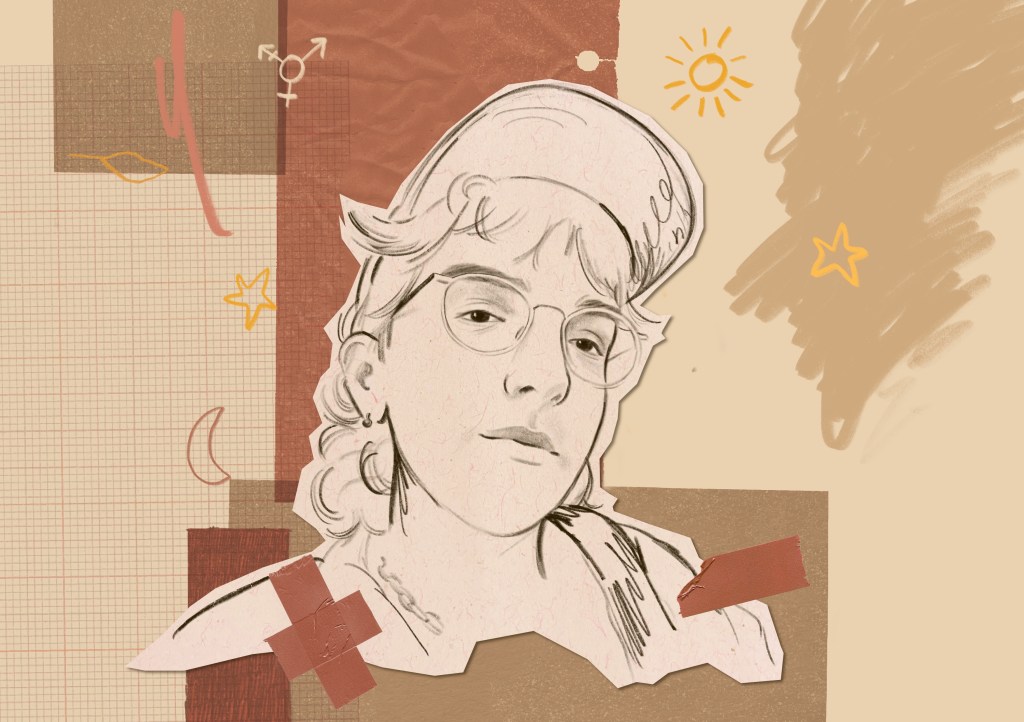
INDIGO: In today’s episode. We are joined by our lovely guest, Nat Lall, a Glasgow based filmmaker, film curator, DJ and tattoo artist. They are the creator and CEO of Sleepie Records and have been making low-to-no-budget films for years. They also programmed screenings around gaming and horror for the 2021 Scottish Queer International Film Festival SQIFF.
[upbeat drum based song]
LEO: This is Changing The Frame.
[upbeat drum based song fades]
INDIGO: Hello, Nat.
NAT: Hello.
INDIGO: I’m very excited to have you here today with us. To start, I would like you to share a little bit about your background and also about yourself and about everything that you do. Obviously, I know you quite well and I’ve worked with you before, so yeah.
NAT: Hello. Thanks for having me. It’s nice to be here. My name is Nat Lall. They/them, but also any pronouns will do. I have a range of things I do. So you know me through film stuff, but right now I’m busy working on the launch of a record label and then next month I will be back to film with you at SQIFF.
INDIGO: Yes. Very exciting.
LEO: So we’re going to be focusing mainly on film creation and filmmaking within your practice, but we can talk about other creative practices a bit later as well. We would like to know what made you pursue film curation and filmmaking and what roadblocks you faced when you were starting out.
NAT: So I started through, like, I went down the sound route firstly, like I was really excited about experimental music so then I went to study sound art, which is just like music, but also sound tech and audio recording and foley and all that kind of thing. It wasn’t so much that I was ready to go audiovisual for like aesthetic reasons, to be completely honest. It was more that I didn’t really fit into the sound boy scene very much. I also used to be really fem and I was a cheerleader and I was there in this like sound tech course. Like, I don’t know, I don’t really feel like these are my people. No offence. So then I moved to Glasgow and did a lot more film stuff and it was a nice way for me to mix like weird music with the more visual art scene, which it’s changing now, but definitely at the time it was definitely more diverse and less like cis boy centred. And then I started making DIY films. I think at the time my practice was very much like, right, how am I gonna make enough money to get by and also have fun? So everything was zero budget and all of the actors were just like me and my friends, like all the lighting, uh, technicians, costume designers and all that was basically just, it was all me.
INDIGO: That’s amazing.
NAT: And then, yeah, through film stuff. And also I did, I did a bit of acting as well. I acted in one of Helen’s films, so Helen from SQIFF, and that’s how I heard about SQIFF and got into it, then started showing some of my films at SQIFF, and then you decided to invite me to curate. And that is how I got into film curation. It wasn’t something I’d really planned out, but, um, I like being in films, making films, watching films. So I was very happy to take it on when you offered.
INDIGO: I still need to watch the film that you acted, like Helen’s film that you acted in. It sounds amazing from what you and Helen talked about.
NAT: I mean, I get rejected in it, like I play the like rejected like weird bird and then the girl I think is hot, has like telekinesis.
INDIGO: I love that and I love that you do so many projects like very DIY, very like what resources that you have at the moment. So moving on to talk about Pink Excavation, which is your debut feature length film, and it’s also available on YouTube. You describe it as an apocalyptic and gender troubled lo-fi, sci-fi and shy-fi film. The story is set in Glasgow of the Future in the year 2… 2518, and discusses themes of visibility and remembrance. How did you come up with the idea for the film?
NAT: I’ve always been quite interested in how things are documented and media and, um, how long things can actually last and like why is so much history repeating itself like. I think also just talking to like even just not necessarily older queers, even just talking to my parents and or like teachers and realising that the kind of issues minority groups face was exactly the same. I mean, okay, give and take, but, and I do feel like the last few years have been like rapid changes in like, uh, visibility. But yeah, I really wanted to explore like alternative histories, but it was actually really hard to do and a lot of the stories I was finding were just like through word of mouth probably changed and I don’t know, exaggerated, um, and not that accurate, which is fine. And then, yeah, I guess I was trying to like hunting for like facts, but that was also very much not happening. And I’m also quite a nerd and I’m like, just so everyone knows, like science, actually none of it is a hundred percent facts. Like it’s just like, it’s not that simple. So I was like, what if everything is science fiction, then this very low-fi budget, like kind of make up as you go along film, it’s like just as scientifically proven. Yeah, I know it’s not like as simple as that, but you know, there’s some ties. And it was about me finding relics from the past and trying to understand them, but not really having the tools to actually do that. And yeah, like I said, I was interested in like media. And it was things like, I found old MP3 players and record players and things, and these, all these things are constantly changing. I think I’m just interested in archiving and kind of how impossible it is to do it well.
LEO: I think it’s very hard to document an entire culture.
NAT: Yeah.
LEO: And gather pieces and bits from every single lived experience is absolutely impossible to do, which is why, yeah, I agree very much with what you said about science being not like fully solid.
NAT: A lot of it is correlation.
LEO: Yes, yeah..
NAT: Not facts.
INDIGO: Yeah.
NAT: Yeah. A lot of medical journals are just, pure fiction.
LEO: Absolutely. Yeah, it’s very interesting to me. I, I enjoyed Pink excavation a lot and I enjoyed it more the more I thought about it after watching it, especially because of the archival bit of it. And I enjoyed the props that you made for the film very much. And I wanted to ask you about them more because it felt like they could be part of an installation as well. Like the pieces that were made for the film could be part of an installation too that called to that culture, to that queer culture. How was the process of creating the gay limestone and the items that were stuck in it?
NAT: So, I made the film when I was doing my masters at GSA. And it was a complicated process. I had a few issues. I was technically in the sculpture department, but I got in through a portfolio of mostly sound work. And not gonna go into it, I didn’t particularly get along with my tutor, but whatever. He was like, maybe you should do some sculptures because you are like in a sculpture pathway. And I was like, oh my God. Okay. Challenge accepted, here we go. So it was very much like I didn’t want to spend money on materials. I didn’t want loads of like big things to carry around and keep, like I was planning on moving around a bit, which I did. I moved to Berlin after a bit after the masters, and I’m back now. But I didn’t want lots of heavy, expensive stuff just to like log around. So I found things in pound shops and on the street and a lot of the tiny little bits of like, they look like shards or ceramics, but they’re actually shrinkles, which are these like bits of paper that you put in the oven and they shrink. I still use them now and people are like, wow, these are beautiful ceramics. I’m like, they are from the kids section of like, the works.
INDIGO: That’s amazing.
LEO: I think that talks a lot more to like what the film wants to achieve as well, rather than going and buying expensive stuff to make it.
NAT: Yeah.
LEO: I like that a lot.
NAT: Like also, so at the time, one of the problems I had, a big problem at GSA was I have like a chronic health issues and my studio was on the third floor. The lift that was supposed to be there never worked and I was just exhausted all the time. Sometimes I would literally get to my studio and take a nap in the studio and people would be like, what you doing? It’s like, I am sleeping. Can you not see? I can’t bother to explain myself. I am sleeping. But I had a grant to study and it was a maintenance grant to study at GSA and I partly did that because the masters was the cheapest masters in fine art in the country. And you get the same stupid method, but you get the same loan regardless of what masters you do. So I didn’t have to work, and it was kind of like, yeah, I’m making art, but I’m also like sleeping a lot and chilling. So a lot of the scenes of the film are literally just filmed like in my studio, outside the studio or at my flat, or literally in my bed. Like I just can’t, I was sleepy. And then finally on that, there was an exhibition I made my gsa, like final show. I made up a tree, like, uh, that was another thing I did that was actually sculpture. I was like, okay, cool. While I’m here, I guess I’ll like make a table or something. And it was quite fun. So I made a, a tree and, and I put the objects in it and that stood in front of the screen. As the film played on Loop.
INDIGO: That’s really cool. I would love to see that exhibition. And yeah, I’m just like, I have worked with you in the past in like film curation, but watching your films recently, like I was watching Pink Excavation. I was like, this is so Nat.
NAT: Yeah.
INDIGO: In so many levels, you know? And yeah, it was just stunning. And I was just gonna ask you like, what did Pink Excavation then bring to you, to your career as an artist, but also I know you decided to put the film on YouTube available for everyone. What was the decision process like?
NAT: So, coincidentally about a year or so before I made Pink Excavation, I started to actually get paid kind of well for my DIY films. And to be honest, first things first, I got some money and like anyone who says like, I’m just doing this for fun, I’m sorry, I don’t believe it, you have to survive somehow. It is fun. And it was essentially not-for-profit, but Pink Excavation, I was feeling like a bit like an icon for spending like no money and getting paid to keep showing this film that I like filmed on my camera phone.
LEO: It is iconic.
NAT: It was a big mood. I loved it. It was a great feeling. So I got that. But also, yeah, it’s like, it’s a community based film. Like it’s local sites and local people and I’ve had things like, so my cat Nugget who was just here, he is always running around in the gardens outside that flat I filmed at and someone was like, I saw your film and I recognized the gardens and the cat and he’s like, come to see me. And I was like, yeah, it’s cuz I’m like your neighbour and Glasgow’s kind of small.
INDIGO: That’s so sweet. I love Nugget.
NAT: He’s in, he’s made a cameo in basically, I think 90% of my films. He’s always there. Um, I lost my train of thought. What was the question again?
INDIGO: What did Pink Excavation bring to your career as an artist?
NAT: Oh yeah.
INDIGO: But also like, why’d you, decide to put it on YouTube for free.
NAT: Oh. Um, but think also, so I, I got to show it at SQIFF as like a feature and it was really nice to be treated as like, um, I think it’s SQIFF funny because it is a community of people who are just my friends and locals. And then sometimes I’m the celebrity and sometimes I’m the interviewer and sometimes I’m just like coming to view a film. And it is kind of funny and it’s very much SQIFF culture is in the same ilk of Pink Excavation. Like it’s all kind of made up sisters, it’s a little bit silly and we’re just jumping around.
INDIGO: And I found this photo of Nat Baby Nat from 2018. That was really cute.
NAT: Yeah. And I think it was just like quite a nice wake up call to the reality of, um, whatever film and art is. And then I decided to put it online during Corona because I personally went through absolute hell and I would say my art career stopped during the pandemic. I have not made a film since, or any fine art per se, and I didn’t make music for ages. I’ve only just got back into music stuff. But it was absolutely like a hellish time and I personally had like, could not cope. I was just trying to like, share whatever I could that was like fun and then hoping people would do the same back. And often they did. And um, yeah, I think it was also very much the time where I realised, wow, it was, I dunno if it was a realisation, but I was very paranoid and panicking. Like, oh my gosh. All of those people who were like, yeah, maybe you actually can’t make money of being an artist. Like, that’s not real. Mm-hmm. The pandemic kind of made that feel very, very true. And it was things like, I was a freelancer, I was living in Berlin. I, I wasn’t a resident there. I didn’t have like a job with proper, um, I had like small jobs but no financial support and paying like health bills and everything. And it seemed like I was really fed up with the like, economic situation and like putting a film up for free. Was just like a tiny detail in that like it wasn’t really gonna, it just seemed like an significant thing to put out for free. I don’t think it was insignificant to like share it, but in terms of like it being free and just available like that just wasn’t important.
LEO: I think accessibility to film is important and during the pandemic, as you say, with everything being like shut down and the arts getting quite a big impact, I’m certain that having your film up for free might have made some people’s day, like just finding new contents that perhaps they couldn’t have access before. Cuz I know that I was finding a lot of joy and comfort in things that I could find on the internet during the pandemic especially that could call to like a sense of community and I feel like Pink Excavation does that so. It’s, it’s a very sweet thing to have it online for free, I think.
INDIGO: Go watch it.
LEO: Yeah, go watch it. It’s, it’s free On the same kinda line you have like a bunch of other free to watch videos on your YouTube channel, which we will link somewhere in the description of the episode. But I wanted to ask you about, Take Me Home Country Roads, the trilogy that you made. We learned that it got made for, It Gets Better 5 at the Institute of Contemporary Arts in London. And I wanted to ask you both about how the process of creating the three short films was, and also the event that happened in London for it. So if you could tell us more about that. Thank you.
NAT: Okay. So this is definitely another one of those things where I’m like, this is actually hilarious that the ICA are paying me to like show pictures of me dressing up in my bedroom. This is ridiculous and I’m so here for it. It was like a bit, it was so funny and I wish I understood like the significance of it better. I didn’t really document it properly. I had some pho, I’ve got photos of most of the stuff and I’ve kept, it was like films, sound piece sketches, and there was actually a light display, but I didn’t take any photos of that. So, um, I’ve learned my lesson. But yeah, I kind of, I hadn’t really worked with like a big gallery that was paying me well before. I was like, surely they would just take photos themselves, like, come on. You guys can get a photographer? Nah, nah. It wasn’t a thing. Okay. I learned my lesson. Like I have to do all these things myself. But yeah, it was just like I got, I heard about it because my friend who lives in London at the time, he’s actually Scottish, but a London art scene person, Morag Kyle, messaged me saying, Hey, uh, there’s this event that usually happens at Artist Space in New York and it’s coming to London and it will mostly be like live performers and music, but there’s also gonna be a room with an installation in, I’ve put your name across and they’d like to work with you. And yeah, all the cowboy dress up stuff. So it was just filmed in my bedroom in Glasgow and some of it filmed in my bedroom at my mom’s house in Croydon. Again, not really any budget, I was just like trying on clothes. I had around in the video that I guess. Most people recognize as like, I guess like the cover photo or something for the film where I’ve got a pink hat on and a blue denim shirt. The shirts an old shirt of my uncles that I just found in my house. And then the pink hat, I actually bought that when I was dressing up as a sexy cowgirl to go see the Finger Boys at Bang Face Festival. Um, but I also just was going through this weird phase where I just was like kind of really obsessed with like gay cowboys and Americana, cuz I also kind of hate that dominant culture of like America over the whole world. I’m very much done with the high school, like American high school genre of tv. I, I will not swear, but I hate it with a passion. I don’t think that should be idolised so much. I hate this like crap about jocks and cheerleaders and all that. But I was curious about it. It was something I’d grown up with like watching and not relating to at all. So for a few things I did. One was that I did become a cheerleader at uni. I was like, right, it’s my challenge. How does one become the hot girl? Is it that hard? Well, it probably would’ve been hard if I was like actually in high school and like as anxious as I was. But when I got to uni, I was in my final year for my BA and I’d done a foundation and taking a year out and stuff. I was a bit older. I was like, you know what? This is actually ridiculous. You simply have to wear small clothes and put some makeup on and suddenly you become the cool girl. Basically the, the whole culture for all this’s bollocks. But I’m glad I like went through the hoops and the cowboy was also like one of these like American boy tropes that I was curious about. And also because there’s so much like gay culture around cowboys, there’s so much like fan fiction, or like erotica about gay cowboys. And I was like, okay, this is cool. But I’m very much like a shy, nerdy boy, not like a kind of like hench mask cowboy or whatever. So I guess the films were more like my interpretation of like baby cowboy romance.
INDIGO: I loved the trilogy.
LEO: Yeah. I enjoyed the one, the, the third film where you’re just in the backyard sitting.
NAT: I know. I, I think that was so funny.
LEO: Getting poses in.
NAT: Cause I was gonna edit it, I think, but then I was just like, actually just posing and it was like, this is very funny and what I was kind of doing, like putting on my different characters every day. So yeah.
INDIGO: You mentioned earlier that your films are all like no budget films, and I know most of them were like experimental and just a one person project, so it’s just you basically making them with your friends. So we kind of wanted to ask you about like making low to no budget films. What’s the production process like for you from brainstorming the idea, to editing it to then putting it up at festivals and stuff?
NAT: Okay. Right. So the plan is, there is not really a plan. I simply have my phone in my pocket all times because it’s useful. I carry it around. If I see something that’s not necessarily even like a plot like idea, just something that looks cool, sometimes I’ll just break out my phone, take a photo of it, and it’s more like I collage together snippets of sound and visuals that I like and start creating a narrative around that. And I think I like working like that. And it’s kind of why the whole big budget application crap has never worked for me. I do not want to sit there ruining all of my joy writing application for hours for a film that in all honesty, I wouldn’t have written or like put together yet at all. It would just be a lie for me to like, and that’s how it’s felt like doing these applications that like physically, mentally, everything draining. And also, yeah, like I said, I have lots of health issues that are like to do with pain and chronic fatigue. I don’t have the time for that and I’m just like, I have to simplify. It’s very much like I’m just bringing my phone with me. And getting snippets of things that I just like doing. A lot of the fun sculptures or whatever are just things I see in like pound shops that are cool that I would like to own anyway. And I’m like, well, it’s gonna be in my film. So it’s like, it’s gonna be useful, I guess. And I still have a lot of my objects. Like I actually, I was going through some of my boxes of my old stuff. I’ve got a little bit of the um, like the pink excavation wall with the Hayley Kiyoko thing in it. And I’ve got my sculptures from the, like the 16MB, like that trilogy and stuff. Yeah, it’s just things I would like to remember and document. But I think again, talking about like worth saying about Pink Excavation. I don’t know how on earth I’m supposed to do like an accurate representation, if anything. And seeing as everything is sci-fi anyway, might as well just like make it up and just like say some random things as I go along. So that’s my like, very, um, thought out process.
LEO: I think it’s very, it’s a, it’s a great process I think. I think that watching Pink Excavation and the other films in your YouTube channel has made me want to like, just go about in film shit again, which I haven’t done in a long time. Cause I think I stopped doing that during the Pandemic as well. It’s something that I stopped doing, just walking around, taking photos and videos and it feels kinda liberating to just be like, what is it that I’ve recorded today and what can I do with it? Instead of thinking through things too much.
NAT: I look back at myself like before being like at like, honestly I was not expecting to be like so traumatised by the pandemic. I don’t think any of us were. But I look back at myself at that time and was like, I had such a good healthy like relationship to creativity and work. And I’m still trying to like go back to that person and work my way around it. I think maybe you found this on my website. It’s a, it’s a bit update, but, um, another thing that was just like, I was like, this is iconic. This is a huge slay. I went to Warwick University and I gave a keynote speech on my zero budget DIY film, and I was like, this is hilarious. I actually went to a really nerdy girl’s grammar school growing up, so they don’t have them in that many places. So a grammar school is like, it’s a state school, but you take a test to get him when you’re 11 and if you pass the like, smart people test, you go to the grammar school. It’s a very like, archaic system of when it used to be um, you only went to university if you were like the smartest person ever. Now it makes no sense. There’s no need, no reason for it. I dunno why I had to like do like a million GCSEs. And like being the sex segregated school, whatever. But I remember when I left school, like some of the teachers were like, you are wasting your talent. Like you could be a physician, you could go to Oxbridge. And I was like, okay, slay boots, whatever. And then it’s funny cuz it came around that I was the person talking at Warwick Uni and it was a bit of a like, fuck you, I’m the keynote speaker bitch.
LEO: How was it like to be the keynote speaker?
NAT: It was, it was fun. So my friend who I’d met through my best friend from high school, they like they’d gone to uni together. She ended up doing a PhD at Warwick. Uh, so her name’s Josie Taylor and she was like trying to organize a bit more of a radical selection of like panelists and events at Warwick. And it was really fun just cause I went to go and like spend some time with her. And also cuz we definitely had like big chats about just also health is like, we both have long-term health issues and stuff and just being like annoyed with like academia but also being quite nerdy and just quite liking to just like read loads and like get really into things. And I kept running into people I knew and it was really strange. Like I ran into, so one of her best friends at the uni was this boy Alex, who’d actually gone to like the boys equivalent of the grammar school I went to. And we were talking about all the gossip cuz the teachers would go between the schools and stuff. I learned some, some interesting gossip. Not all great gossip, some of thought. I was like, okay, some teachers can be fucked up. But anyway, sorry. I also, I know I said I wasn’t gonna swear, but the just keeps being… I have to swear.
INDIGO: You can swear, don’t worry, go for it.
NAT: Like it’s dramatic. I need the drama. But anyway, it was like, there was also someone, a non-binary person who I’d known from London ages ago who happened to be in Warwick visiting a partner who came by and was like, Hey, like I don’t even go here. I didn’t even know this was happening, but it’s really nice seeing you here. And basically afterwards, this is so classic. There was obviously like free drinks and snacks at the event that we all just went and had a house party and it was lovely.
INDIGO: Amazing.
NAT: It was very much like all of the kind of like club kids. A lot of them seem very nerdy at the start. No offence, I’m, I’m in that boat too, but it was like, yes, let’s like talk about, um, I’m good to give a paper. And then everyone just went and got smashed and like all of the like, older professors, like went home again, no shade. Like you could have come if you wanted to, but it was all like, the babies like went and just got absolutely wasted, had a party, which is exactly how it should be.
LEO: Oh, I’m gonna go back a little bit into your experience with sound and how you got into filmmaking before, like, I’m muddling my sentences, but yeah, you mentioned that you got into sound creation, first of all. I was thinking, when I was watching Pink Excavation, I really enjoyed the bubbly and futuristic sounds that go with it. And I also noticed that you have done ASMR videos. Like there’s one called 18th of August, 2025 18 on your YouTube channels as well, which I found very interesting. I enjoy ASMR a lot. It’s, I think it’s a medium that’s very fascinating. And we also know that you’re a DJ and that you’re creating Sleepie Records, which we’ll talk about a little bit later. But yeah. How is your connection to sound like and how do you explore creativity through music and sound creation?
NAT: So many like big questions. I’m like, where do I start? I guess honestly at school, I think I started when I, like I was very like honestly just so like understimulated. Even though I was at this nerdy boot school, I was so bored and I remember just. But also being very dissatisfied with like the education system. And there were these weird things about like how you could learn music. And I always absolutely hated the like classical trading system with a passion. So it feels, this feels so ancient, but it’s literally like, not that long ago, I went, I walked to the library and I got outta book with a cd and it was called Teach Yourself Guitar. And I taught myself classical Spanish guitar. That’s amazing. I love that. I, I miss, like, I keep looking back to moments in my life. I go through moments of just absolute chaos and then just extreme focus and it’s always up and down. But um, I found it like very methodical and satisfying and also nice to do something for myself. But there were limitations again. So it’s like, once I’d like learned the things, I was like, right, this is boring. So then I started getting to really weird music, like I was really into. Noisy experimental music, and I would always just be on limewire, like downloading like loads of random albums on. Does, does anyone remember what Limewire is? Yeah, Indie, you know what it is?
INDIGO: No.
NAT: It’s this huge slay. It’s the Lime, Limewire is like a Torrent platform. So you download it on your computer, the logo is a lime, and like all these random people are seeding their, there’s like all these people who seed something online. And you know what Torrent is though, right?
INDIGO: Yeah, I know Torrent.
NAT: Okay. Well then it’s basically just a Torrent platform that was very popular in the 10s. And you know, half the time you download something and it would be a porn virus half the time, I mean half the time of 50 50, like, yeah, your cursed. But it was like this exciting way to get music and films and stuff for free. So I would always be downloading weird music off there.
LEO: I used it for. Downloading loads of films. So I know this struggle of like, is this file I downloaded downloaded pornography or is it actually, I don’t know, Ice Age three or
NAT: like is the shock? Probably not.
LEO: Ice Age three is much more recent, but yeah. You know what I mean?
NAT: Yeah, I know what you mean. Yeah. And then I was like also on MySpace, but I had a MySpace music account and all these very like cute online things. I literally was so bored. I would just go on Omegle and talk to talk to people about music. I know cringe, but that’s me. I’d be like, hi, do you like noise? And you’d like put your interest in of things you’d like and mine would be like so, so embarrassing. So it would be like Apex twin like, and all these like sound Boy things. And yeah, I think I was just enjoying the weirdo community. Quite a bit. And then I started going to lots of like, it got weirder and weirder, like free improvise and like minimal gigs and stuff in London. And then, yeah, I realised a lot of the music stuff I was reading and hearing was coming out of what’s all linked to this department, the sound art department at LCC, which is the uni I went to, it’s London College of Communication, and it was very much, The kind of place I could go to. And I did a, I had a break between school, so none of the tutors knew about it, but they would’ve absolutely hated that I went to this like smaller college to study some weird subject and didn’t like go to Oxford to become a physician or some bs. Yeah, I think it was all of the like information I really wanted. It was perfect in a lot of ways, but also, like I said, I don’t feel like I really fit it in. That was my pipeline into weird music. And then from there, wanting to be in more of a queer community. I moved more to like film stuff. Also, my first year of sound school, I got really sick. That’s when I first got a diagnosis for ME. I dropped out, was given a laptop by the like disability student allowance thing, and that is when I like actually became an idiot DJ because, well, it was the start, obviously I was. Kind of felt home in bed. So I didn’t do that, but I got really into gaming and listening to like weird, vast, like internet music. And before that I was very much like, haha, I like guitars and like acoustic things. He, he, he stupid.
LEO: Listen, we all go through that phase. It’s okay.
NAT: And I was like, you know what’s stupid? Like all these like weird organic sounds. You know what I like cheesy fast tunes. And um, when I went back to uni, start restarting this like, so-called experimental sound course and I literally just was like DJing happy hardcore and just wanted to like be annoyed at that system after being annoyed at the, like I think I just get frustrated and, uh, nothing too structured, but it’s all been a process.
LEO: I’m enjoying a lot of hearing about like your. Progression and internet explorations as well, because I feel like for the longest time when the, when I was growing up, I spent a lot of time on the internet as well, and I don’t know, I remember finding sort of an interest in really silly, cheesy, fast music and something that comes to mind is nyan cat.
NAT: Yeah, I do remember that guy.
LEO: I was, yeah. Yeah. Very interesting times on the internet in the early, yeah, early times. Just really good to hear about it. It, it’s bringing back stuff.
NAT: Honestly. Yeah, like early YouTube. Early YouTube is a big inspiration. It’s like my favourite filmmaker.
LEO: Yeah. I haven’t heard the word Omegle in a really long time as well, but I did.
INDIGO: Or MySpace.
LEO: Some flashbacks. Yeah, some big flashbacks.
INDIGO: I remember having a MySpace account that was like a long time ago. Mm-hmm. Yeah, talking about nostalgia actually, and talking about film curation. Uh, moving on to that bit of your career, I would love to know your process of programming screenings. Mm-hmm. So I know kind of how you work with film curation because we’ve worked together. Mm-hmm. I would love to know about the process around it. And I mentioned nostalgia because in 2021 for SQIFF, you did an incredible screening of D.E.B.S. and that was like really, really fun. And also you’ve done like loads of other incredible screenings focusing on like trans gaming and sci-fi and like horror. So I would love to know the process behind creating like these amazing events.
NAT: Firstly, thank you. Very generous. Your compliments. Appreciate it. Um, so. Yeah, like obviously you know this, but I guess talking to other people on the photo Earth, we’ll get loads of submissions on film Freeway that we split up and watch through, and that is where I officially start work on programming the screening. But there’s always films that are just lingering in my head that I’ve seen or wanna see more of. I saw a film recently that I was like, oh, I’m gonna take a picture of the info card next to this. It was like that, an exhibition. I might keep it in mind for SQIFF. And then I’ve like put it in the like filing cabinet in my head somewhere and I’ll come back to it later. So we’ll go through the submissions and for me, I will start by giving them a red tick or like a yellow tick or a green tick. Green tick, I’m like, definitely I must show this. Orange, maybe. Red, absolutely not. And I’ll see if there’s a natural pattern to what’s coming up. So there’s a lot of films that are. There was a lot of horror films when we did the Last in-Person festival, and I was like, okay, that’s gonna be one theme. I mean, it also has to be something I’m excited in about. And I’m, I was still quite new to like, horror films that weren’t just like, I wouldn’t have thought, like definitely growing up, I wouldn’t have thought I’m into horror films. I’m more into like psychological horror and thrillers and I think, um, newer, well newer takes on what the definition of horror is as well has made me more interested. And then I’ll also, once I’ve got things together, I’ll be like, Hmm, I have these rough ideas of from this film freeway. And what’s missing? Like, what do I think is missing from there as a program on the whole, like, to be quite honest, what do I want to see? Like I will have to be at the film festival. I’ll have to do a lot of work with films. You have to be really into it. And I guess I went to so many like. Uh, I guess like techie, like sci-fi gaming routes because it’s something I’m still very curious about and I’m also revisiting like my own thoughts about it from growing up still. So it might, might seem like I grew up being an absolute like tech nerd. I was not. I would just sit and like stare at my brother playing games for like hours on end and definitely like, like I was saying, I got that laptop when I was sick. I’m not gonna say it was like the best year of my life, but in terms of me discovering like computers properly, it was great.I got a MacBook Pro. Guys, all you have to do is be sick and they just give you a MacBook Pro.
INDIGO: That’s amazing.
NAT: It was so cool. And I got, that’s when I really got into gaming was like, this is my laptop and I downloaded Steam, which is like a gaming platform. And I was like, these are my games and I can take it everywhere with me. It’s this like little thing that’s got a great CPU and I can just like, Lie down and use it on my like bedbound days. And it was also really interesting cuz I started to realise that firstly so many trans people game. And I was really curious about why that is. And there was a, there’s a huge community of trans Femes who game and I was just really like got interested in like the culture of like girl gamers. I know Girls Plus, but you know what I mean?
LEO: Yeah, absolutely.
NAT: All of these things. And then I got some like really amazing books. I have these two books that I was reading, one’s called Beyond Barbie and Mortal Combat Two because there was a Beyond Barbie and Mortal Combat One, which I didn’t read. The second one’s like a re-edit. And then there was also, um, I think it’s Beyond Culture and Play, it’s called, and it’s like a World of Warcraft reader. Both of these books are from the MIC press. And it was this like extremely nerdy analysis of like playful little games, um, which I loved. Yeah. And I think those two books kind of were a big pathway into exploring gaming for me. And yeah, I wanna see how people are kind of reclaiming it in their adult life because yeah, a lot of these things, yes, they’re nostalgic, but I’m not just like longing for the past. I never want people to think that. I think it’s really dangerous if people to say stuff, especially like in DJ scenes, they’re like, oh yeah, like vinyl is the best. Firstly wrong. MP3 is better than vinyl. Secondly, revisiting something does not mean you’re obsessed with the past. Like it was a better time. Like I didn’t have a chance to fully process it the first time. I’m just like, Revisiting things and bringing them into the present. And yeah, I think that’s really important. And I don’t like these kind of like generational wars that sometimes I feel start to happen. It’s just useless because it’s like, yeah, I’m still revisiting a lot of stuff I grew up with in the nineties. In the nineties and noughties. But would I have wanted to be out as a non-binary person in the nineties and nineties? Absolutely not. So I’m not longing for the past. There’s like little bits and bobs from different generations I’m putting together and yeah, that’s why I also feel like gaming’s really interesting, cuz it seems like this kiddish thing, but it’s actually very much useful to do as an adult. And also there was all these like things as well as it being a boys thing. It was also. It being like going on your computer is like so bad for you and like so distracting cuz and I’ve like, it’s also just really ableist. I’m like, I was bored out of my mind during the year when I was bed bound. I needed that computer and to like game constantly and you can like make characters for yourself and yeah, it was like Omegle was fun or whatever, but this is like next level. It was like that part of my, um, I don’t know, childhood self was, I’m getting a chance to like develop. So yeah, I think it’s really important to have outlets and like, have fantasy moments and not live too much in reality. Some people would say the opposite is what’s needed, but nah.
LEO: Nah, nah.
NAT: Nah.
LEO: A good, a good balance perhaps, but no, I feel you very much.
NAT: Yeah, that’s fair.
LEO: I feel you. I feel you very much, especially as well when you’re talking about bringing stuff from the past to the future. I’m not, if I’m playing on my old game boy that I received from my older cousins, it’s not because I want to live when it was made, it’s just because I enjoy Pokemon yellow right now. Perhaps. Like it doesn’t have to mean anything, anything deeper than that. Um, I feel that, I feel that very much. I want to ask you two questions, right? So I want to ask you first what kinda game, any that you can think of off the top of your head that you were playing on Steam, because I’m also a big. Steam person and I enjoy computer gaming a lot. And then once you answer, I’ll ask you something else. I’m gonna save it for, for after.
NAT: Okay. Right now I’m actually not playing any, I actually don’t have steam downloaded on my laptop cause it takes up too much space.
LEO: Fair.
NAT: I, but I did recently complete a free, like it was with the Glasgow Academy of Music. It was, um, a sound for games course. So I was more interested in making and creating games recently than playing. But if there were games, I’d recommend the big ones Gone Home, Life is Strange and no I think those are the two ones I’d recommend most. They’re like storytelling, kind of like RPGs more and they’re gay.
LEO: Life is strange is so fantastic.
NAT: It’s so good.
LEO: I love that.
NAT: Terrifying at times, but like, mm. Pretty good. Yeah.
LEO: It’s good. I think there’s something to gaming as well, what you were discussing about needing it as an escapism where gaming allows you to figure yourself out as well and the choices that you make. Yeah, and I think that’s something I learned a lot from Life is strange because I played it in a certain way and I got certain storylines developed that other people might not play that way. I just, yeah, very fascinating stuff. My second question would be if you have any curatorial projects that you’ve really found fun to do, like any fun stories about curating?
NAT: So right now I’ve just, before this podcast recording, I was chatting to Soph from Stereo and Soph’s, a DJ I’ve known for a while, and we’ve like, played together or like played each other’s nights for a while in Glasgow and they’re organising a Stereo pride. And they asked me and my new record label to like do a takeover on one floor and I have people in mind to do the sound and the lights and the audio visual stuff. And I think I’m excited for that because I’ve, I’ve run my own nights or like co-run nights, but I’ve not really been like running a record label. I’m still like, what is that? I haven’t even had the launch yet. But, it’s exciting cuz it will be like, it’s not like I’m sorting out one thing, like just the music or just the film. It’s like an experience. Yeah. And also I. It’s not gonna be completely narrative, the like visuals. And I’ve done like little bits of like AV work for clubs before and like made short little films. But it’s something I’m excited to explore, like excited to explore more abstract kind of objects and shapes that can be inspired by the music and surrounding space. Yeah, haven’t really worked with moving image that way much. I’ve done bits, but I’m excited to do more of that. Yeah.
INDIGO: That sounds really cool.
NAT: I’m very excited. Lots of exciting stuff coming up this summer.
INDIGO: I, I feel like this is the year of abundance for queer people.
NAT: Oh, it better be.
INDIGO: For all my friends. Yes. I think you’ve answered a bit of my next question, but what other creative practices are you interested in?
NAT: Honestly, I’m not one of those people who are like, this is my thing. I really thought that when I was like a weird sound nerd as a kid, but I dunno how people can pick one thing and people will say like, what do you do? I’m like, I don’t know. Loads of things.
LEO: Bunch of stuff.
NAT: Yeah. Like I just do stuff like why do I have to categorise myself? That’s it’s, I just don’t think it’s a great way to, not just in terms of art or music career or something, it’s just not a great way to live, to like have one, one outlet. So as you might know, Indie, I actually like doing tattoos.
INDIGO: Yeah. I have two tattoos from you.
NAT: I haven’t been doing loads of them at the moment, but.
INDIGO: I mean, you can give me more.
NAT: Yeah, I think lots of other things. Yeah, like I said, it’s like I like to do lots of different things. I’ve been busy with music stuff, but I really enjoy doing tattoos. And to be honest, it’s also like, it’s time based. It’s uh, audio visual, the little poke, the pokey poke sound. It’s really nice. And the buzzing of a tattoo gun also great. I like how it’s also you can do it on someone and then they go away. And I’m not gonna just completely just overthink it. I had to have a break from music for, and film for like a few years, not a couple months, like a few years. And tattooing, I mean I only started that like last year, but it’s been a nice thing because you have to stop and I don’t know, it’s very much in the moment and I can’t overthink it. Um, well I can a bit, sometimes I’m doing like a big piece on someone and I don’t dunno, I’m like, What is the colour gonna look like there? Skin’s already bleeding and scabbing up. I’m like, panic, panic, panic. But it’s also like, I can come back to it at a later point. It’s just, um, it’s not as at hand as say like, yeah, music and film, one issue with it being so accessible to me is that I just can’t, I can’t stop. I have to really force myself to just have a fucking break. I was sitting in the park yesterday and had all my tattoos out and a couple people were like, hello? Um, I would like this one. And I’m like, yes. Okay. So that’s exciting.
LEO: That is very fun.
INDIGO: Yeah. Yeah.
LEO: Did you sit in the park with the flash or something?
NAT: No.
LEO: It was the ones you have your own. Yeah. Yeah.
NAT: They were like, oh, I like this tattoo. I’m like, I did it. Would you like one? And they were like.
LEO: That is so cool.
NAT: It’s fun. Yeah.
INDIGO: I love the two that you gave me. They’re very special. The last one. Yay. So cute. It heal so well as well.
NAT: I loved doing the mushroom one on you. Like um
INDIGO: Oh yeah, the mushroom. That was a bit painful though cuz it was so my rib. It’s not new. It’s like the position.
NAT: It was like fine lines on your ribs back and forth. Sketchy. Like I know. I know. It was definitely gonna hurt.
INDIGO: Yeah, they’re stunning. Everyone loves them every time I show them, so, thank you so much.
NAT: Yay.
LEO: I love the mushroom tattoo so much as well.
NAT: I love like talking to people about their tattoos and like, It’s a nice, it’s kind of like a way to get to know someone as well. Like you learn a lot about ’em from their tattoo decisions. And I like it when you see someone who’s got like a tattoo from like the same artist or in the same style and you’re like, Hey, hey, we have this, like, this one on my wrist is like, um, obviously this won’t be like heard on the radio show, but it is a purple grumpy teddy bear and their artist is called Fantasma Tattoo. And I’ve seen a few other people in Glasgow have them and we’re like, oh look, I’ve got one of the stickers. And they’re like different grumpy animals and it’s like nice community thing. Yeah.
LEO: I, yeah, I, I got a tattoo in 2018 and then I’ve not gone anymore, but I really want to get back into getting more to dos now cuz I, I miss it and I think it’s, It’s good. I have some big ideas for…
NAT: it’s good to have breaks.
LEO: Yeah, absolutely.
NAT: You can just get too many.
INDIGO: I feel like. Yeah. I started get…
LEO: You’re, you’re on a roll right now.
NAT: You’re ok. You’re ok.
INDIGO: I am okay, I started getting them like a couple years ago and I, I have six.
NAT: That’s all right.
INDIGO: I, I, I do want more. I do want more. I just, yeah. My mom, my mom is a very, no, she doesn’t really like them. And I had this weird, I love playing backgammon, so I had this weird idea at a party the other day, like, maybe I should tattoo a backgammon board on my thigh.
NAT: Yeah.
INDIGO: And then people can play at like, at party.
NAT: Oh my gosh. Yeah. I’ve been thinking about getting like, just like, you know, like the hashtag thing that’s for like lots and crosses.
INDIGO: Yes. That’d be cool.
LEO: Tic Tak. TikTok, how is it called? Tic-Tac-Toe.
NAT: Tic-Tac-Toe. Yeah,
LEO: TicTacToe. Yeah. Yeah.
INDIGO: I mean my mom did not like that backgammon idea, but it’s okay. I’ll get it at some point.
LEO: I would play. I would play.
INDIGO: Yeah, same.
NAT: I haven’t, I haven’t really played back in much, but , maybe I should get like Catan, like a Catan board, like across my whole back.
INDIGO: Yeah. But then do you know how to play it?
LEO: This is my trick. Takes top off, lays down.
NAT: Like it’s confusing cause also you’re supposed to change the board each time. So I’d have to like rearrange my whole back. Yeah. It’s a nice idea.
LEO: I enjoy that. Uh, a little quick question. Have you ever accessed funding for your projects? Cuz you said earlier that you look into bigger funding applications and they’re like very, ugh.
NAT: Yeah.
LEO: Have you ever actually accessed?
NAT: Rarely. I don’t actually know if I’ve ever actually finished like a proper application for like these things. There’s been a couple that I’ve, oh my gosh. So I did one and I put the wrong date on it because I was doing it at the last minute. That was a recent one. I did, I think it was like the Vacma one or something and they emailed me like, excuse me, um, this date is in the past. I’m like, it was obviously an accident, like come on. Like, but for my films. No, it’s something I have in mind. But yeah, like I said, I’m still like struggling to get back into filmmaking and stuff, but I would like to have a budget to do a film at some point.
LEO: Bureaucracy is not very accessible though, especially if you don’t know firsthand. I found personally. It’s just a lot of data gathering and having to explain yourself and stuff like that.
NAT: And also the same people keep getting funding and I’m just like, this is a stupid, like, messed up situation and it just annoys me too much. I don’t even really wanna be involved with it sometimes. So it’s like, okay, the person who’s made like a million films that will have like a huge budget gets more funding. Hold on a second. That doesn’t make sense. Like at some point, but I’m not ready to deal with that drama yet. Been a little while. Yeah.
INDIGO: I mean, this question can be quite broad because you delve in so many art practices, but what impact do you want your art practices to have both within the trans community and in general, like with DJing and filmmaking and curation and sound and so many things?
NAT: So, yeah, right now I’m very much engrossed in getting this label together, and there’s a few things I saw that the community I think was lacking and I wanted to be able to provide. So there’s lots of DJs, lots of people making music, but there’s not really anyone doing the thing of organising it and putting it onto some kind of, not even really like a Glasgow based place. I know that’s really like curating music onto like a SoundCloud or anything. But also one thing that’s great about Glasgow is it’s the only place I know where a lot of my friends feel they will settle or can settle for a while. And I never was a collector until I was never a proper collector until recently. Now I’m like, right, I got all my CDs, I’m building my collection more and my records, I have a book collection I’ve taken like around, but it’s getting a bit tatted. So I wanted to make nice physical objects that people could treasure and have this thing that they can put on display and show off. I think maybe I’m just like a material girl living in the restroom. That’s true. Literally. But it is nice to have nice things and I think I was annoyed at myself at some point for like wanting that, but I want people have this beautiful object that sounds good and looks good and is affordable. And yeah, to be honest, a lot of the budget for Sleepie Record, the first release Universal Credit, made a mistake about a year ago when they were supposed to have been giving me disability money to help with my health costs for like over a year. So I got this big, it was letter like, we owe you some money. And I was like, okay, this is great. I have this. Like, I mean, I was owed it, but like it was like, I’m not gonna say, okay, you know what? I’ll say transparency. It was like 1.8K
INDIGO: Amazing..
NAT: That they owed me. So, um, a lot of that is what’s funding the materials and like fees for the label. Yeah, it’s something that I think is important and needed.
LEO: I’m excited to see what comes with it. I like the name of the record label a lot.
NAT: It’s also cuz I’m tired.
LEO: Yeah, no, I, I love it. I love it very much. I think it’s very, it’s a good, it’s a good name. I like all the, I was, I was snooping. Okay. I admit I was snooping. I like all the visual art that has been made for it as well. I like it very much.
NAT: Yeah. I think actually the visuals, part of the reason it’s so like abstract or whatever is I’m also getting too tired of being like, hello, I am a list all the random groups I’m part of like trans blah, blah, blah. I right now, I’m too tired to care. I am very sleepy.
LEO: So fair. So fair.
NAT: Um, and people have been like, what’s the object? So they try and work out what it is and like what it means. And I kind of like that, like there’s like a 3D design object on the front and everyone’s like, what is it? What does it mean? And I’m like, it can be whatever you want.
LEO: Free up for interpretation.
NAT: Yeah. Which is the kind of thing I think I used to hate cuz I was like, no, there’s always context. I’m like, yeah, there’s still context. I’m just not completely like spelling it out. Like there’s a bit of a freedom to it, but coincidentally, most people on the label are queer and trans, so, those are just people who make good tunes, I don’t know.
LEO: Excited to hear when, yeah, it comes out. Um, is there any advice that you’d like to share for trans creators that are your getting started? Anything from your experience that you would like to be like, be like me or, absolutely don’t be like me in this regard or anything at all.
NAT: So maybe I’m selling out a little bit now because I’m like, I am putting some money into something and in investing in, like I was saying that money from Universal Credit, they’ve owed me for ages. It forced me to save up some money and I am putting that into the label stuff. Not all of it, some of it, but, um, for the most, just don’t spend money you don’t have. And I, I really like, it saddens me to say, but honestly you have to survive first and be very careful with your energy, money and time and just don’t set up plans that are gonna completely drain you. Take it easy, pace yourself.
INDIGO: I think that’s great. Like prioritizing what’s good for you first. It was from last, from, yeah, it was .Beginning last year that I decided for myself and put some boundaries of like choosing exactly what, not, not getting everything that I’m offered, but like choosing exactly what I wanna do.
NAT: I’m always telling you to have a rest. I am.
INDIGO: I know. And I, I know I do loads.
NAT: Take yourself out for a coffee and cake today. Indie, come on.
INDIGO: I know I do loads, but like I, when I was at uni, I was part of the LGBTQ Society and like, because I’m an immigrant and like I have so many identities, loads of people ask me to like, speak at different panels for free and stuff and I would always do it. But then I decided to like put some boundaries and actually be like, what projects do I actually want to work with? And yeah.
NAT: Yeah. Actually, you know what? Scratch what I, well, you can say what I said before, but the TLDR say no sometimes.
INDIGO: TLDR?
NAT: Too long didn’t read.
INDIGO: Yeah.
NAT: It’s internet nerd speak.
INDIGO: Okay. I, yeah, don’t know anything about social media and stuff, so.
LEO: Well, you’ve learned something new today. I think that’s very important advice, like prioritise yourself, learn to say no and
INDIGO: pay your rent first.
LEO: Yeah, yeah. Pay your rent and your bills and everything else. And there’s no art without the artist, so.
NAT: And like great art can be zero budget.
INDIGO: Exactly.
LEO: Yes.
INDIGO: Absolutely. It’s very inspiring. I feel like your films are also very inspiring and Yeah, it just shows that we can make such a great project with no budget.
NAT: One thing that was really nice that happened the week that just passed, I was at an exhibition and someone came up to me and I was like, hi, I’m Nat, nice to meet you. And they were like, no, I actually. I know you from like ages ago. Ages ago. I was like, what happened to ages ago? They were like, I really liked your, your film Pink Excavation. And I remember it, I remember the exhibition and my tutor really liked it as well. And I think it was, it was just so nice. I think also people in the art community, like do tell people what you like their films and work. Yeah. Because honestly, part of me’s like, oh, what, I hate to say it, but in my head sometimes I’m just like, oh, that was such a load of crap. But, um, sometimes it’s good to know the opposite.
INDIGO: Yes. Um, the last question that we always ask everyone is, what other, and this could be queer or not, so forms of media, either films, books, music, podcasts, whatever would you like to recommend to our lovely audience?
NAT: So it doesn’t have to be queer?
INDIGO: It doesn’t. No. No.
NAT: Okay. A lot of nights I fall asleep listening to the Ologies podcast. I literally cannot stop talking about it. Yes. I’m so obsessed. Yeah.
LEO: I love that podcast so much. Actually almost jumped on my seat when you said
NAT: Yeah, like not necessarily like a big deep queer community thing, but she does actually cover some like pretty important issues that I don’t think would be heard otherwise. Oh gosh. I’m just like so done that you’re both obsessed with it too. So I’m a bit distracted now.
LEO: Sorry. I just got too excited myself.
NAT: So I mean, I’ve been watching, I Kissed a Boy, that like Gay Boy Reality TV show on Channel four.
INDIGO: Oh my God. Amazing.
NAT: It’s actually very cute. Like, they’re like really like, it’s like very much not the trope of like gay boys just wanting to have sex, like. They’re very much there for like U-hauling and like
LEO: That is, that is very exciting to me cuz this month I’ve been getting into the Ultimatum, the queer version as well.
NAT: Yeah, that’s on my list.
LEO: Such a chaotic representation of it, which like, yeah, I was, I was having my eye on, I kissed a boy as well. It was like my next watch after I finished the queer ultimatum.
NAT: No, it’s really cute. And they were all like very like cuddly and like caring.
LEO: Sweet.
NAT: That’s nice. Yeah, so that’s my recommendation. You get two episodes a week as well, which is like a good amount of tv.
INDIGO: That sounds good.
LEO: That’s very nice. Well, thank you so much for joining us today.
INDIGO: Thank you.
LEO: It’s been very lovely to chat.
NAT: Yeah, it was nice to hang out. Thanks for having me.
INDIGO: I love this conversation with Nat. We just want to thank them so much for joining us today. It’s been a pleasure.
LEO: Make sure to follow Nat on social media to check out their work. Their links are on the episode description and you can find more via our Instagram.
INDIGO: Thank you so much for listening to this amazing episode, and stay tuned for our following episode next month.
 Changing The Frame
Leave a comment