[upbeat drum based song]
LEO: Hello everyone and welcome to Changing the Frame. I am your host Leo Torre and my pronouns are he and him. Changing the Frame is a podcast that discusses trans and non binary experiences in the film industries. Every episode counts with the appearance of trans and or non binary multimedia artists in the film industries joining us in conversation about their work.
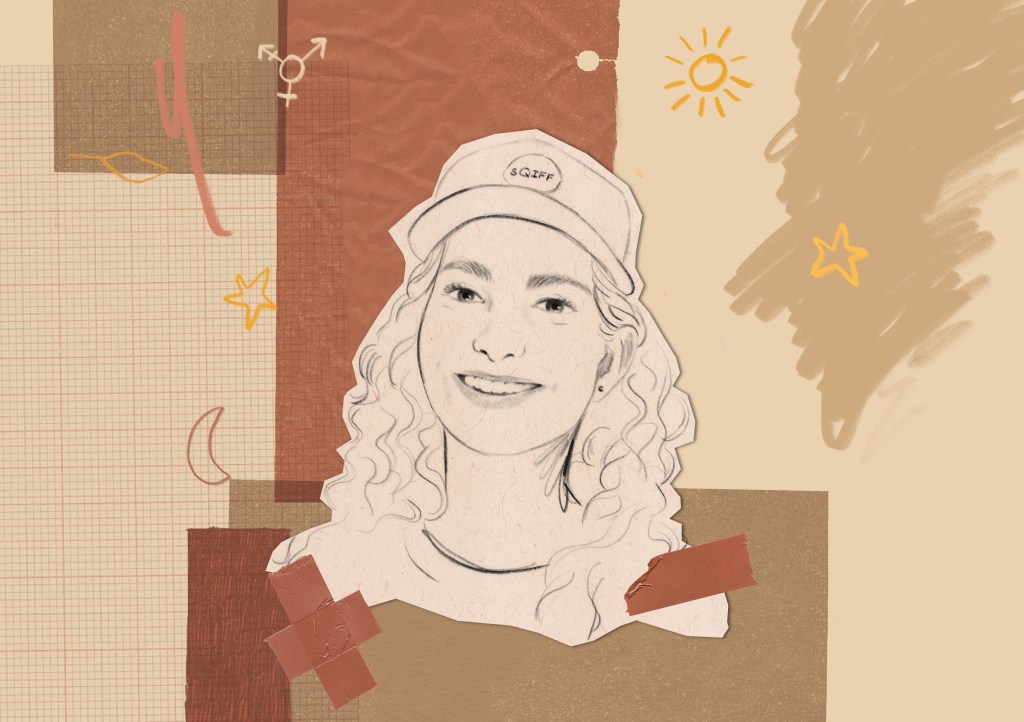
We are really excited to share these amazing talks and discussions with you all. The very lovely guest for today’s episode is Indigo Korres. Indigo is the co host and co producer that runs Changing the Frame alongside me, but today she has joined me to talk about her work as a Festival Director and Programme Coordinator for the Scottish Queer International Film Festival, as well as her career as a freelance film curator and Yo Perreo Sole, the queer Latin knight for marginalised genders she runs in Glasgow.
[upbeat drum based song]
LEO: This is Changing the Frame.
[upbeat drum based song fades]
LEO: Hello Indigo.
INDIGO: Hello.
LEO: Well I am very excited about this episode and as usual we’re just gonna start it off by having you tell us about yourself and your background for our audience.
INDIGO: Yes, um, I’m always quite interested in how I, I talk about myself, like, I always feel a bit awkward. First of all, I’ll talk about what we’ll be discussing in this episode a little bit. So, I’m the current Festival Director and Programme Coordinator for the Scottish Queer International Film Festival. I’m a film curator as a freelancer. Um, I also DJ and I run this Latin queer club night in Glasgow called Yo Perreo Solx, and I also run this podcast with you.
LEO: Let’s talk a little bit about what made you pursue a career in the film industries. What did you do to get where you’re at, basically?
INDIGO: At first in school, I really wanted to go into university to study, um, cooking and culinary, um, especially vegan foods. But then I was also really interested in film. So I did a foundation year in arts and humanities, and then I applied for film studies at Bristol Uni, which I started, did it for a year, and then I dropped out, worked at a cafe for another year. And then went back to study at Glasgow uni, which was a lot easier because the uni was free. So, um, even though I still had to work full time, it was more manageable this time around. And then I was able to do more freelance work this way. And then I go into the film festivals, basically just like giving my time for free. And then when I saw SQIFF was hiring 2019 for a videographer, I was like, yeah, I have a camera, I have a tripod, can just apply and like film some of their events. And then I got that. And then the year after, I knew that SQIFF was looking for access and support workers. So I did a bit of the helping with emails because it was mostly during the pandemic. So there were loads of other accessibility measures that we put in place at that time. That’s why we needed more access and support workers. And then in 2021, I applied, um, to be the program coordinator and that was really fun. And it was very different than all the other jobs I’ve ever done, even though I was doing film curation a little bit before, but that was a big step towards my career. I think I learned a lot about like how to manage people, especially other curators and work as a team to create a full festival program. And then in 2022, I became the festival director. It was kind of like moving very fast. And this time around, a couple of weeks ago, it was when I did my first big festival as the festival director, which was very exciting. And now I’m here.
LEO: You obviously got involved with SQIFF for the first time in 2019, which was by becoming a videographer. What kind of events were you filming when you were doing work for SQIFF back then?
INDIGO: It was mostly like Q&As and panel discussions and talks. There was one lecture as well. I can’t remember exactly what it was, but yeah, it was just making sure we had some sort of video archive of some of the events that we had. Um, I feel like especially for funding, it’s quite important to show like what sort of events we’re doing. Yeah. So I had one camera and then I borrowed a camera from a friend and a tripod. So it was, it was very DIY and then I just edited them together.
LEO: That’s really good for skill building though and that you got into SQIFF in such a small supportive role and years later down the line you’re directing the full festival. It’s just outstanding. Your career with SQIFF is something to be very in awe of, I believe, I think personally. SQIFF has many feelings for me, like it brings me many feelings, especially because it’s where we met as well. The first time we ever interacted was in SQIFF 2021, and you gave me a ticket to the screening of Linda Stupart After the Ice The Deluge. Tell me a little bit more about the work you were doing with SQIFF in 2021 then.
INDIGO: Yeah, so that’s when I was the program coordinator, and I remember really well like the first time we met. It was very, I think I was very awkward because I was running around and then I was, and then Linda was like, Oh, this, um, this student from this course that I went in to talk about the work that I do, and can you give them a ticket? And I was like, Yeah, sure. So I just went outside and you were there. And then I was like, Hey, yeah. Um, and then we met a few times after and became friends but yeah. So at the time I was Programme Coordinator and we had two curators, uh, Nat Lall and Jamie Rea, and I was basically helping them and mentoring them on how to put the programs together. So they were in charge of a certain number of events each. So we all watched the submissions together, um, and kind of put a yes, maybe or no for each film. And then the curators kind of had their own ideas of what they wanted to put on, and I basically just helped them achieve that. So I was mostly in touch with like distributors and filmmakers to get the rights for the films, putting the timetable together for the festival, working in partnership with other organisations to have other events that are not only the curators that put on. I think at the time we had like the Scottish Documentary Institute, LGBT Youth, Lux Scotland. And Lux Scotland is the one that um, actually partnered with us for After the Ice, The Deluge. Yeah, so it’s kind of mostly in like the actual program.
LEO: I, I remember SQIFF 2021 quite in depth because I had just arrived in Glasgow and it was the first thing I’ve ever seen for SQIFF. So the, after the Ice at the Luge was my first ever SQIFF screening and it holds such sentimental value to me that you were kind of like behind the scenes preparing everything and making sure that everything runs smoothly. Um. I wanted to ask a little bit about the SQIFF 2022. Um, you did a mini series instead of a full time festival. Would you like to talk more about the mini series and what kind of events you were hosting back then?
INDIGO: So the mini series came about because we were in this transition phase and I was asked to be the director literally a couple months before we usually have a festival, but obviously with funding applications, it takes a lot longer to secure funding. So we couldn’t do a big festival at that time but I was able to secure a little bit of funding to create like a development phase for SQIFF. And with that, we had three events and each of them kind of focused on audiences that we usually approach when putting a big festival because we want to know what minority identities even within the LGBTQ+ community wants from us. So basically we had one event, it was a filmmaking workshop with deaf and hard of hearing filmmakers. After the workshop, we had a group discussion on what we could be putting on in terms of events for those types of audiences. And then we did the same with older queer people, um, in their 50s and 60s and 70s. To know what SQIFF can be doing to make sure they are included, um, in the festival. And also we did the same with queer asylum seekers and refugees. And those are three main groups that we’ve been working a lot with and we wanted to get that feedback from them. With the development of SQIFF, if we want to know what we can do better, pretty much. Um, so we had the, the three events was two film screenings and one workshop at that time. And I think it went really well, especially because I think most of the people on the team were new to the roles and they’ve been able to explore the role better this year in the big festival. But it was a good way for everyone to kind of test all the waters with just three events instead of having 25 in one go.
LEO: I really enjoy knowing more about the 2022 phase because at first glance it looks different, obviously, because it’s a bit of a shorter strand of a festival, but it makes a lot of sense that you took the time and resources that you had and you applied them consecutively where you wanted to apply them and that it came out so well. I feel like it says a lot about SQIFF’s approach to accessibility and inclusivity.
INDIGO: That was a really good space for me to kind of understand what sort of project we could start beyond the festival. And I think this year we were able to create different projects that we’ve never had before because of that. Like stopping for a bit, thinking about it, yeah, taking that time to actually develop what we want to do instead of just having another festival and run, run, run, you know, so I think it was a really crucial point to what we’re doing now.
LEO: I like that. I like the stepping back to take care of oneself and of the festival as well. We’re recording this in October and September has just passed and SQIFF 2023 has happened. You received the necessary funds to run a fully fleshed out festival this year, so I wanted to hear a little bit more about how funding search and application processes went for you ahead of the festival.
INDIGO: Funding, um, is very limited. I wish it wasn’t so limited, but I’m really happy that SQIFF was able to secure funding for this year. I think it’s, yeah, I think SQIFF is really special for Scotland and really special for the queer community that we have. It was, it was just great to see the festival as big as it was again and yeah, um, in terms of funding, it was, um, we have, we have to apply quite early on. One of the fundings this year from Screen Scotland was a bit delayed to start, so that was a bit stressful, but we were able to secure that in the end. And we were able to secure funding from Film Hub Scotland as well. And I think for next year, we’ll try to look for other sources of funding to expand a little bit more. But what was really good this year, especially is that with all the partners that we had, we were able to get loads of in kind support. For example, the CCA gives us the space, which is the venue that we use, gives us the space in kind. And there are so many people that want to help SQIFF and I feel like, yeah, that was really important and it was really overwhelming to see how much support we got from other film festivals that are in the same situation funding wise.
LEO: That is very lovely. I had no idea that the space had been given in kind. I feel like that really is a testament to how much SQIFF is loved through and through in the community and it’s very cool, it’s very important to be hosting SQIFF because it makes a very cool artistic space for people and it’s a brilliant festival so it would only make sense that people want to support it. I’m very glad. Let’s talk a little bit about the SQIFF Transgenerational Tour. What kind of events were you setting up and where did you go?
INDIGO: The Transgenerational Tour, I can talk a little bit about its background as well, like we’ve done SQIFF on Tour before, but it was usually just one film and we knew the filmmaker and the filmmaker came with us. It was a very like small project, but this year, especially because we didn’t have a big festival in 2022. Early 2023 we decided to make a big tour and we curated three events all focusing on trans joy and trans love. That’s why we called the Transgenerational tour. It was a friend of mine that came up with the title. I was basically in their house just like, what should I call this? And then we’re just thinking of like trans stuff. Yeah, and then we basically went to Glasgow, Stirling, Inverness, Hawick, Dundee and Stornoway in the Isle of Lewis. And it was really beautiful the whole way through. It was me and a couple of other people from the team that went to… all of the spaces in the tour, and it was really beautiful travelling with other trans people, and meeting trans people, and every single space that we went to, we had at least one Q&A with local trans people, and it was just, yeah, it was just beautiful. Basically, the tour started because I watched the film Framing Agnes and I really enjoyed the idea of looking back at archives and looking at how people and where trans people were in those archives. And then a friend of mine wrote their dissertation, um, on the Tartans Skirts, which is a magazine that we had, I believe, in the nineties, in Scotland. Um, and I think it was published in Inverness, if I’m not mistaken. And I just really liked the idea of like going to rural areas in Scotland and kind of analyzing like the art, like where we were in a way. And, um, so basically the tour, I wanted just to be that, like bringing the Tartan Skirt to loads of different places across Scotland. So reprinting them in a way and having Framing Agnes. Um, but then as we were able to secure the funding, we were able to do three events and it was different. So Framing Agnes was there. And then the second one that we had, that came to be in the tour was this film called Sediments, which is a Spanish film, um, which focuses around the lives of six trans women, um, from different ages. And they go to a rural setting in Spain, and they kind of have various discussions about their own identities. And I thought that would be really cool, especially bringing the films to different areas across Scotland. I thought it made a lot of sense to have that film in. And then the third event came to be because I watched, um, some films around trans parenting. One of them being… M(OTHER)HOOD, which we interviewed Bea and Jack in the podcast before. So with that, I collected three short films together for the Trans Parenting Strand. And what I wanted was mainly to focus on joy and love, and make sure the panel discussions that we had were all focused around that and also the love that the community in each of the rural areas in Scotland have. So mainly focusing on the groups that other people that come to the screenings can actually meet other people in their own town and know where to go. And I could see that a lot in… Even in Stornoway it was really fun to see, it’s so far away, but it was really fun to see trans people from the islands that didn’t really, that had never met each other, exchanging numbers after the screening. That’s the main thing that we wanted was like to build community and to show these amazing films.
LEO: I went to the trans parenting short screening in Glasgow and it made me cry so much. So much. I had already seen one of the films, obviously, because, again, like you said, we interviewed Bea and Jack, but you curated such an incredible program and I left bawling my eyes out. I think I still have the ticket somewhere. I keep all my tickets from SQIFF. I still have all of them. They’re like my little mementos, I keep all my cinema tickets, but yeah, I think I carried that one. in my phone case for quite a while because it really impacted me. Obviously, I was at the Glasgow screening, but I can imagine the impact of living in a smaller rural area and having an event like that come to your town. And the ability of seeing yourself represented in screen is massive. It’s, it’s something that’s very huge. I feel like there’s a big exodus of queer people going to the cities, but you did the total opposite, where you brought queer community to rural areas, and I just really enjoy the, the concept of SQIFF on Tour, and I really hope there is more of that.
INDIGO: I hope so too. Um, we’re currently on the process of applying for more funding to do another SQIFF On Tour, and I really hope we get to do that because it’s so important that we’re outside Glasgow and Edinburgh, which are the central areas of Scotland. Like, I think it’s just really important to go to other places because we’re everywhere, you know. So I think it’s, yeah, it’s good to show trans love everywhere as well.
LEO: I, I like that very much. So let’s move on to talking about the festival that just happened. SQIFF 2023 took place from the 26th of September to the 30th and the team set up a program packed with screenings, panels, workshops, collaborations, and so much fun. What was it like to work towards the festival opening? What kind of work were you doing before September to the lead up of the festival?
INDIGO: That was a lot of work. We had to work on a very tight deadline this year, and we got way more submissions than we ever got before, which is crazy, um, because we only had our submissions open for a month as well. Yeah, the whole team worked so hard. before the festival. I don’t even know like the full list of how much stuff that we had to do, but it was really fun and exciting, but also like really hard working. Like I said before, I don’t, I don’t know the full list that we had to do because it’s just a lot of little nitty gritty things, but I can talk about a little bit about other the, the, the leads up to the festival in some way. So like putting the program together and then putting the brochure together, getting like an artist to create the design and then creating the social media designs, getting all the film rights from filmmakers, distributors, making sure the tech coordinator got all of the film files to create the descriptive subtitles and audio description for the films that need them, turn them into the right format for each of the cinema spaces. So if it’s in the space downstairs of the, uh, the CCA, that’s a DCP file. And then upstairs is a different file. And then there’s so many things that way. Um, and then the social media part of things like getting interviews and, um, articles written about SQIFF and advertisements, social media. Yeah, there’s just loads of things. I don’t even know. Like my, my list was huge just before the festival, but it was also really, really exciting because I was going to meet loads of new people. We asked loads of filmmakers to come through for the festival for panels and talks. And it was just nice to, to meet some of them. It was like Kristiene Clarke. It was really lovely to meet her, you know. Yeah, it was just really, really exciting, and during the festival as well, like, I was running around the whole time, I feel like everyone was like, just seeing glimpses of me, but, yeah, the whole team worked so hard, and I’m so happy with how the festival turned out.
LEO: I remember hanging out with you on the lead up to the festival, because we would be just like, I don’t know, doing podcast work, hanging out, watching a movie, having dinner, and you would be like, here’s my list, here’s my to do list, and it would be an endless point bullet list of things to do, little tiny tasks that you had separated into smaller tasks so you could like catch up with everything that you needed to do, and now it’s done, it’s over, the festival happened, but my goodness, were you busy on the lead up?
INDIGO: Yeah, I think it’s also because, like I said, there was a tight deadline. Most of the people on the team were doing their roles on this scale of the festival with 25 events for the first time. So I think everyone was like, trying to understand the role in a way as well. I just made sure to like catch up with everyone to make sure everyone’s doing okay and I just wanted to put load even if it was a little thing that I had to do I would put on my to do list because yeah I just wanted to make sure the festival went well and but I’m sure that next year with the beautiful team that we have, it’ll be a lot smoother on the lead up to the festival because, yeah, I think everyone will know about it better. Even me, like, this was my first time, so I think I was even more picky about every single thing I was doing. I was like, this needs to be perfect. But obviously things go wrong every time, and that’s okay. And that’s the fun of it, you know, we’re a queer DIY festival, you know.
LEO: 100%. That’s what I was going to say as well, like the team are mostly new, but you are also in this brand new position for yourself because you were running the 2022 mini series was shorter it gave you a taste of what being a festival director was going to be, but then facing up the fuller 25 event long festival is a total different endeavour. It’s completely different. So it’s very wild that, it all came together so perfectly. And as you say, mistakes happen and they’re there for us to learn from. And they’re only going to mean that you approach things differently altogether with the whole team learning and doing all the best that they can. I feel like the hard work does not go missed during the festival week. It’s very very noticeable that SQIFF is a work of passion and that you’ve put like, and when I say you, I mean you as the festival director, but like all of the team are putting all the best energies towards it.
INDIGO: Yeah, like the festival wouldn’t have happened without such. That amazing team, like everyone’s done so well. I hope they hear this, but like, cause I, I honestly appreciate them so much. Um, they’re so good to talk to if we need anything and like they’re our friends as well. We work together, but we all know each other’s boundaries. We make sure everyone’s listened. We help each other when we can. And like, I don’t know, it’s just a beautiful team. And I think we all work together so well. I, I honestly appreciate them so much and the festival wouldn’t have happened without them at all.
LEO: Yeah, let’s talk a little bit about the actual festival delivery week. Do you have any favourite moments from SQIFF 2023?
INDIGO: It’s interesting because for me it’s still happening in a way. I feel like I’m still decompressing from it and trying to understand what happened. Just because during the week I was just like… Going to sleep at like 2am and waking up at 5am to make sure, you know, I was like the first person in the building, the last person in the building to make sure everything was okay. But there were so many great moments. I think one of my favourite moments was. Uh, The Screening of Sex Change: Shock! Horror! Probe! With Kristiene Clarke, just because seeing Kristiene Clarke there, like, what? Like, the first trans filmmaker to make films about trans lives to be in the festival and like, just having a chat with her after as well. And I don’t know, it was just a very beautiful moment and seeing over 150 people in that room staying until 11 o’clock in the evening. Which is rare, like, it was a sold out event until late in the evening. People could be in bed, but they were there, and it was just, yeah, it was just really beautiful. I want to thank Kristiene for coming, because it was, yeah, it was just so good. One of my favourite moments as well was, uh, doing the workshop, um, with Autojektor, because… I don’t know, I just love Autojektor’s work, like Robyn is so lovely, and I think it’s always great to work with 8mm film, and it was great that I was able to actually sit down and participate on that workshop, because most of the film screenings I was running around to make sure the tech was okay and that everything was working fine, but for this one I was able to sit down and actually work on my own 8mm film piece. It was just really lovely to like bump into loads of cool people and see loads of people that I hadn’t seen before and see loads of people that I hadn’t seen in a long time. So yeah, I feel like there were loads of people that I haven’t seen that live in other places across Scotland and they came to the festival and it was yeah, it was just nice to catch up.
LEO: I love that you got a breather space at the festival, and I especially love that it was the workshop. And I love that we were sitting there side by side. It was very cute. I had so much fun at that workshop, so I can see why it’s a favourite of yours as well. How do you approach accessibility and inclusion as a festival director? What kind of measures do you take to make sure that the festival is the most accessible it can be and the most inclusive it can be?
INDIGO: SQIFF has been a pioneer on accessibility in the film festival world in Scotland. We’ve existed since 2015 and it was because of the co-founders, Helen and Mark David, that like, we are as accessible as we are. Like I literally, I can only thank them for making SQIFF this accessible and we can, we’ve been able to learn from them and like be able to increase our the accessibility that we do because of them and because of everyone that’s given us feedback. I can talk a little bit about the accessibility that we’ve had this year. Um, obviously the full extensive list is on our website. And if anyone listening to this has any other feedback on how we can improve, please like send us an email, our email’s on the website as well, because, um, we, we honestly like really want to know how we can break this barrier of accessing the arts. So for example, all the venues that we use are wheelchair accessible. Um, all of the films that we have have English language closed captions. We have BSL English interpretation in all of our events. We also have life captioning, which is basically someone transcribing everything that’s being said on every single event, all of the rooms that we have events on have induction loops installed in the room. Most of our screenings have audio description for blind and visually impaired audiences. The lights for our screenings are slightly up so people can move freely in the room. Support animals are are welcome at every single venue that we work with. We have a quiet space with zines. This year we had an art installation at the quiet space as well. There’s coffee, tea there, comfy seating. Even the venue for the screenings, we had beanbags available. This year because COVID has had a comeback we’ve had face masks available, FFP2 face masks, and also hand sanitizer available. We have content and access notes, um, on our website and also printed out in both regular and large prints. We have an audience travel and access fund, and this could cover travel to the event, child care costs, if you need to pay someone to take care of your children whilst you come to the events, um, no one needs to give a reason for this, they can just ask us for the fund. We have an access and support team. And this year we had for the first time, an access table where people could come to if they needed anything, um, access wise. We have a large print of the brochure, the brochure available as well. Um, as well as a text only version, um, for screen readers and also an audio version, and there’s so many more. Like I was just reading through a list, but honestly, like there’s so many other things. And if anyone asks us as well for any other type of accessibility, if we are able to provide it, we will. So please let us know how we can improve. Because accessibility is like one of SQIFF goals and it’s at the heart of the festival. And as I said before, like it wouldn’t, we wouldn’t be as accessible if it wasn’t for the co-founders of SQIFF and the team that we had previously. And I hope other festivals can look at what we, we have and that they are also able to make their festivals as accessible as we can because it’s so important to do that.
LEO: I believe we would all be better off if everything was more accessible. So to be able to go enjoy films and not have to worry about several aspects that make it non accessible is just, it’s just massive. It’s, it’s really important.
INDIGO: Yeah, because if someone can’t afford the ticket, we have sliding scale ticketing from zero to ten pounds. We can, like, they can book a free ticket and they can ask for the travel fund, like, the travel costs back. It’s free to come to SQIFF, like, we just want people to enjoy the films and enjoy the projects that we have on in the whole program. And we want to make sure anyone can access it.
LEO: So you mentioned earlier a little bit that you’re looking at funding applications for another SQIFF on Tour. Do you have any other plans for SQIFF from here on? Are you going to just keep on building what you currently have as a base or anything specific?
INDIGO: We want to do more year round events, so we’ve been applying for funding for year round projects. A couple of the projects that we started this year that I can talk about is the Queer Filmmakers Group that we have once a month at the CCA, a new facility. So the Queer Filmmakers Group is open to any filmmakers of any levels that want to meet other queer filmmakers in Glasgow or around Scotland. We meet in Glasgow but obviously you can come from other parts of Scotland. We also have the travel access funds for that project and you can get to know more about the project on our website. But also we started this year a project which was a series of filmmaking workshops for queer asylum seekers and refugees and that ran for six weeks over the summer. And we were able to show the films, the six films produced during this series of workshops at the festival a couple weeks ago. It was really beautiful. This was a project that made me cry every time I went into it for every single session because it was just very, very powerful. And I hope to do more events like that, more projects focused on specific communities. And one of the main goals of SQIFF is to build community. So I think having projects, there’s not only a yearly festival, it’s really good for people from the community to meet other people year round.
LEO: I’m going to be asking you questions about curating now. You screened a series of films in SQIFF 23 this year. It was called Are You Into Emotional Edging? And it was four films by trans filmmakers in an experimental form of filmmaking. What was your selection process for that screening like? And why did you set it up the way you did?
INDIGO: We had a gap in the timetable and we had to fill it up, and I was like, okay, I can create a program. Basically, the idea for this program were to focus on different ways that trans and non binary people tell stories through experimental filmmaking. The first film that I got for the program was The Backside of God by Hogan Seidel. And then… I thought of other films that I had watched this past year that I thought it made a lot of sense to put on the program. Another one of them is Bigger on the Inside by Angelo Minax. And that film, in one of the lines, it says, are you into emotional edging?, which became the title. I really like the title being a phrase of one of the films. That’s usually how I pick up my titles. And then we also had A Luxury by Jamie Crewe, and that was one of Jamie’s latest work. Um, I really wanted to show another work of Jamie’s, but they were showing that one in a gallery at the same time as SQIFF was happening, so it wouldn’t make sense to show both at the same time. And then we also screened, um, A Trans With A Movie Camera, which was kind of like punky and the music in that, I think loads of people connected with it because loads of people after the screening, they were asking me about what song somewhere in this program. All of the films, they’re so distinct from each other. I think they work so well together. So after picking the films, I kind of just watched them in a row and I kind of put them together in the way that would make sense. And then for the actual event, I’ve invited Milo Clenshaw, who’s a friend of mine, to host the Q&A because he’s one of the main programmers for Alchemy Film And Moving Image Festival and he works a lot with experimental film. And I thought, and because he’s had watched some of the, the films that were in the program already and I knew he had some ideas about it I thought he would be like the perfect person for it. Um, and then we’ve invited Jamie Crewe to come in to talk about Jamie’s film, A Luxury, but also talk about experimental filmmaking work broadly. And I think the event went really well, like it was really well attended. And yeah, loads of people were asking me about the music afterwards. It was really fun. Um, and the good thing about experimental film as well as that everyone comes out of the film with different thoughts. Um, so it was very interesting to hear what people thought of the films, especially being put together.
LEO: See this is why I love SQIFF’s accessibility and the lights being a little bit up during the screenings and the subtitles cause I was scribbling during that screening I was just taking notes in the little brochure thingy, I was just going Oh my god this song, oh my god this sentence Oh my god, this little bit in this film, and I just kept on like, underlining things and just making little scribbles in the program, it was very cool. I really enjoyed that screening, I think it’s up there with like, my favourite events from the week. I think it paired really nicely with the um, camera less filmmaking workshop as well. I feel like there were themes and themes within the festival itself that I also very much enjoyed, like, the whole thing feels very nicely threaded through. The curation for your event I thought was fantastic and I think the way it also like reflected other bits of the festival was really nice as well. I also love the title, love the title, love that it comes from the film. Once, once the film got into that bit and the title came up I was like oh yeah that’s that it makes sense, it makes sense.
INDIGO: And also I put that film in the end because I wanted people to think of the title throughout the whole program. Even though the first three films, they weren’t really about emotional edging in a way, they were more like… They were, they were kind of emotional in some sense in their storytelling. So it’s kind of like people coming into this film, are they into like being emotional in the, on the day, but then when it gets to actual emotional edging and the last film, people are like, Oh, okay. I understand what she meant by it.
LEO: I, I really enjoyed that bit. I enjoyed that you picked that one for the end as well, because it was just a good cackle. It was just a good, it was a good succession of like, being in awe, being a bit enraged, being a bit sad, and then just a good cackle at the end. It was really nice progression, I think.
INDIGO: It was really fun. And, uh, thank you for saying about the, like, the threading of the festival. I think this year, um, I joked in one of the press releases that I had to write to be like, SQIFF is back and even more trans than ever, um, because honestly, like, 90 percent of our team is trans and I feel like most of the programs were trans. If not all of them. And I think, yeah, it was just, it was just really nice.
LEO: Something else that you have curated was called (Re)Birth with the “re”; part of rebirth in parentheses. And it’s, um, a program that you set up for the Edinburgh Film Festival as part of the Curate-It platform in 2022. It included five shorts, five short films, is that right? Would you tell me more about it and why you put these five films together?
INDIGO: Because I was the program coordinator for SQIFF in 2021, but I wanted to learn more about actual curating each program, even though I did some of that as the program curator in a way. So I applied for this traineeship called Curate-It and I got in. It was really good as well because it takes you to through 12 weeks and you kind of learn everything about curation and I was able to focus on one only one program and actually focus on the on the details of it and at first my idea was completely different like when I applied for it I actually pitched this idea of showing films made by trans people in Brazil through this program that was created for trans people to learn more about filmmaking. And most of them were about documentary, like there were documentary styles. And because the Edinburgh International Film Festival in 2022, it was the 50th If I believe the 50th anniversary of the Women’s Film Festival. So the program was focused on female filmmakers, so I was focusing on trans women filmmakers in a way. Um, so I watched some of the films in that from, from that course from Brazil, and one of them striked me. It was the, uh, the first film in the program actually and on Rebirth. It was kind of like this experimental film of this trans feminine person mixed in nature and kind of her body moved with nature. It was, it was very beautiful. So in that way, I started to research more about trans femininity and nature in Brazil. And then I came across all these films and there were so many, which was very interesting to me because I had never seen any of them, even though I’m from Brazil and I’m trans femme from Brazil, and I’m always researching about trans films from Latin America specifically. So at that time I was just stunned by how many films were there. I was just asking loads of filmmakers to send me their films. There were five films in particular that I picked for this program, the last one being a meditation style film. It wasn’t so much focused on nature, it was mostly focused on this idea of rebirth. And I think I got the title from that film specifically because they were talking about dying and this part of transition of like rebirthing again, they didn’t actually use that word, but I thought it was, it was an interesting concept and that’s why I have the re in brackets because it’s kind of like we’re birthing again. And then for a complimentary event for that, I commissioned Manuara Condeschina to create a film with pieces of her work that she was showing and The museum of modern art in Rio de Janeiro, that work was basically Polaroid pictures of trans feminine people in Brazil to kind of criticise how our life expectancy is of 35 years old. So she put the ages of each woman in the photos down on the Polaroid. So she basically. used those photos to make a film about her work and about that. So the actual program of films kind of contrasted with the complimentary event in a way, because the actual film programs, they were all focusing on trans people in nature and how our bodies are so fluid. And then her film around trans people in society was mostly like restrictive in a way. So it was. It was, I think it was a very interesting combination coming together, and I was actually really proud of how it came to be. It took a lot of research and a lot of work, but this is one of my favourite programs that I’ve ever programmed, um, that I’ve ever curated. And I hope I get to do more events like that in the future.
LEO: I really enjoy the meditative space after screening. I really enjoy sitting down and thinking about what the films have made me feel. So I feel like a meditative space being one of the films fits very nicely, especially within, especially if it is within the themes. That’s something I enjoyed about SQIFF this year. I watched Kokomo City, which was very funny, but heartbreaking at the same time. And the festival hosted a space afterwards for trans feminine people and Black Indigenous people of colour to have a space, a safe space to reflect. I believe that’s one of the most important parts of film watching. It’s the reflections and the thoughts that we have afterwards. So I find it very fascinating to hear you talk about rebirth and how it fits into the connections of the thinking space afterwards as well. I really enjoy that.
INDIGO: The meditation was very interesting with Rebirth and that program because my Brazilian friends and people I know that speak Portuguese, they were able to actually close their eyes to actually meditate. Some of the people that watched it, they had to read through the subtitles to make sure they were following the meditation in a way. So it was very interesting. Um, but I thought it made a lot of sense to have that in the end, just because it’s a very thought provoking program. And like you said, it’s really good to have a space to then think about it and think about what you’ve just seen.
LEO: Is curating something you want to pursue more then?
INDIGO: Yes, I, I really enjoy curating. I really hope I get to do that more. I, I really enjoy it. Not only picking the films, but curation is also about like picking your audiences and what you have around the event, um, how you’re gonna put the event forward and publicise it. And something that I’ve been enjoying this year was to play around with the filmmakers to understand how they want their films to be shown as well. One of the films that we had at SQIFF was Tending To ta by April Lin and basically for their event, we wanted to create more tactile pieces to it. But the ones that we were able to have were little snacks that we had in each seat, snack packs, and they had like dried fruit and seaweed and basically they were things that you could see in the film and taste whilst you were watching it. And then we had some rocks and also a flashlight that was shown in the film that people could touch afterwards if they wanted to, because we did a writing session before and after showing their film. So I want to play around with that more in any programmes that I curate in the future like this tactile aspect of it and other ways that we can show like create an event that’s not only a panel discussion. Like you said, like for Kokomo City, holding that space for trans feminine people and Black Indigenous and POC people to have their own space to meditate and to decompress and reflect on what they’ve seen, especially because the film is so it’s so powerful was so emotional. And I think it’s really good to have the space instead of focusing on having a panel discussion. I think that was a better way of approaching the curatorial aspect of the film. I really want to explore more of that.
LEO: Tell me about something else you’ve curated that I might have not heard about.
INDIGO: I was the LGBTQ officer for the Students Representative Council at Glasgow Uni for two years. Some of the events that we did for LGBTQ History Month and 2020 or 2021? 2020 was an event that I’ve actually, I actually messaged the co founders of SQIFF and I was like, can you come to the cinema at the university and showcase a film and we can do this together? And they were like, yeah, sure. So, um, basically the tech coordinator, the current tech coordinator for SQIFF, Nicole O’Reilly, showcase her film, Norfolk trans youth, which was basically a documentary, uh, around trans people that live in Norfolk in England. And then we had a panel discussion afterwards at Glasgow Uni. So that was actually the first event I curated. And that was really fun. And it was really nice because I got to meet like the filmmaker, I had never met Nicole before, and I was able to curate it with SQIFF, which was really nice.
LEO: What would your dream project be if you had no money and time constraints?
INDIGO: Honestly, to my heart, is that SQIFF could do more year round projects. And that we could have year round staff instead of getting project to project funding. I wish we had year round funding that did not have a limit, that we could even go higher on accessibility, that we could create projects like the series of workshops with queer asylum seekers and refugees in Glasgow. Like, I would love to do more of that year round. I would love to make SQIFF bigger in a way, but still focusing on communities and being able to do more of that year round without having to constantly fight for funding. I just want SQIFF to grow in a way that even when I’m not here anymore, cause I would love to do it for a few years, but I want other people to continue the project like I don’t want to, to just be me for years to come. You know, I’ll do it for a few years, but I want other people to have this opportunity to grow and to make SQIFF grow and to, to take SQIFF in different directions that I wouldn’t be able to because yeah, we’re all different. And I hope that by that time that someone new comes in, we have a better structure for that person to be handed over a project and be able to have help in that structure more than I did when I first started at least, like. I just hope that we can grow Squiff in the way that we are here year round supporting people. But also I have a million of other things that I would like to do personally in terms of projects for myself.
LEO: What other creative practices are you interested in?
INDIGO: Everything. I mean, I’m into DJing. Um, I really want to get into music production. That’s one of the projects I want to get into. Um, I’d love to learn how to make my own stuff, but at the moment I really enjoy DJing. Podcasting with you. Um, I enjoy making films even though I don’t make them that much, but I’ve been really enjoying getting my camera recently and filming shit, which has been nice. I don’t know if this is a creative practice, but I love playing backgammon. I think what I love about DJing and like filming and stuff is mostly like just grabbing something and doing it, you know, and just exploring on how, for example, for DJing, exploring how songs mix together and like, I don’t know, I just have a lot of fun with that. And I really want to explore other types of far in that way. As soon as I have a bit more time, I’d love to do that. And another art practice that I love doing is culinary. I love cooking. I love spending my time in the kitchen. I love taking four hours to cook a really nice meal. It’s very meditative to me and that’s a way of that I meditate. Lovely.
LEO: I didn’t know that one of the things you wanted to do in uni was study culinary practices. That’s brand new to me, especially having been fed by you so many times. Like, that’s mind blowing. I feel like you’ve gotten your knowledge from just practising cooking and you cook incredible meals. I just wanted to say that.
INDIGO: Thank you. I would love to do a course at some point just to learn more about the chemistry of foods in a way, but I really enjoy cooking. I’ve always had, I’ve had to cook for myself since I was like seven, eight. So I kind of had to learn. I really enjoy it. And, and the kitchen is a place where I feel very peaceful, especially if it’s a hard day’s work, you know, it’s nice to have a good shower and then take your time with cooking the meal and then having your amazing meal afterwards. Woo! It’s great.
LEO: What advice would you like to share for people who are just getting started?
INDIGO: I did a panel discussion a few weeks ago for another film festival, and they had other queer film people in the panel. So I’m just gonna repeat what one of them said because I and It was basically apparently someone told Reece this and Reece projected into the room, but basically at the beginning of each year just write a number of how many rejections you get because there will be many, and that’s okay. But every time you get rejected, a rejection, you just tick it. And you’re like, oh my god, I got another one! Because rejections are so, like, our scene is so sad and bad. But like, we will get loads of rejections in the art world. And that’s okay, just make a game out of it, you know? If you get another rejection, woo, another one for the year, you know? So, I, I heard that a couple weeks ago. And I think I will take that forward for next year and just be like, Okay, I got another one. Another one.
LEO: That actually has shattered my brain just now because applying to things and getting rejected and getting rejected and getting rejected and getting rejected and I sound like a broken record for a reason. It gets so tiring. So fast. Make a game out of it, but also, every time you take, that you have gotten another rejection, that’s a, that’s something that you worked towards as well. Like, stop to realize that you’ve put time and effort into it. Like, yeah, that’s actually really good advice. I’m stealing this for me.
INDIGO: As soon as he said it, I was like, oh my god, this makes a lot of sense. So I’m definitely gonna do it because I got so many rejections this year. I didn’t make a game out of it. So next year, I’m gonna count them down. I’m gonna be like 150.
LEO: So do you have any new projects in the horizon?
INDIGO: I actually have one project that’s happening soon, but I actually don’t have many things lined up at the end of the year and that’s on purpose. I feel like this year I’ve worked so much that I’ve had no time off, like literally no time off. So on, in December I’m thinking of taking quite a few weeks off just to relax and I’m hoping to bring back loads of new projects next year. But at the end of this year, after this couple of last things I have to finish, I just want to relax and read my books. I’ve been reading so much recently, which has been really nice. Instead of watching TV shows and films at the end of the day, I just grab a book. And it’s been lovely and great for my health, my mental health, but a project that I’m working on at the moment. So I’m currently mentoring early career, mid career film curators for Curate-It, which is the program I did last year. But this year I’m coming back as the mentor. It’s been really fun to get this opportunity to be there for early career and mid career film curators to help them understand different ways that they can curate and also be there if they have any questions around what they can do differently or just be there to listen as well. I’ve done. a couple of talks before around like, curatorship, and I did one for, um, earlier this year, I did one for the, the master students in film curation at Glasgow University. Um, and I really enjoyed that. So when I was invited to mentor in this program, I was really, really happy because I really wanted to have this opportunity to talk to different levels of film curators and I feel like everyone’s bringing together so many incredible programs this year. Something really cool is that this is the first time we’ve had a mid career curatorship training program basically. We are putting all the programs together. It’s like a mini festival called CineAstra and that will happen at the end of October, beginning of November. There are some programs online and some programs in person in Glasgow, so make sure to check it out. If you want to see some, like, really incredible programs that are very distinct but connect really well, I think the festival will be really cool.
LEO: I am very, very glad your upcoming project is Rest and Relaxation. I am very excited for you.
INDIGO: That’s another advice, like, I know freelance work is like really hard, and I feel like it’s always like loads at the same time, loads of projects, but I think it’s really important to keep at least one day a week to yourself. I didn’t use to do that, and the past few weeks I have been, and just putting an out of office notice on your email is the best thing ever, and it’s so good for mental health.
LEO: Do you have any media, queer, not queer, podcast, books, films, TV shows, video games, etc, etc, etc, that you would like to recommend to our audience?
INDIGO: Yes, I have some really cool recommendations. So, I know last time I recommended a TV show, Heartstopper, but someone gave me the first book for my birthday. Then the week after, I had read all the four books and the… The two novellas and whatever, whatever, whatever. Great. Loved it. And will definitely reread it again. But also recently I’ve been really interested in reading trans feminine fiction. So one of them that I read when I went to London was Nevada by Imogen Beeney. About this trans girl who basically breaks up with her girlfriend, leaves her job, and travels across the US. Really cool. And this book actually inspired Torrey Peters to write Detransition Baby. And that’s how I first heard about it. And I’m really glad I got a copy, a secondhand copy from someone. And it’s, yeah, it was really lovely to read that. I actually saw myself in so many bits of it. Especially cause… I’m not gonna say any spoilers but it basically talks about someone who has transitioned and someone who hasn’t yet. I kind of identified with all the characters in that book which was really lovely. Um, and then a book that I just finished yesterday that I highly recommend as well is called Bellies by Nicola Dinan. I also identified a lot with the main character, Ming, in this story. I also don’t want to give any spoilers, the book is really good. But it’s basically about the relationship of this couple and how it develops after one of them comes out as trans in transitions. And I think there’s some really emotional, but also raw and very human moments. I love the way the author describes food in this book because Ming is, um, Malaysian. And basically in the book, there’s so many times the characters are cooking and they, they mentioned a specific Malaysian dish. So I’ve been researching the dishes whilst reading the book has been really interesting. Um. I think both books talk about how trans people have flaws in a way, and I think that’s really good. So if anyone has any books written by trans feminine people that they would like to recommend to me, please send me a DM on Instagram. Because I would love to read more. And I have loads of other books in my list. And then in terms of other media, I really enjoyed the new season of Sex Education. It was very queer, even more queer than before. Um, it was really good to finally see a T4T couple in a mainstream TV show. Sex Change as a film by Kristiene Clark. So good. We screened it at SQIFF, as I said before, and I think everyone should see it. It’s a 1989 film that was produced for Channel 4, and Kristiene Clarke directed it, and basically she interviewed loads of trans people that lived in the UK at that time. Most of them have passed away now. Basically what she was saying is that their legacy keeps alive in the film, and I think it was a very special screening. So I highly recommend people watching Sex Change: Horror! Shock! Probe!. Songs that I’ve been listening to have been… an interesting vibe. It goes from everywhere to everywhere. I’ve been mostly listening to Pagode, which is a type of music genre from Brazil, and it’s basically more like mellow and fun and like fancy in a way. There’s no specific songs from that. It’s just like the whole genre. I have so many playlists for that. I’ve really been listening a lot to this one song by Cavetown called Fall In Love With A Girl because it was on one of the Heartstopper episodes for season two and it got stuck in my head. Um, and it was really good and I would definitely recommend that. And then for podcasts, I recommend this part of this Brazilian podcast called Vibes em Análise, which is two psychologists friends and each episode they talk about specific topics. So sometimes, like, for example, one of their newest ones was about best friends. And it’s like a very broad topic, but they go into very much details and like the positives and negatives of things that relate to best friends. But also they have one about social media, they have… one about like the loneliness of being queer, they have one about becoming viral, yeah they have like loads of different one hour episodes about like thinking of life in a way. I usually listen to that when I just want to think of a topic that I haven’t thought about before or something that’s totally non related to my work and I just I can just put that to the sides and listen to it and think of different ways of experiencing the world in a way. Yeah, so those are my recommendations.
LEO: Thank you very much Indigo for joining us today and for taking your time to share your experiences with us. It’s been very lovely.
INDIGO: Thank you. It’s been really lovely to be interviewed by you.
[upbeat drum based song]
LEO: I loved this conversation with Indigo. It was very special to have her join the podcast as a guest. Indigo has been working as a mentor for the festival Cineastra, a collaborative festival that brings together curators, festivals, artists, and local businesses across Glasgow. Cineastra will be taking place in Glasgow and online between the 27th of October and the 5th of November.
Make sure to follow Indigo on social media to check out her work. Her links will be on the episode description for your convenience, and you can always find more via our Instagram, where we tag interviewees and share their media recommendations. Thank you so much for listening to this amazing episode, and stay tuned for our following episode next month.
[upbeat drum based song]
 Changing The Frame
Leave a comment