[upbeat drum based song]
LEO: Hello everyone and welcome to Changing the Frame! We are your hosts. My name is Leo Torre and my pronouns are he and him.
INDIGO: My name is Indigo Korres and my pronouns are she and her.
LEO: Changing the Frame is a podcast that discusses trans and non-binary experiences in the film industries. Every episode counts with the appearance of trans and or non-binary multimedia artists in the film industries joining us in conversation about their work. We are really excited to share these amazing talks and discussions with you all.
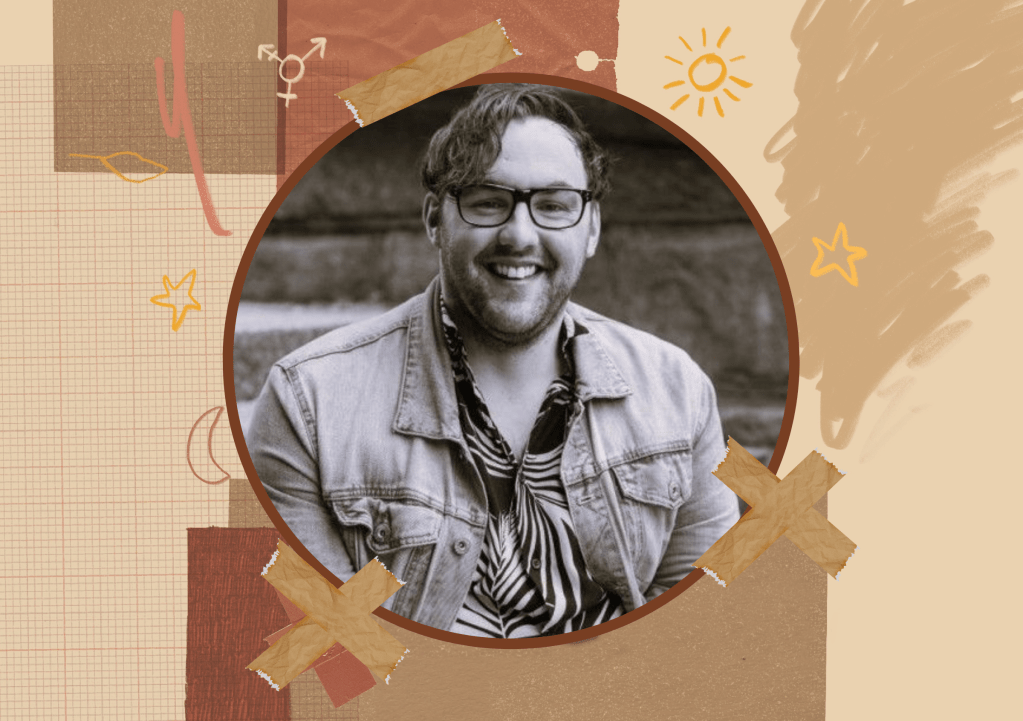
INDIGO: The guest for today’s episode is Michael Lee Richardson, a writer and filmmaker based in Glasgow. They have written for TV and films such as Who I Am Now, directed by our previously interviewee Jack Gossens, and My Loneliness Is Killing Me, which won the BAFTA Awards in 2018. Michael’s first funded short film as a director, Just Jackie, has recently entered the film festival circuit.
[upbeat drum based song]
LEO: This is Changing the Frame.
[upbeat drum based song fades]
INDIGO: Hi Michael!
MICHAEL: Hi!
INDIGO: Thank you so much for joining us today. Would you like to start by telling us about yourself, who you are and your background?
MICHAEL: Oh, wow. Okay. Yeah, I’ll try my best. Um, so I’m Michael Lee Richardson. I’m a writer and filmmaker and I live in Glasgow. Um, I’m from Northumberland in England, but I’ve lived in Scotland for nearly 20 years now. Um, I, um, probably the thing I’m best known for is a short film I wrote called My Loneliness Is Killing Me, which won a Scottish BAFTA in 2018 and was highly commended for the Iris Prize in 2019. Um, but since then I, I write for TV and film. I’ve made a couple of shorts and I’ve just directed my first short as well.
LEO: Wow. Congratulations on the BAFTA…
MICHAEL: Thank you.
LEO: …And on the exciting work!
MICHAEL: Oh, thank you.
LEO: Um, what made you pursue a career in the film industries?
MICHAEL: Um, I think, I think a lot of people, like a lot of people’s story is that they’ve been writing ever since they could hold that, hold a pen, but that’s not my story. I didn’t write my first script until I was 25. I’d always been, like, interested in film and TV particularly, to be honest with you. But, um, never, and I knew that people wrote it, but it felt sort of abstract and I didn’t sort of know that you could do that. Um, and I, so I said, I, I, I studied English at University and then, I think because I’m from a working class background, the only people I knew who had English degrees were English teachers. So I went and trained to be an English teacher for a year as well and taught for three months, said goodbye to my kids at Christmas and it was a goodbye and I am never going to see you again because I hate this and this is not what I want for my life. So I feel like as a writer, I got like my B career out of the road, my like backup career out of the way, um, very quickly. And from like after, after that experience, I just, I wrote my first script for a BBC Writers Room competition. It was for Scottish sitcoms. And the script that I wrote wasn’t a sitcom, but it was very in that sort of realm of like, write what you know. And like, what I knew was like, being queer and going out all the time when I was like 25. Um, so I wrote a script about a bunch of queers who go out all the time. And I got some really nice feedback from someone within BBC’s Writers Room. Went in and had a meeting and she encouraged me to keep writing and, and that’s kind of what I did. And I think coming out directing as well has been the same cause I think, I don’t know what it is, I don’t know if it’s like a like a weird patriarchal thing or something but like I, I think I was sort of, I felt like you had to go to like director school or something or like somebody had to like tell you you could be a director and then I was like oh no you can just actually do this if you want and give it a go. Um. And, uh, yeah, so that’s, that’s been my experience anyway.
LEO: Nice, I agree with that. I feel like these things are a bit of a practice and you have to train them like a muscle and people don’t believe that oftentimes, like you have to go to like school or something to be able to start getting involved in this when in reality you can just start small and keep building, which is, yeah, really cool to hear that perspective from your side. I wanted to ask how you find writing from TV and writing for film, and if they’re like the same or if they differ, what kind of experience is it working in both?
MICHAEL: They’ve been, they are interesting, because I’d always done TV, I’d always been pursuing TV. TV is the, the sort of medium that I like, like I probably watch more TV than I do films. I think TV is much more dialogue led, as a sort of generalisation, um, TV is much more dialogue led and can be more character led and it means you can sort of sit with character and let things grow a bit more, which is kind of one of the things that I like about it. Film is much more visual and it’s much more about like a, a sort of a visual sense of a world and I think less about dialogue actually, but, um. In this, this sort of era that we’re in, I think the lines between the two are becoming more and more blurred anyway, and yeah, so, but I also feel like I learn, I bring a lot from the other one when I go to the other one, like, I think my TV work has been like much improved after having done film and particularly having done short film, and I think my, my film work is better because I have like a sort of understanding and a grounding in story that sometimes people coming at film like writing film as a director, sometimes people don’t necessarily have. Um, so I think it all feeds into each other in a nice, in a nice way.
INDIGO: Yeah. And, um, going into like specific films that you’ve written, we interviewed Jack Gossens, um…
MICHAEL: Yes!
INDIGO: …a few episodes ago, and we talked about the film Who I Am Now, that you wrote. And we talked about that in particular, like the, the, directing side of it with Jack, but we would love to know about the script.
MICHAEL: Yeah.
INDIGO: Because the stories that we see on screen kind of reflects the lives of Adam and Talisa in a way. Um, how, how do you approach writing from this biographical perspective, um, to include in a short film.
MICHAEL: I think that was a very interesting one and it was an interesting, I can’t remember whether Jack talked about this or not, but, um, it was something that, I think in short film this sort of thing doesn’t happen very often, but, um, it was a project that Adam Kashmiri, who’s the main, uh, plays a main part in the film, um, had been working on with another filmmaker called Zan, um, who was a friend of Reece Cargan, the producer. Um, and Zan died pretty sort of in a pretty horrible circumstances. And one of the things that Reece wanted to do was to keep some of Zan’s projects going and approached me about working on the script with Adam, um, from Zan’s original ideas, um, and approached Jack about directing it. Um, so it kind of came together in a way that I’ve never worked before, and it felt really collaborative in a nice way. I had lots of conversations with Adam. Because, because I think with that film it was about taking the original idea that Zan and Adam had had, and working with Adam to write something that he wanted to play. But Adam has also been, um, he’s had a play made about specifically his life and that’s not what this thing is. Like, there’s some biographical detail that’s, that’s his, um, but also that a lot of it is sort of completely fictional. So it was interesting to kind of, to kind of, uh, work with him in that way. And then I kind of pulled in the other story, character’s called Denise, played by Talisa Garcia. I pulled in the other story as like a sort of counterpart to Adam’s story in that film. Uh, and part of that is because, like, increasingly… Actually, I write a lot of, a lot of my stuff that I write, well everything I write is queer, I have lots of thoughts on this. Everything I write is queer because it’s through a queer lens and I’m queer, so it’s always got a queer sensibility even if I’m writing about straight people. But in my, like, explicitly queer stuff, I’m less interested in writing about romantic relationships and more interested in writing about friendships and, like, found family and… because that’s, that’s, I think something that we don’t often see on screen. Like, I think when queer lives are depicted on screen, it’s often through a romantic lens and I don’t, you know, it’s sort of less interesting to me than the community and friendships and, and, and some of the sort of interesting, weird, sticky stuff that comes out of that. So that was a really odd phrase for it. But you know what I mean.
INDIGO: I think it’s very interesting to, yeah, to, to talk about those connections, because there are so many films out there of queer relationships. So it’s very interesting to, to hear that you’re really interested in, like, friendships and, you know, how the community comes together. I think it’s really beautiful.
MICHAEL: Yeah, and I think, like, a lot of my, like, sort of, before I I, I was working as, I was sort of starting as a writer in TV, uh, and then I went away and had like two other careers, I feel. Um, obviously this, in a queer temporality way, all of these things were happening, happening at the same time, but when you tell the story, you have to, like, make it make sense. Um, but I, I sort of, as I was starting as a writer I went away and had these two other careers and one of them was in like, I guess like arts development, like I worked for film festivals and for like, um, venues and stuff like that, um, and just did a bit of everything. Um, but I also worked as an LGBT youth worker for 10 years, um, and worked with a lot of queer communities and particularly trans communities, and I think that informs the sort of stuff that I write. Like, I think I’m interested in the way queer people come together and, and sometimes the way queer people blow each other apart.
LEO: I find that so fascinating as well. I think a good example of this is the film you wrote, uh, a short drama called My Loneliness Is Killing Me, which sets up as a romantic film, perhaps, like, two queer men are gonna hook up and then they actually end up kind of becoming friends and forming kinship instead of, like, just relying on the sexual romantic connection. I thought it was very brilliant.
MICHAEL: Thank you.
LEO: And yeah, I was going to ask you why you feel it’s important to tell this story, but obviously like we’re talking about it if you want to develop more, um, on how you approached creating these two characters and setting up this story and making that twist to turn the story around.
MICHAEL: Yeah, so, so when I’m writing like my own ideas, everything starts as one image and it’s sometimes it’s like it might be an image that I’ve seen or an image that I’ve like, like something that I’ve seen in real life and like Loneliness came from being a, so I used to work as a youth worker, so I’d work in evenings and I’d be walking home from work. And it was one night when I was walking home and I saw this person, um, sort of around where a lot of the gay venues are in Glasgow, in Glasgow. And they were like really dressed up, really flamboyantly, like really kind of big, um, big white coat and stuff like that, uh, big white fur coat. Um, but they looked really sad and I was like, oh God, what is that? Like, like, oh, and then that, like as a writer, that’s where you become a bit ghoulish because you start to go like, “who’s that person? And where have they been? And what, what, what did they think was going to happen and what actually happened? And why are they sad?” Like, so that’s sort of the genesis of that film came from that, but the other thing that sort of informed it, and this is like a, I feel a bit odd telling this story sometimes, but, um, it was, it was me and my friend were like talking about the hookup that he’d had with a guy where the guy came to the door, came to the door of his flat. He opened the door and the guy just looked at him and said, “no”, and walked away. And we were like, we’re obviously like pissing ourselves about this. Like, cause like, oh my God, like what a fucking psychopath thing to do. But then afterwards I was like, actually what a fucking psychopath thing to do, like what, what, what are we doing to each other when we do these things? Like, where are we at as a culture? And why are we, why are we doing these things to each other? Um, so a lot of the, like, genesis of that film came from there. In terms of creating those characters, like, Elliot came pretty easily, to be honest with you. Like, that’s a character, like, maybe in a slightly, um, interesting way. It’s a character where you cast a really attractive young person to play yourself, um, but Elliot is the character that I sort of obviously, maybe, is much closer to my own experience, I guess. Um, kind of, kind of gay slacker, queer slacker, non-binary slacker. And it’s interesting how people interpret that character as well. But, uh, who’s sort of out all the time and engaging in hookup culture and stuff like that. Jack, as a character when I first started writing it, I think, I think there was part of me, and it’s not a very sort of admirable part, but there was part of me that was like, I’m gonna write this sort of hyper masculine guy that’s only into masc for masc kind of hookups, and um, he’s all these things that I hate, and I’m gonna really freaking pin it on all these guys to tell them what’s what. And then like, as I like, started to, like, pull that character apart. I was like, actually, there’s probably more of me in that character than I thought, because that character is, like, he’s, he’s totally, it’s a sort of there but for the grace of God kind of character, because it’s like, actually, I think a lot of us are, a lot of us are affected by that culture in different ways. And I think this character, when I was like putting him together, I was like, and this is, this is all stuff that’s not in the film. So I feel slightly weird saying it because I think, like, people should approach a film for what’s actually there, not for what the writer or filmmaker is telling you. But like, that character, when I was putting him together, I was like, he’s working class, he used to be fat, uh, he’s now married, he’s grown up in a culture that told him being gay was disgusting, and now he can get married and he feels like he has to. And it’s like this, I do think there’s like, very, very weird things happened to a generation of queer people that, like, the changes that have happened in my lifetime are so strange when you look at it and of course that’s having an effect on people so I felt much more empathy for that character and people like that after I’d written it because like God, they’re affected by all the same stuff as us just in different ways. Yeah, yeah.
LEO: That’s very cool. I enjoyed, in the film, the violence with which they first meet each other, like, there’s a sense of, like, urgency and speed and, like, we need to do this and we need to do it now and then we’re going to leave each other. And I enjoyed the turn it took to, towards gentleness and care. Um, I think that resonates a lot with what you were saying about finding kinship in the community. So, it’s a film I really liked. It’s, I think it was very well written. I just wanted to say that.
MICHAEL: Thank you, thank you. Um, it’s a, it’s a piece of work that I’m really proud of. I think there’s a lot in there that I like and it says a lot that I want to say, I think, about that film.
INDIGO: I really liked the film. I thought the characters were really multifaceted in so many ways and yeah, it was a really good film and I was wondering if we could talk about another film, which is completely opposite in some senses, um, Just Jackie is a really cute and it’s like fairytale-like. I loved it!
MICHAEL: Oh, thank you, thank you.
INDIGO: And from an interview that I read that you, you did. You said that after reading the script, you knew where you wanted to take it into, like, where you wanted to take this, like, 90s bubblegum world with this candy coloured palette. So what was the process of bringing this world to life as a director?
MICHAEL: It’s been really interesting. It’s, it’s, I feel like, I feel really lucky in a lot of ways, because I think I’ve had sort of a slightly easy ride of it as a first time director. Um, I directed like a couple of sort of wee things before. And I’d also directed, co- directed with Garry Mac, this little dance film a couple of years ago for BBC Loop with dancers from Vogue Scotland. But this was the first time I’d ever done like narrative film, and, and the first time I’d had like anything approaching the budget Short Circuit films have. When I read the script that Ali sent, uh, Ali Taylor, the writer, sent through the script, and I read it, and there’s just this, there’s this moment in the film, and I saw it, like, while I was reading it, of, um, the two kids kind of jumping on trampolines, either side of the fence. And I was like, I know what that looks like, and that’s what sort of informed the look of the film. I was like, I know that I’ll have like a beautiful blue sky. I mean, you know, you’re filming a film in Scotland in March, so it’s probably not, but in the fantasy version of this, I’ll have a beautiful blue sky. And I know it’s about this relationship between these two kids. And actually, maybe this, I know I’m just, I’m blowing smoke here, but actually, when I, when we pitched that film, or we like pitched for the funding, that was one of the questions that someone on the panel had. It was like that, it’s very different to the work that I’ve done before and like, how does it fit in with my stuff? But I think, I don’t think it is. It’s still about, it’s still that core theme of, like, queer friendship, I think. And that core theme of, like, outsiders coming in. And there are some, like, visual stuff in there that I think is sort of carried over from, from things that I’ve worked on. But that, that like nineties bubblegum aesthetic. I mean, maybe this is not the right way to think of it, but I just think that’s cool, like, I just think that looks good. Um, so it’s like, I want to make a film that looks like that. So it was like looking at all like, I don’t know, Clarissa explains it all and like, um, the babysitter’s club and stuff like that and being like, this is what this film would look like. Um.
INDIGO: I know you talked a little bit about the process of pitching the film, but what was it like applying for Short Circuit and working with them?
MICHAEL: Again, I feel like a bit of a sort of fraud in talking about this because Ali approached me with the idea, like literally the day before the Short Circuit deadline. So I like pulled together, um, and I’m not, I’m not like a, I’m not like a Canva queen, like I’m not very good at that sort of thing. But I, uh, I pulled together like a, a sort of pitch deck thing with all of my like visual references and stuff. And then we put the application in and we got through to the, like, next round, and then there was some sort of development stuff on the script and on the, like, uh, like, we talked to a bunch of people about things, and we, also for that film particularly, even in the development stage, we, we worked with a casting director, um, Anna Dawson, because, sort of, one of the things that I was very conscious of with that film was, like, it’s a very particular cast, that young lead, like, you need uh, young actor that’s going to be comfortable being that queenie, um, but you also need a young actor that’s going to be able to carry a film. Um, and, and I think we were really lucky in finding, uh, Josh who plays Jackie. And I think, so that was, that was kind of some of the stuff we’d put around the film before we pitched it. And I think we were just, I don’t know what it was. You sometimes, you know, you sometimes get these things, then you, like, look back at it and you’re like, what was it that took it over the edge? But I think it’s just, it’s a really nice story and a really good script and I think we sort of pitched it compellingly. I, I also think in a lot of ways, actually a script like this, I think Ali was bringing lots of kind of lived experience to it as a writer and I having, having been that kid, to be honest with you, but also having worked in, like, as an LGBT youth worker for 10 years, like, I, I, I know that world, and I also, I was very conscious when we were pitching it about, like, this is not an issues film, like, there’s a space for issues led films for younger audiences, but this is not that, this is just about friendship, and this is just a nice story. It’s about, for me, I think there’s so many conversations about like trans children or like gender non-conforming children or like, and nobody is actually talking to those children or like putting a face to those children. So for me, that film is about bringing light not heaped to a conversation that’s very, very, uh, burning everybody’s house down at the moment, I guess. Yes.
INDIGO: That’s why I loved the film. I think it was very different than anything I’ve seen before of like, cause usually anything about gender non-conforming children, it’s usually like a big drama and, you know, like the parents divorce each other because one agrees with the children. It’s usually like really big and I really liked the story because it was very chill and lovely and it was just about the kids having fun, you know, and yeah, and it was really good to see that they actually had a friend as well in the film at the end of it, you know, they weren’t isolated. And yeah, it was, it was. really cute, I think.
MICHAEL: I think it’s a cute little film. I think what’s been interesting, so we’re in our sort of festivals submission phase, I think, at the minute, and we’ve showed it to a few people, and I think queer audiences get that part of it, whereas I think cis audiences, maybe, or non-queer people approach it, and they’re looking for that drama. They’re looking for, like, the dramatic turn to happen and for things to go really horrible. And I’m like, no, that’s just not what this was meant to be. Yeah.
INDIGO: And um, with this being your first directing project. I know you’ve directed a few projects before, but with this being like, like you were saying about the, having a budget and, you know, having a big team, what was the process like of directing? And you talked about the cast as well. And I thought it was a really good cast. How was directing children?
MICHAEL: Oh my gosh.
INDIGO: There’s so many things, like, so many aspects to it.
MICHAEL: Um, that was the, I think the working with kids was the thing I was most nervous about in lots of ways before doing this. And I, I don’t know why, because I kept, like, articulating it to people as like, I’ve worked as a youth worker for 10 years, like I know how to work with kids and I never ever, I don’t even think about that now. Like, I do lots of work in schools and stuff like that. And I’m like, it doesn’t even occur to me to be worried about it anyway. But, um, as soon as you call them actors, I was, like, freaked out by them. Um, I think one of the things that I really found, and I think I did pull this from like youth work, was like working with those two young people, it was about all of the work we did before getting on set. We like met a couple of times, we did some rehearsals, we took them to like, there’s a sort of, part of the storyline is about trampolining in the film, even though, uh, for, Josh’s character, Jackie, there’s not actually that much of it. Um, we took them to, like, this trampoline park place in Glasgow and just, like, messed about for a bit. And I think that actually was important. Like, I think it was important for them to know each other and for them to, like, feel comfortable with me. And one of the things I found, actually, like, after directing it, I was like, my back is fucked, like, why do I feel, like, fucked up? And then I, like, realised, like, every photo of me, I’m, like, squatting down to talk to them, because, like, for when I’m talking to kids, I want to be on their level to talk to them. Um, so, yeah, that was, that was a revelation. But, um, I think another thing that was really, I was really lucky in, I was working with two producers, Reece Cargan and James Heath. Uh, Reece, who I’ve worked with a lot, he produced Who I Am Now and is producing my feature as well. But I, I was really lucky to work with them and to pull together an amazing crew of, like, people that I felt really comfortable with and that I felt really got it. And I, and I think a lot of people who I think I haven’t actually talked to them about this, but a lot of people who were enjoying working on something that was joyful and fun and like, you know, you could put the stupidest streamers and craziest lights on it because like, often my approach is like, let’s go over the top and once you get there, just keep going. Like, like when you feel like it’s too much, it’s just enough. So I think that was, that was what was, that was really nice about working on this film. Like it was, I was really lucky. I feel really lucky to have surrounded myself with good people. I mean, the other thing as well is, um, there was a couple of like, while we were filming it, Reece would like, give me a lift home and he’s like my emotional support producer, so it’s just been like. Here’s like 15 minutes worth of like the crazy that I’ve been keeping a lid on all day, um, for you to deal with. That’s yeah.
LEO: That is so sweet. I generally thought, I was really worried you were going to say that your back hurt after production because of, like, pirouettes done in the trampoline park. I don’t know why my brain…
MICHAEL: Oh my gosh.
LEO: …my brain just went there immediately when you were talking about the trampoline park and like just hanging out there getting to know the cast, getting like the cast to know each other and, yeah, I don’t know why.
MICHAEL: Well, we didn’t, we did have a moment actually, like we had, um, a trampoline that we set up and it was like Ali, so the other thing about this film that is slightly mad is Ali Taylor wrote it and we filmed it in her house, um, like with her kids and husband living there. So, it was like a real sort of bringing the circus to town for four days and I did feel a bit guilty sometimes. But um, so that Ali had a trampoline in her garden anyway, that she, that we were using in the film. So we put it in next door’s garden and set it all up. We had this like trampolining instructor guy to like come and safety test things and like warm the, so that the leads, girl is, she’s a gymnast first and is, is getting into acting. Um, so she, he was like warming her up and stuff, and then he got on the trampoline and did a couple of jumps and the legs just went underneath and it, like, spun across the garden. And I was like, oh God, what are we going to do? We had to, like, find another trampoline at one point. It was a real kind of, um, mission. But that was it, that was the only, like, point where I was like, okay, this is actually all going to fall apart.
LEO: Thank goodness you had, like, a specialist on trampolining for that part.
MICHAEL: Yes, yes. I mean, God, I do think about that. What if we put that wee girl on there?
LEO: The dangerous, dangerous art of making films, truly.
MICHAEL: Yes, yes. Um, Yeah, yeah. But it was a lot of fun.
LEO: I enjoyed just Jackie a lot. I really enjoyed the bit where Jackie is climbing over the fence and the shoes drop first, the, like, heels drop first. That made me smile so big. I was like, yes! An icon outfit moment, gorgeous! Loved it so much!
MICHAEL: Thank you. I love that bit. And it’s the bit that I think took the most convincing for most people. Because like, the way it was written in the script was very much like a stunt. Like, you saw all of that and it was like, no, no, we’ll just do it. It’s funny, yeah, if you just show, if people can fill in the blanks of what’s happening over the other side of that fence for themselves.
LEO: I thought it was very brilliant.
MICHAEL: Thank you.
LEO: Also, because you’ve been writing films, but you’ve written about other stuff and for other mediums as well, I was curious about a writing workshop course thing that you’ve developed recently. It’s called the Writing Your Short Film and it’s a practical online course where you were introducing participants to the world of short film and helping them develop their first short film script draft. Why did you decide to set up something like this?
MICHAEL: Um, I, so I’ve done, I think two reasons, like I love short film, like I love short film as a medium in itself, as an art form in and of itself, like not necessarily as “I’m making this because I want to make a feature” or “I’m making this because I want to you know, as like a”, I think sometimes people could treat it as like a first step. And I actually love short film because I love short film, I like that storytelling. And the other thing that I’ve done lots of teaching, like for the Conservatoire, for GCU and like lots of writing workshops and stuff over the years. And this course was about, like, bringing all of those things together and putting it all in one place and having it as as a course. And it’s been like a lot of fun actually. What has been interesting about this course, um, is that I think because of the people that I know and the people that were shook. So I only like, I like advertised it on Instagram and stuff for people to, to come and join in. I didn’t put it anywhere else. So, like, people I know shared it, like, SQIFF shared it, and, like, a few of my friends have shared it and stuff. And, like, the whole course is Girls, Gays, and Theys. Like, I do, I am teaching sometimes, like, imagine if a straight man arrived here. What on earth? How would I explain any of this? Because I teach, I teach, uh, like three and five act structure through clips from reality TV shows.
LEO: Nice.
MICHAEL: I’ve got two that I love using, which is the David’s Dead clip from Big Brother, where um, it’s like a big confusing thing where Angie Bowie on the day that David Bowie died, gets told that he’s died, comes into the house and says, David’s dead, but there’s a housemate called David Gest as well. And they all think it’s him. And it’s like a big, like, it’s like, you couldn’t write that. It’s just brilliant. And then I use, like, clips from America’s Top Model, like Project Runway and stuff. Because, because everything is in three and five act structure, actually, like we naturally tell stories in structured ways. But once you look at that and point it out, it becomes easier to teach. Like, here’s how you do it in your film, or here’s how you might break down the story you’ve come with. And the stories that people have, have, like, I’m starting to see first drafts of scripts now from people. And I’m just, it would just make an amazing program, at like a film festival or something that just great, great fun ideas, and lots of queer ones, actually. Lots, lots and lots of queer ideas.
LEO: That’s very exciting. What is the outline, the outline of the course like?
MICHAEL: Um, so we just do, like, week by week, we do a little, we do something, we do, like, character, we do structure, uh, and then every week there’s a, there’s a, uh, we, like, start with ideas generation as well, because some people will come with an idea, um, but also, um, I’ve got like a lot of different exercises I’ll use for just pulling stuff out and playing with it. And every week I’ll set, like, a task and I’m always like, like, I’m not, I’m teaching you, but I’m not a teacher. Like, I’m not going to chase you for the task. You can send it to me if you want. The only way I can respond to it. is if you send it to me, but I’m not going to chase, I’m not going to look for it. Because, also because like people are doing other stuff, like people from all across different mediums and stuff have joined, but um, we, yeah, we do a task every week and that sort of builds up to writing a script or a first draft of a script. We go through, like, treatment stage and, like, pitch decks and, and looking at stuff like that.
LEO: That’s very cool. I, I’m asking for the sake of the podcast and my journalistic, journalistic instincts and everything else, but also very selfishly, like, is it going to be reopened soon? Or what’s going to happen? Are you going to run it again?
MICHAEL: I’m hoping to run it again, uh, next year. I think in March, but I’m not sure.
I’m in that very freelance writery space of like, I know there’s stuff happening next year, but I don’t know when, and nobody seems to want to tell me so like once I know what my next year looks like.
LEO: That’s fair. I am setting notifications for your Instagram so I can stay alert. No, that’s very exciting. I think the structure of having check-ins weekly really helps with progressing stuff and like having external motivators is really good for project building, because you can have ideas and if you’re not doing anything about them or being held accountable, where are they going to go? They’re going to go nowhere. So, yeah.
MICHAEL: And I think also, like, I think what’s been nice about that course and what is nice about doing stuff in that kind of space is that coming week by week and hearing people’s ideas and like seeing that people are excited about your ideas and like, which I think is why having a group, not like minded, it’s not the right word, but having a group that maybe have similar life experiences is really, really useful. Like there’s a, there’s a, a lot of queers in that group. So there’s no, you have to explain stuff. Um, so, um, yeah, I think, I think, like, having those check-ins is really important, but also having the sort of shared, shared goals of doing something and the excitement of working with people.
Leo: Nice. Um, you were mentioning that you’ve done workshops before as well. And I found out that you were delivering a queer writing group with open book reading and it was taking place in Category Is, which is the queer bookshop of Glasgow Southside. Would you like to share about this group and what kind of different vibe there was to it. What was the goal and what were you up to with it?
MICHAEL: Yeah, we have, um, so it’s a monthly group and very fortunate to have money to run it like in 2024 as well. So it’s a monthly group where we, we meet on the last Wednesday of every month at Category Is in a very queer way, you can sign up to come to the group, but nobody who sign up, signs up ever comes. But every, every time I run it, there are at least 10 people.
LEO: Nice.
MICHAEL: And obviously in a very queer way, um, it starts at six o’clock, but there’s still people turning up at like quarter to seven. Um, so yeah, it’s a monthly group. We, so the open book. The structure of open book sessions are that we read some stuff in the sessions. Um, we have a little chat about it and then we do some writing based on that. And it’s always a case of like, I always tell people I’m not looking for Shakespeare. Um, um, um, it’s just about getting something started and getting something on the page. Like, I don’t think people are ever going to leave that group, I mean, people have actually written some really amazing stuff in those sessions, but the point is not to write the best poem you’ve ever written in the like hour and a half that we’re together. But we, um, open book have like a theme every month and some of them are quite sort of esoteric or kind of, um, the one this month was, uh, I think it was the sea or it was like the ocean or something like that. So I, I like, very cheekily used some Ocean Vuong for a form that had nothing to do with the sea. But I was like, they’re called Ocean.
LEO: Yeah, let’s go.
MICHAEL: Um, so, uh, yeah, we read, in my, in my group anyway, we read all queer writers and I usually try and do at least one Scottish queer writer in every, every group and we just have a little chat and do some writing. It’s nice. Um, and actually in that last session, like, we, the writing that came out of that session was just sort of crazy, actually. It was so good. Like, like there’s one woman that wrote, like, a poem that all rhymed, and it was, like, a sort of dark children’s poem about, like, a dream, like, dark, twisted children’s poem that all rhymed. And I was like, I can’t even do that in, like, like that, that would take me a long time. I mean, like, we had seven minutes to do this. So yeah, it’s a nice little space. And I love Category Is.
LEO: So good.
INDIGO: Yeah, it’s a really, a really lovely venue. I really like it there. Um, and as, as you mentioned, like, you write not only for film and TV, but you also write for radio, and you’ve published poetry, prose, children’s non-fiction. Would you like to develop more on like this type of writing, um, and how it’s different from writing for a film or TV?
MICHAEL: It’s definitely something I want to do more of. I’m writing a book at the minute which I’ve, has not had as much attention as I would have liked it to do because, I think the thing with film and TV is like, I find with, like, writing prose and stuff like that, you have to be quite self motivated. Whereas in film and TV, like, you have to be self motivated, but then once you’re working with someone, everything takes ages to get decisions. But then when there’s been a decision, it’s like, okay, so we need the script in like 24 hours or like everything’s going to fall apart, um, which actually as somebody who, I don’t know, I think I need a bit of that sometimes, like I think I need a bit of, um, fire underneath me. So I’m writing a book at the minute that’s based on a short story I wrote for Juno Dawson’s anthology, Proud. It’s like a young adult anthology about queer football team, like young people on a queer football team. Again, it’s themes of friendship, also themes of football, which is not something that I’m actually that interested in, but keep coming back to it for some reason. Um, yeah, so I’m writing that and I’m also, I also had this moment, I think sort of during the year 2023, I had this moment where I was like working on so much stuff, like in film and TV, that was like, in a like, in a, I was very lucky to be working on so many different things at once, but I was also bored of everything I was working on. I was like, all of this stuff has been around for so long, and it’s just, just, I have nothing left to say, nothing left to give it. And I did this, I did this event that was totally like, separate from writing in, uh, Brighton. I was put up in a hotel for the night, and while I was in the hotel, just started writing something that just came quite quickly, sort of this character voice, like a jaded old drag queen character who’d had a past and it was about their past basically, um, and it’s a horror, like a horror, horror idea. So I’m working on that when I’ve got time to at the minute and I feel excited about it. So, yeah, it’s definitely, yeah, I like writing in different mediums. I sometimes think that you should probably pick one at some point and, like, actually make a career out of it instead of just being like, I’m a novelist now, I write poems now.
LEO: I love a good multifaceted artist, what can I say? It’s always good to have variety and range. Um, yeah. It’s good. This is maybe a bit of a more like “ah” question, but we’re very interested in funding opportunities and how people access them. Um, so we would like to know what process of applying for funding and screenwriting you’ve found in Scotland and UK-wide potentially.
MICHAEL: Um, yeah, I think that’s interesting. I’ve listened to a lot of this podcast, and then I listened to quite a few of them at once. Um, I think there’s something really nice about it, because I listen to a lot of podcasts. I’m not just blowing smoke here, but like, I listen to a lot of podcasts that are like, on a very particular frequency, and it’s often like, gay Americans talking about pop culture, which I like, but like, it’s, it’s, there’s a lot of yelling, and I think this podcast is like, nice and gentle, but introspective.
LEO: That’s very kind, thank you.
MICHAEL: It has a different tone that I really appreciate. Um, and you talk about funding a lot on this podcast. It feels like a real kind of part of the project, which I think is interesting because nobody else does. In terms of funding, I think one of the places where I’m quite lucky, maybe, again, or one of the things that’s quite useful is I used to work, when I worked in Arts Development, I worked with a couple of Creative Scotland grants that were about, I did one for LGBT History Month, the Cultural Commissions Project, um, where we commission a piece of, at least one piece of work every year that spoke to the themes of LGBT history from a queer artist. Um, and then I think like one of the, one of the really big things that’s come out of that is Love Song to Lavender Menace, um, James Ley’s play, which is now being developed as a film. So, I feel like I’ve, I’ve been on the other side of that. And I also read scripts for people, like for a couple of different production companies. So I’ve been on the other side of that as well. And I think I’ve seen what really works for me and sort of seen what people are looking for and what people are reacting to. So, sometimes I think I’m bringing some of that when I’m like applying for funding, but I have been very lucky, so I don’t know how much insight I’ve got into it because I applied for SFTN funding once and I got it, and I applied for Short Circuit funding once and I got it. So I don’t, I don’t know, I don’t quite know what that is like that, but I think sometimes it’s just about like committing to a project that you really believe in, but, but you have to know how to tell people about that project. I think sometimes where things slip is like, and I think I’ve, I know how to sort of see this now sometimes, is like, I can see when a writer has got an amazing idea, but it’s just not quite there on the page. Like I know, like there’s so many ideas I’ll see, and I’m like, if you could just talk to this writer for like half an hour, this would be completely illuminated, but it’s not there, and I think you just have to make sure it’s there, like, even if it’s actually just spelling it out sometimes. But yeah, I don’t know, I think I’ve just been quite lucky.
INDIGO: Yeah, I find it interesting as well to talk about funding. I think we always ask about it because I don’t know. It doesn’t seem to, there doesn’t seem to be loads of opportunities for trans and non-binary people. So when we get to talk to people on the podcast, it’s quite nice to hear about the opportunities that they’ve had. So, like, other people can go and look for those specific places that they’ve applied for funding before, and, and it’s resource sharing in a way. I mean, that’s how I got to know about loads of funding that I applied for before, you know, I find it so fun to do that. I think,
MICHAEL: I think, um, like something actually does make me think about that, like for quite a while on a few different projects that I was working on. I like, I was like, I always said it as like a bit, but I think it was actually true. Um, like that my artistic practice was taking money from public bodies and giving it to queer people. Because sometimes actually, I think, what I’ve done in my practice is, like, been, been the middle person, like, be the person who can translate, like, like, because, because I think, like, a big massive public body, not naming any names, but you know, the big funding bodies that we’ve got here in Scotland for creative people. Um, uh, it, it is probably hard for them to see, like, some of these sort of, some of the sort of queerer artists are doing and to appreciate because I mean I think a big part of like often those, those applications is like how many people are you going to reach, like how many people are going to come to this and it’s like actually for what I’m doing maybe four people will come if we’re doing like a, a creative event in the highlands or something like that, like, but those, for those four people, it might be the most important thing they’ve ever fucking been to, so like, we do need to do this. Um, and I think sometimes it’s just about like, translating that, and actually sometimes just spelling that out is really important. Because, because, because if you don’t explain that to people, then they won’t ever know. I think with a lot of, like, queer stuff, like, I think when you’ve been in queer community for a while, you can, like, get so used to it. Like, there are points now in my life where I, like, go and, like, like, into straight worlds, and I’m like, “oh my fucking God, I forgot about this.” Like, I didn’t know that you all just don’t know about any of this and that this is the way you talk about stuff. But, um, I, I think so, you know, I think often, like, people don’t know about things that you have to kind of spell out the importance of them or else they’ll not get it. But I also think, like, to say that, uh, not to, like, talk about individuals, but, um, I do think within, like, particularly, like, Creative Scotland and stuff like that, there are, like, amazing queer people. There are actually quite a lot of really good queer artists working in Creative Scotland. So like, and I think increasingly so. So, I think the, the, the walls between the worlds are maybe becoming a little thinner than they used to be. Yes.
INDIGO: I feel like that’s really good advice, what you just said about the, like spelling out those things to them. Cause sometimes they, they don’t really know the full picture, even though you’re like in your head and you know about queer people living in the rural areas of Scotland and then, but, but you have to explain that to the funders in a way that they understand as well. So yeah, that’s really good advice.
MICHAEL: I think I’ve also like been on the other side of that quite recently, actually. I did an event in Inverness, like it was, it was a queer event. It was about queer film and it wasn’t I mean, there was probably about 20 people there, which is actually, for me…
INDIGO: A lot.
MICHAEL: It was a fucking rainy day in Inverness, and it was like about 20 young people had come to it. And I was like, that’s actually pretty impressive. Like, I’m not like, but the person that was running the event, I think was expecting that like a hundred people would turn up and like kept sort of apologising to me. And I was like, no, no, like, I’m actually talking about quite on a rainy Saturday morning, and this is fine. And yeah, so I, I think, like, you just, yeah, it’s about those expectations and, and, and letting people know what that means. Because even in that little group, there was, like, people that, like, I mean, just on, like, a low level, there was people there that, like, obviously loved talking about queer film, and, like, had just didn’t necessarily have the opportunity to do that, like, in their school or in their college or whatever, like, because there’s just there’s nobody else to talk to about it because, like, you’ve got the like the, the, the minority of being a queer person but then you’ve also got the minority of being a person who’s like really into film in like a weird way. In a way that it’s maybe hard for some people to get. Yeah.
INDIGO: Yeah. I’ve done an event in Inverness and yeah, 20 people, I think it’s great.
MICHAEL: Pretty good!
INDIGO: Yeah, for sure. This is a completely different question, but, um, are there any fun anecdotes that you have from your work in writing, producing, directing, everything?
MICHAEL: The one that comes to mind, and I don’t know how fun it is, but it just makes me laugh. Like I do, sometimes I do poetry, right? Like I do, I write poetry and, and I’ve done like events before. And one of the poems that I do is called, I don’t know, I can’t even remember what the number is, but it’s like 59 lines read by the actor Harry Styles in the film Dunkirk, where I just read out lines that Harry Styles said in Dunkirk, which I think is hilarious.
INDIGO: I love that.
MICHAEL: See! I did it at like a, it was like a Scottish book trust event before that was quite sort of high minded. And I’m like, whenever I do stuff like that, I’m always like, I’ll be the turn, I’ll be the one, the funny one that, like, comes and does a few funny little things that will just be something different to what, like, sort of serious stuff people are doing. But, um, I did that poem. I mean, I’m calling it a poem. It’s just like things that I’ve printed out off the internet. I did that and one woman laughed and clapped and I’m like, that woman is the perfect audience. That’s, to me, I know she’s had a good time and that’s all I wanted to know.
LEO: You made that woman’s day and that’s all that matters.
MICHAEL: Good! Yeah, I don’t know, I don’t know if I do have any anecdotes from like, I mean, I think, I think because like most of my stuff is writing, like, I think screenwriting and writing for TV particularly actually, like, I think we can have this idea of writing as quite a lonely profession and, like, sometimes it is. Writing for TV I think one of the things I like about it is there is a lot of collaboration, uh, so I do a lot of writer’s rooms, um, with people. Oh, I feel like all my anecdotes are like, I don’t know if I’m legally allowed to tell them.
LEO: I signed an NDA. I can’t tell you about the fun stuff.
MICHAEL: I, I, I have signed NDAs.
LEO: What would your dream project be if you had no time or money constraints?
MICHAEL: Oh my gosh, what would it be? What would it be? I think I find that a hard question to answer because I, I think of projects for audiences. Actually, I’m writing a feature at the minute, which I think certain will get made. I also feel like there are lots of challenges in it, in the type of film that I want to make at the level that I’m at. So, if I had a dream project, it would be to give that project the amount of money that I think it will actually need, not the amount of money that I think it will probably get. Just because it’s a British film, it’s a Scottish film, and it’s kind of a queer film, but people might not actually realise that, it’s a Trojan horse queer film. Yes, my feature which is about kind of pitching it as Billy Elliot, but if Billy Elliot was a witch, um, like it’s a queer, a little queer kids in Glasgow in the 70s finding out that his mum is a witch and so is he and using magic to fit in and realising that the real magic comes from being who you actually are. The sweet side of witches.
INDIGO: I love that!
MICHAEL: Uh, yeah. Yeah. So that’s, that’s kind of. Yeah, I, I, I just, I want it to look amazing and like the film in my head looks amazing and we’ve got amazing cast. I’ve got one specific person on my vision board that I do really want for that film. So yeah, if I had infinite money, I’d definitely be able to get her.
INDIGO: I love that. I’m very excited to watch it once it’s made.
MICHAEL: Thank you!
INDIGO: Um, what other creative practices are you interested in?
MICHAEL: Um, I don’t. Like, writing is always the core of it. I think, I always say, like, if I could actually, if I could write songs, I wouldn’t be doing any of this stuff. Like, that’s the absolute fantasy, is to be able to, like, sit at a piano and just be amazing at writing a song. But I think, like, but I think what I’m thinking about is I want to write a song like they write a song in a film, like, you know, when they start playing it and then everyone starts singing along, like they know the words, like, not, not like spending three weeks writing it. Um, I, like, I do think if I could write music, if I could play music, I would, I would, that would be what I would love to do. Like, I’m very interested in music, but I think, so I worked with a composer on Just Jackie and I did really find, I was like, she was amazing. And I knew what I wanted, but I found it, like, I just didn’t have the language to, like, there was a lot of, like, you see that bit where it went da da da da da da da da da? Could you make it, like, go da da da da da da da? Like, I don’t know. Could you put, like, a little spring in the step of that? Like, I just didn’t have the language to, like, say, like, this is great. This is what I want. Yeah, so music, I like visual, like, I just, I like, or like, just anything that people do I find interesting. What a weird, what a weird sentence to say.
LEO: No, I actually thought the soundtrack for Just Jackie was really excellent, like it really added to the tone of the film, so to hear that you were struggling to communicate with the person setting up the music and composing it, it’s very funny.
MICHAEL: Oh no, she was, she was great and she, she got it. But I just was so conscious of it, like, when I was talking to her, I was like, I do not know what I’m talking about here, so you will have to be very patient with me.
LEO: Maybe there’s a way to collaborate with musicians who are finding it hard to write lyrics. Because a lot of poets might actually, like, delve into songwriting, in the sense of, like, actually writing lyrics, and then Somebody else can provide the music for you.
MICHAEL: I’d like to, I’d like to eventually. I think there’s a musical in me at some point, but I don’t know.
LEO: I love musicals so much.
MICHAEL: I love musicals. I feel like it’s a, like a secret shame to like musicals, but I really like musicals.
LEO: A little like confession from before you like came in, but we were talking about Camp Rock before you came in.
MICHAEL: Oh right.
LEO: Yes, anyways.
MICHAEL: Oh wow, love Camp Rock.
LEO: Anyways, musicals, good. Um, what advice would you like to share for people who are just getting started in the film industries or in writing for script or for film, for TV?
MICHAEL: I would say give it a go, like, you don’t, you don’t need permission, but if you need permission, I’m giving you permission now. So give it a go. The big thing that I always think is like, you’ve got to have something to have something to work with, like, let it be, let it be shit a bit, and then like you can work on making it good. And then the other bit of advice I think is like, just find your people, like, find people that do what you do, find people that like what you like, find people that are gonna be like a support network for you through this, because it’s really important. Like, I think, I think that part is as important as the work itself, like the building community. It’s very important to me anyway, like I think you have to be in community with people.
INDIGO: And do you have any, I know you have loads of projects in the horizon, but like, do you want to talk about them?
MICHAEL: Yeah, I’ve got a few, like, I mean, sort of film and TV wise, I’ve got quite a few. I’m sitting on a lot of maybes at the minute and I know a lot of maybe eggs, and I know some of them are going to hatch. I don’t know where that metaphor comes from. But, um, I just, yeah, I’m sort of waiting. I think last year, particularly, I was in a position where I was working on, I think it was like five projects at the same time that all ended up needing, like, they basically all needed full time attention at the same time. And I was like, I do not want to get myself in this position again. So it’s like trying to be a bit more sort of methodical with things on this side of the year. The biggest, the big thing that I am able to talk about is I’m working on, about five years ago, I ran a project with Ryan Vance called the Queer Words Project Scotland. We did, uh, mentoring for, for five writers at that point. And then, we did an anthology with 404 Inc, um, called We Were Always Here. Um, we’ve just got funding from Creative Scotland to do, uh, a new version of that project which will be mentoring again and, uh, another anthology. Um, the mentoring this time, we’re kind of mentoring an anthology this time will be poetry prose, poetry sort of fiction prose, and not quite sure what to call it, but like memoir, creative nonfiction, like, like people talking about their lives. Um, and yeah, very excited to, to, to sort of dive into that.
INDIGO: That sounds amazing. Where, where can people apply?
MICHAEL: Um, so, um, I’m, uh, all of it is, we’re awful because we don’t have a website. All of the information is on Ryan’s website, which is www.ryanvance.co.uk. But if people, like, look at my Instagram, @hrfmichael, I’ll have a pinned post with all the information that people will need. Um, so there’ll be like a mentoring opportunity first, which closes in February. And then submissions for the anthology, which I think will be around April. If people have got stuff, if they’ve got time from listening to this, they’ll have time to actually write on, write their stuff.
LEO: We’ve made it to the last question.
MICHAEL: Yes.
LEO: I’m going to ask if you have any media recommendations for our audience and that could be podcasts, books, films, TV shows, video games, anything that you’ve enjoyed recently. It does not have to be queer, but it could be.
MICHAEL: I always love this part of the podcast.
LEO: So do I!
MICHAEL: Just like to, it’s where I get really nice recommendations from. The things that I probably recommend are like my two favourite books from 2023. Um, Patricia Wants to Cuddle by, she’s called Samantha Allen, um, she is a, she is a queer writer, um, it’s about the, the top four contestants on a bachelor style TV show who go to this island that used to be a lesbian commune, uh, and they’re being pursued by, I mean, spoiler alert, it’s on the cover, a Bigfoot, like a sort of sexy lady big brother, um, just hilarious, like two, two, um, big loves of mine, horror and reality TV colliding and just very, very funny, but also like, like there’s a, something that I really respond to in a lot of trans writing and particularly trans women’s writing is there’s like a glibness, like a glib tone, like a, a wry sense of humour sometimes that I just really love and it’s in that book particularly. Um, the other one is, um, the book is called Any Other City, she’s called Hazel Jane, I’m just, I’m just saying women’s names now, sorry. She wrote the book Little Blue Encyclopedia for Vivian, which is an amazing book and her new book is, uh, Any Other City. It’s like a fictional autobiography of this rock star, sort of pre and post fame and pre and post transition. Like, um, it’s like a dual timeline thing, um, of her living in this city that is, is, we don’t, know what city it is, um, living in the city and becoming part of a community and then going back to that city and seeing how it’s changed and, and what’s still there. Um, one of the things that I loved about that book and what I love about her writing in particular is that she writes about like art incredibly beautifully. She also mixes, like, real art, like, the, in this book, obviously, it’s about rock star, so there’s lots of, like, real songs and, like, real examples of music, but they’re all mixed in with, like, fake music and, and art that, not fake, but, like, like, music that is made up for the book and art that is made up for the book and, like, it’s so, I just, I, I kept finding myself, like, going to Google things and realising, actually, she’s just made this up and it’s almost sad because I want to listen to this song or look at this. Um, um, so yeah, I really liked that. And then I, I think my last recommendation is a podcast, um, uh, Like A Virgin podcast. It’s, uh, uh, the tagline is today’s, uh, “Yesterday’s Pop Culture with Today’s Hot Takes”. Rose Dommu and Fran Tirado, trans woman and a non-binary person, like, bringing this very queer millennial take to things that queer millennials grew up with. But, um, they have an episode about Harry Potter, which, like, as someone who loved Harry Potter and no longer loves Harry Potter, I found, like, quite cathartic to listen to. Like, it was actually quite, I find there’s in that podcast, like a glibness and like really funny takes on things, but also there’s like a recognition of stuff. Like, I think the thing that I respond to when I listened to that Harry Potter episode was like, they weren’t pretending that Harry Potter is shit and like, we were all stupid for liking it. Like, I think that’s something that goes missing when, when, when we talk about things from the past, which might now be problematic or be perceived problematic. Yeah. So that’s, that’s my recommendations.
INDIGO: I’m really excited to read Any Other City. I listened to, um, Hazel’s podcast, T4T.
MICHAEL: Ah, I didn’t know she had a podcast.
INDIGO: Yeah, and, uh.
LEO: Stop, is that the same person?
INDIGO: Yeah, and she talks about, with other trans writers, about their books, and she talks a lot about, um, Little Blue Encyclopedia, which I also need to read, but that’s, yeah. I’ve been trying to read, like, loads of trans feminine books recently, so those are really good recommendations.
MICHAEL: They’re my favourite, like, I never read, I feel very shamed because I never read books from the boys, I always read. There’s something about trans feminine novels particularly that has, that just, I, and not to be like, I was into this before it was cool. There was a point in time where literally there was about 10 novels by trans women published, and I could safely say I had read them all. And now we’re at a point in time where, like, sometimes I’ll go to Category Is and there’ll be, like, books on the shelves that I’ve never even heard of, and I’m like, pOh my God”, this is, we’re in a different time and this is really lovely. Um, so yeah, I do, I do love, I’m going to check out that podcast. See? Recommendations.
LEO: Have you read Lote by Shola von Reinhold? Because when you were talking about Any Other City inventing fictionalised rock and stuff, it made me think of it. I just finished Lotte. And it talks about the archive and queering the archive and finding black artists within the archive that have been erased. And a lot of people, a lot of people, maybe two or three people recommended it in our podcast as well. So I ended up reading it and it was very interesting doing what you were saying that you were doing as well. Like, going to Google and being like, this book, is it real? Is it made up? Is it part of the book? Is it like, what is happening with it? Can I find it somewhere? No, I can’t. Okay. Keep reading. Something else that gets mentioned. Can I find it? Can I see it? No, I can’t. Okay. Let’s keep going.
MICHAEL: Yes. I loved it. I love that book. Um, I think, we haven’t quite crossed the eyes and dotted the Ts all the other way around, but I think Shola is going to be one of the mentors on the Queer Words Project that I’m running. So, uh, yeah, I love her writing. I think she’s brilliant. And she’s actually incredibly cool. Like, I’ve seen her speak at things. It’s nice to have a cool person in Scotland. Um, yeah. Yeah.
LEO: That’s deeply exciting to me. Nice.
MICHAEL: Good. Good.
LEO: Well, thank you very much for joining us today. It’s been so nice to chat to you and hear about your practice.
MICHAEL: Thank you. It’s been so lovely to, to chat to you both, to be on a podcast that I actually really like and listen to.
LEO: Stop!
INDIGO: Thank you so much.
MICHAEL: Thank you, thank you.
[upbeat drum based song]
INDIGO: This was a great conversation with Michael. It was really special to have them join us as a podcast guest.
LEO: The Queer Words Project Scotland mentoring scheme will be opening a call for applications really soon. The aim of the mentoring scheme is to support writers in developing work to be compiled into an anthology of poetry, fiction, prose, and creative non-fiction memoir. You will be able to find information about the program on Michael’s Instagram @hrfmichael and on Ryan Vance’s website, www.ryanvance.co.uk. Changing the Frame will also be posting about it on our Instagram once the application window opens.
INDIGO: Find out about Michael’s work on their Instagram, as well as on their website, michaelleerichardson.wordpress.com.
LEO: All these links will be on the episode description for your convenience, and you can always find more via our Instagram, where we tag interviewees and share their media recommendations.
INDIGO: Thank you so much for listening to this amazing episode, and stay tuned for our following episodes next month.
[upbeat drum based song fades]
 Changing The Frame
Leave a comment