[upbeat drum based song]
LEO: Hello everyone, and welcome to Changing the Frame. We’re your hosts. My name is Leo Torre and my pronouns are he and him.
INDIGO: My name is Indigo Korres and my pronouns are she and her.
LEO: Changing the Frame is a podcast that discusses trans and non-binary experiences in the film industries. Every episode counts with the appearance of trans and or non-binary multimedia artists in the film industries, joining us in conversation about their work. We are really excited to share these amazing talks and discussions with you all.
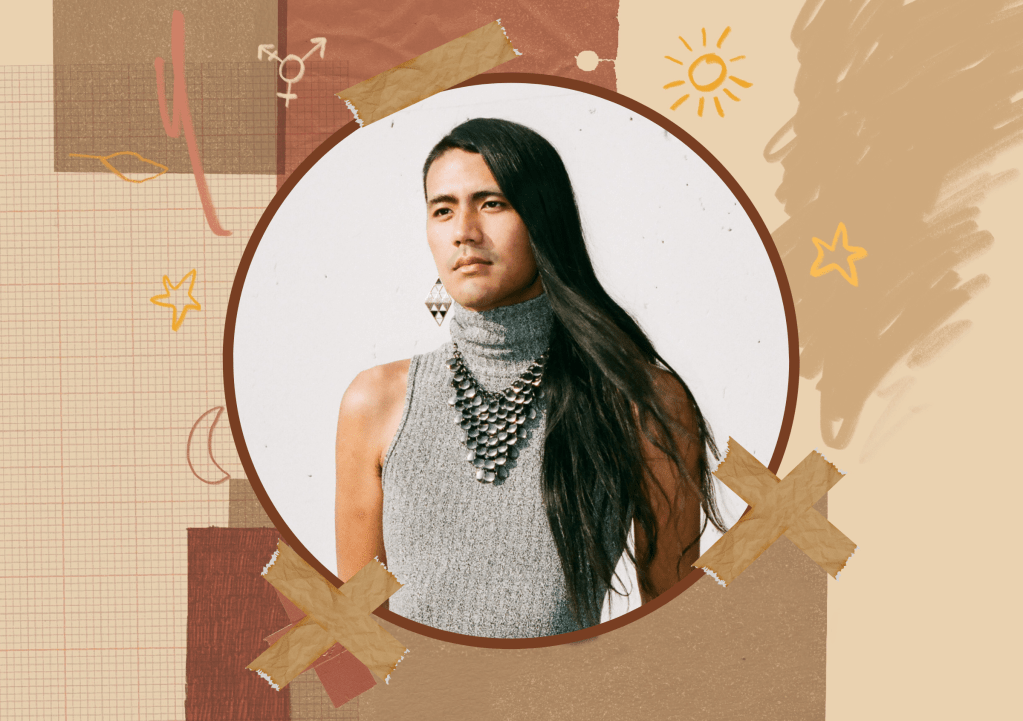
INDIGO: Today’s guest is Sarnt Utamachothe. Sarnt is a Southeast Asian non-binary filmmaker and curator based in Berlin. They are a co-founder of un.thai.tled with two dots and, uh, the word Thai in the middle, an artist collective from German-Thai diaspora. They have curated many films, events, and exhibitions regarding postcolonial histories, South Asian diaspora, and activism.
[upbeat drum based song]
LEO: This is Changing the Frame.
[upbeat drum based song fades]
INDIGO: Hello, Sarnt. Thank you so much for joining us today. If we could start by you telling us a little bit about your background, what you do and how you relate to film.
SARNT: Yeah, I mean, sure. I, I guess, um, yeah, I’m, I’m born in Thailand, born and raised in Thailand. And then I left to Berlin in 2014 to, to study film actually, but long story short, um, nothing works out. Um, I was interested in directing class, let’s say, and it’s as somehow, maybe, I didn’t know, but when I arrived, I realised one of the most competitive categories in a film university, film school is directing. Um, and I have been trying for many years and so it didn’t work out. And, um, long story short, I kind of ended up joining the underground filmmaking guerrilla scene in Berlin and sort of learn everything by myself. And now in 2023, then I’m just sort of end up doing too many things as a filmmaker and curator myself. Um, I think cause I was sort of never have this proper education training, man. And somehow it made me like a mess, but Gemini, which I, I also love to just do many random things, not random, but, you know, I’m sort of, many things as much possible. I guess that’s a very short version of my background.
LEO: That’s very exciting and we’re gonna be dissecting all the different things that you do today here. So looking at where you started though, why did you want to pursue a career in the film industries? What made you decide to study filmmaking and move to Berlin, specifically?
SARNT: Yeah, I mean that, that was also, like, kind of a mystery in my life somehow. Like, I And maybe earlier in my life, I was very curious about German language. I mean, don’t ask me why, it was super random. And then, um, and then later on, when I had a, I had a degree in design in Thailand, like industrial design. And as a part of presentation, we had to make, like, video clips to present our products and projects, right. And then I, I think I fell in love with a kind of this camera and editing since then. Um. And I think that for, for us queer people, like when you a bit, when you were kind of growing up, you have this, I mean, it’s a cliche, but you would dream of doing fashion design or something like beauty related. And, um, I remember I would just, you know, like to stylise my set and trying to get the costume right and things. And it was so much fun with friends. So I think with that love, it, it, it ended up me sort of like, okay, I work a bit in design and I realised that I just really want to pursue that somehow. Also, I had a bit of kind of, I was writing a lot because before I moved to Berlin, I was a bit more shy, like quote unquote, but I, I tend to just, I didn’t have the confidence quote unquote that I have now. So back then I was writing a lot and to visualise this sounds fun, you know.
LEO: So how did it happen for you to, uh, make the shift to curation then, because you mentioned you started getting involved with underground guerrilla filmmaking movements in Berlin. So how did you end up doing curation as well?
SARNT: Yeah, that came way later, so I think like back in 2019. So, when I arrived in Germany, in Berlin, let’s say, I have been doing like, you know, video for drag queens and concerts. So that’s how I sort of proceed my video making, maybe not film. And earn some gigs too, and you’ll remember this kind of, um, charity based drag events, that kind of thing. Um, and I, it sounds like a boomer, but, um, I would say back then Berlin was not as sort of like a hub, right? What is now somehow for the, for the gay or queer movement. Um, I remember in 2016, I was telling people like, hey, look, come to visit me in Berlin. And everyone’s like, what’s that? Like piece of Cold War, Germany, socialism, Berlin Wall. You know, they would rather go to, like, I don’t know, Paris, London, um, Barcelona, for example. Um, so back then it was sort of really underground and in 2019, I started to organise sort of more of my events with, with the Thai artist group that I somehow just created with a friend and a few people, and because there are not many of us there and somehow we kind of let’s do something together. So since 2019, we, we founded this group un.thai.tled with the word Thai in between, and I’ve been trying to do events since and from learning from this DIY thing with my collective. Then I end up in some kind of curation direction and I think it would answer itself because like it’s it’s such a different way to filmmaking that, that I appreciate… I mean, again, Gemini… but I appreciate this a bit of, you know, shift your brain and you kind of let go of the sort of almost control freak, quote, unquote, that you have in the film. Doing curation is like you bring people together, you let things be what it should be. Make sure everyone is happy, but it’s kind of bringing people together and in film is a lot like this need to happen, like, no matter what, right? It’s a completely different world.
INDIGO: I’m a bit biassed, but I love curation. I think it’s such a beautiful way of, like you’re saying, bringing people together in community and putting films in specific contexts that bring those communities together. We were looking at un.thai.tled and it’s such a cool collective. Would you be able to talk a little bit more about the collective? Um, what’s the ethos of the collective and also what kind of events have you developed through it these past few years?
SARNT: Yeah, sure. I mean, um, we, I mean, we, we were many members, but in a kind of one, not volunteer, but more like project based. So like I, I think because, again, I mean, related to my life, I was one of those who went through the… So I didn’t go to film school, and I went to the Cinema Studies programme, um, and Literature, which means I had to went through German language programme, because German education is free, but you have to go through in German. And, um, I learned German somehow, and now I, my German is pretty fluent, and in comparison to some of my friends in this group, you know, maybe they could not speak German. I mean, it is what it is. Um, it’s Berlin, right? It’s international cities. Um, but so this came to help somehow when I figured out, okay, how to apply for fundings because you have to write in German. So, I helped them to sometimes apply for things. And we did a lot of events since 2019. Um, we did, we did a launch, we did like a film screening series, which turned out to be our sort of mini film festival, um, that happened regularly at Sinema Transtopia for, I think for Berlin artists and queers, um, it’s kind of become one of these proper place of community and cinema. Um, and they have been supporting us since the beginning. So we show a lot of movies from Thailand and now we are trying to bridge in also like Vietnamese and Indonesian artists and queer artists in Berlin. And, uh, we did performances and exhibitions, um, around this issue of women. I mean, let’s say Thai women, that is kind of a cliche that is attached to us, but we also kind of want to go deep on how it is produced and how we sort of reclaim it somehow, right? So like, I mean. The cliché is that, like, I don’t know, Thai ladyboys love sex, I mean, yes, I love sex, so, like, I mean, it’s a boat in itself, you know, um, so, we will have also more projects about that coming out soon, next year, I mean in 2024, yeah.
INDIGO: I’m excited to see them.
SARNT: Thank you.
LEO: Yeah. Since you’ve mentioned Sinema Transtopia, um, I’d like to ask you about the programs that you’ve developed for screening there. Because when we were chatting ahead of recording, you mentioned you have a big focus on Southeast Asian and queer cinema, and you sent through information about Common Cold and the Wandering Salon, which I thought were really cool. So, if you could run us through what kind of films and the specific type of events that you developed for those two would be great.
SARNT: Thanks. It’s, um, yeah, I mean, these are sort of, kind of, a development in this program we do there. Um, I mean, the cinema itself, in case if you tune in from outside Berlin, um, is found in 2020 by Can Sungu and Malve Lippmann, and they are this Turkish-German couple who, who have been researching in Turkish diaspora, let’s say, in, in Germany before, and then they just sort of, you know, let’s start a cinema by ourselves. Um, in which there was also many Turkish, let’s say, cinemas in Berlin because of the migrant workers that came in the 70s. So it was actually very normal to have… for Turkish people to have cinema. But somehow it disappeared, right? Gentrification. So they kind of took over the term. With this ‘Sinema’ come from the Turkish word for cinema. And Transtopia is, is not sort of related to a transgender person, but more like it is term where it means something that crossed the border. So it’s like, um, it basically is a term by this Turkish philosopher that, that sort of tried to say that, okay, whatever term or discourse that cross, you know, one country, one space, one thing means. So, it’s not particularly sort of like, um, like a utopia for trans person, but it can be anything, let’s say, um. So they lay out this philosophy of every program they do as something very open and political. So, let’s say, maybe less quote unquote fear of queer focus, but more like. anything critical politically. And yeah, that’s why I worked with them with, with, with firstly with Thai movies and Southeast Asia, um. Common Cold, we focus on Cold War, which is what, um, what Southeast Asia shared, you know, recently this, this bitch named Kissinger died. So we should basically, we all more or less know what, what was created after that legacy. And we’re trying to look at the old movies and new movies that explore this, also trauma of the war and class that were distributed between, you know, the communists and non-communists. And, uh, Wandering Salon was, was more like 2023 when we want to, or I really wanted to do more like community based, so we, rather than just have film screening, we do like performance and workshops to, to kind of make it sort of less about like, okay, you come and watch movie and just passively enjoy, but also to participate. So, you know, they have workshops on food in Sinema. You have workshop on, on sense of belonging and cinema and, and so on and so on. Yeah, so these are very short descriptions.
LEO: No, that’s very cool. I undertook a curation fellowship recently and we were looking a lot at community building through cinema and active approaches in cinema and how to actually engage people instead of just watching the film. So, it’s very cool that this kind of thing is happening all over as well. So, I was going to ask if you were building up like a mini festival or was it just like one day of events or what kind of system, was it for Wandering Salon, if you wanted to develop more on that?
SARNT: Yes. I mean, we, we are very sort of low scale, like, I think we are in a core team of six people and then the rest are sort of assisting us. So, we have to spread it out throughout three months, but, like, not, not every day, but like, you know, um, maximum two events per day because it’s too much to run everything. Um, so we, we, we show in May and July and in October, which is give like a little bit space between the months to PR, to get to know new people. Um, and I, I realised that also in a normal, I mean, I work for another festival called Xposed, um, like we’re a Berlin festival where they do more like, okay, one week and week and bam. Like 20 screenings if you can’t catch it, like, good luck. So, there’s a different way to work somehow and They have pro and cons, but yeah, I feel like this stretch amount of time make less stress and also you can really talk with people let’s say, you know you you have a screening in May and then you talk to the audience who are like “Yeah, I like this, I don’t like that.” Um, okay, maybe we can plan better in July and that was, that was, um, pretty great actually.
INDIGO: Yeah, I’ve worked in both settings as well. And I know there’s pros and cons. I feel like with big festivals, sometimes it’s, like, so stressful for the whole week for everyone. So, I feel like having regular events are always really nice, especially to connect with, like, local communities that can come regularly. And I know you have a really big focus on community. Another project that you developed with Sinema Transtopia is Imagining Queer Badung, which is a program of filmmaking and podcasting workshops for queer BIPOC. What was the process of creating this project like, and how was it different to curating a screening event, for example?
SARNT: It was, it was, this one is 2021, um, with Rakkyu Huda, who is representative of Queer Asia, which is based, usually based, in, in, in the UK and London, I guess. And, uh, it was COVID time. So, I mean, I think looking back 2021, I think what was missing, as everyone would say, is, uh, the social aspects of it somehow, right? So, even screenings back then, it was kind of like semi semi-formal, semi-legal because um, people will figure out like, I mean, where to get the test and can you get the test? You, are you COVID positive or not? So it was very difficult to get together. So yeah, so the, to the workshop for filmmaking podcast came to be because they, okay, let’s see this out. And it has been great, I think, because it’s, it was, I mean, Bandung, in case if you don’t know, it’s, um, it’s a place where the anti-colonial conference took place for the first time, quote unquote, let’s say in 1955. Um, and we just sort of kind of reclaimed that discourse somehow, like what it means to be, to come together across this, people of the South or people of colour, et cetera. And, um, so we didn’t also have like a pressure for people to make things. So, let’s say you are in a filmmaking class, you don’t have to make films. We just kind of tell you or we learn together how to make film, but you don’t have to finish it somehow. And I think many of them also later on also didn’t really kind of become a filmmaker, but they learned this tool. You know, you can make TikTok, you can make things. And I think it’s, it’s great to put it this way, somehow.
INDIGO: Yeah, and I feel like with, uh, those skills as well, you can I ran some filmmaking workshops this year, and I feel like, even though not everyone went into filmmaking afterwards, I feel like it was a really nice group project, in a way, and like, connecting with other people within the workshop, which makes it really fun, I think.
SARNT: I think because, like, somehow, I think for us, maybe, I guess for you, for you all too, like, I mean, because I didn’t come from sort of proper feedbacking, right? So I think for me to, even to teach or to, to support something that is too proper is never really a thing. I think for me what, what sort of is like, uh, the good and then maybe I don’t know, productive and beautiful time you could share with, with a group of people, with people. I think that’s why the word community came to be, but I think for me it was also, like, no pressure. It was like informality, you know, and, and I, I remembered that when you go to normal, even normal workshops that some film schools offer, sometimes, you know, they, you go in and you’re like, “what’s your logline? What’s your synopsis?” And I’m like, I don’t know what is going to happen with my life. So don’t ask me for my logline, please.
LEO: Yeah, I feel like it can be quite full on sometimes for workshops where there’s, like, a very rigid structure but it’s good to sometimes just get together and talk about ideas and not have to, like, do things per se. I find that very cool. I think that’s where more creative stuff can happen rather than in stricter places. So, I appreciate that. In terms of connection and a little bit in line with what you were talking about, transtopia, meaning not just for transgender, but like for beyond and for connection and for transnationalism and finding connection all over for politics and critics within cinema. I wanted to ask you about the Cinema of Commoning that you coordinated and moderated in collaboration with bi’bak. What is the Cinema of Commoning and what kind of stuff were you doing for it?
SARNT: Yes, I, um, I, yeah, it’s, uh, that was also another big project in 2022. Yeah, bi’bak is actually the, the mother organisation of Sinema Transtobia. And, um, our idea in this, in that time was that the Sinema Transtobia have to move from, it used to be in house that statistic where, it is like a former GDR, you know, East Germany kind of building that was ready to be sort of gentrified but was not yet. So, they kind of occupy that space in a kind of formal legal way. And then they have to move because of, I mean, city project development. So, they create this symposium to, to gather cinema theatres around the world who are both level of, let’s say, something more formal and like heritage cinema, you know, the oldest cinema of this, but also the cinema that was really, like, squat and occupied. Um, so we invite guests for, for speaking and sharing like film programmes around the world. And so we have like, I don’t know, Cine Geração, Angola, um, we have, um, Cinema Akil, Dubai and, and so on. Um, and it was great. Um, a lot of work, but it was great to see that there’s a kind of solidarity and, and space communities emerging around the world, you know, in, in this kind of future of cinema, somehow. Because of course, all of these spaces have queer people because it’s not, it’s not like a big, you know, national level censorship board kind of thing. So of course they have queer programmes and of course they have a good community engagement with queer persons from around the world. And it’s great. Yeah!
INDIGO: That’s really good to hear. And um, when moving to more of a local like Berlin focused festival, I know that you’ve recently worked in, uh, Hamburg Short Film Festival as one of the, um, international competition selection team as part of that and also, um, Xposed queer film festival that you mentioned before, um, as part of their programming team. How was it like working with these festivals and on a more local level and what kind of films did you select as being part of the programming team?
SARNT: Yeah, I mean, this is sort of, it’s too much going on in my life. But yeah, this is one of it. Um, and, uh, these are two festivals that is, that are in my heart. And, um, they have been very, um, open mind, let’s say, um, Hamburg one is maybe a bit bigger than Xposed because they, they are sort of funded by the city. And then they have sort of like a proper good funding behind. They organise so much for the short film scene in Germany. And I feel like, I mean, with Hamburg, for example, it of course is not like a queer focused film festival, but, but then I kind of, me and other person in the selection team also want to push this sort of, maybe you call it a queer propaganda, but, but in a way, um, you know, like supporting and looking at it. But also I, I also look at many films, I think, and I kind of discuss of, I think some of the films can be, you know, let’s say this victim narrative or a bit of kind of maybe you call oriental narrative, right? Sort of something that is a bit problematic to, to us and we feel it somehow. Um, and they might go, they might do well on some international festival thing, but when white people kind of love it, but I mean, I don’t. So, I, for Hamburg especially, I have been sort of tackling those somehow. And, uh, Xposed in Berlin as well, um, they happen in a similar time. So, I do this kind of summer tour when I go to Hamburg and Berlin and do moderation. And with Xposed, it’s a very, very sweet family, um, um. The joke of the festival director, Merle, um, I think I can say this is that like, we are getting bored of queer film, we want to do straight films now. That’s like, I’m sure as you work in festival, you have to watch, I don’t know, so many films from amazing queer films, actually from queer filmmakers. And we’re just like a joke of like, can we do like a straight festival now? And, um, yeah, and, uh, it’s great. Um, I think for Xposed also we’re trying to push of what queer aesthetic means, right? So as some of these films that fall in the in between categories, somehow. Um, but okay, let’s say maybe done by queer filmmaker and but it’s not about gender, let’s say. So, I remember we have film from Singapore called 24 and it’s about the boom operator, like, a recording sound in movies in 24 settings in many place including some afterlife, like, a kind of fantasy. And it’s just that it’s not even about like LGBT identity, but, but it has so much of this, this level of being queer is, is sort of between these shadows or moving between places, but then being able to understand and maybe you, you stand out like this boom operator who just looks like you passively record people’s sound. But you also exist somehow and it is a very weird film, but I love it, yeah.
INDIGO: And also it’s good to support other queer filmmakers, even when the film is not, because, uh, for SQIFF, we also screen loads of films that are made by queer people, but not necessarily talking about queer topics in the film. And I feel like it’s so good to support queer people making those films as well. It’s just really good. And I love what you mentioned about the queer family within the festival. I feel, I’ve, I’ve met so many people working different queer festivals across the UK and everyone has this, like, little family, like an independent queer film festivals there. It’s just really lovely. How, how did you find, uh, like working for this, like Berlin based festivals and how it was kind of different from working with bi’bak, which was more like international in a way?
SARNT: Um, I think it’s kind of more or less the same or similar, or let’s say like you just sort of need to, um, kind of think a lot and plan a lot. I, I have positive experiences from both sides. I think also, like, because I have lived in Berlin now for nine years, when you listen to this next year, there will be 10 years and I’m just, you know, maybe quote unquote settle down with my Berlin cuties community and those who come from abroad, of course, I think it’s also become more of like a place. I mean, now that many people move to Berlin. So, as I mentioned earlier, it has become now more, like, international quote unquote, apart from a party scene, you know, that you can, okay, forget it. Everyone comes at Easter and then they go, but the people really move here and they want to, you know, find jobs and settle down and trying to make things. So, there’s, a kind of, also knowledge, teaching level going on. I mean, it means that like, you know, I learned a lot from people who lived before me. And then somehow I need to pass this on to them. Okay, how to apply funding, how to, you know, know this and that. And, um, I hope these things, this sort of cycle continues, somehow.
LEO: I, I also very much enjoyed what you said about programs of films made by queer people that aren’t necessarily about being queer. Because queer people are concerned by many things that don’t necessarily have to be about gender and sexuality. So, it’s, it’s very cool to give space to those films as well. I would like to hear more about one of your more recent programmes, which is called Ladyboys United. Because of what you were saying about Ladyboys earlier, so, what did you screen as part of this programme, and what were the topics surrounding it?
SARNT: Yeah, I mean, exactly what you said, actually, sort of, I mean, this is also another topic, even to go in deeper into queerness, right, what it means, and I think that’s sort of maybe our lifelong journey, somehow, to understand it ourselves. That program came because, um, it’s called HKW, it’s a house of the world cultures in Berlin, also Haus der Kulturen der Welt. They re-opened with a new board of directors and managing team. It used to be run by white people and now it’s run by Bonaventure, who is, like, a Cameroon curator. And sort of, they brought in sort of, let’s say, people of colour and all around to this museum. And they have this program called O Quilombismo, which is like a, I guess, for a Brazilian term for, like, a movement when the marginal people come together, they’re a collective, grassroots collective, and they were kind of asking many curators around Berlin to do, you know, perform and program and things. And I, I just got asked for one night and I thought, okay, maybe, maybe for me from Southeast Asia to come together is this what, Ladyboys, which is, it’s a kind of my way of reclaiming it, somehow, because let’s say, you know, I, I identify as non-binary, but, somehow, what is non-binary in Thailand? And I would say that’s Ladyboy. I mean, because I think some people tend to say it’s more like a trans person direction, especially like a trans feminine, which I mean, I grew up with trans feminine person around myself as well, but it’s rather also in this sort of It’s called Kathoey in Thai, and I think for me, it has more of this connotation of everything is possible. So, you can be like a trans feminine, or you can be also like a feminine gay man, or you can be whatever you don’t want to define, and we just call it Kathoey. I think for me, this is a kind of way to gather together or somehow, also in Philippines, that you call Bakla. Which is a term for everything. And so, you know, what is a queer language outside the word LGBT? And this is one of it, I believe. Um, so we showed films, um, actually the, the programme shifted. So, it was shown already in Hamburg as well, and in Berlin. And we have different films, but we focus on, on this non-binary trans perspective. So, we have Memori Dia, which is about Indonesian, um, this growing up in Indonesia, being trans, and understanding that a human soul is not gendered. Even in a kind of, even in a Koran, actually, um, it was written that the angel gave the soul to the baby on the hundredth day. But in this world, soul doesn’t have gender. And so basically it is about going back to those times when, when, you know, culture, civilization were not gendered. We also showed a film from Thailand from the fifties, the second world war, that was like a silent film that has this sort of cross-dressing character. And we invite also the kind of local musician or sound, like a sound, queer sound makers to make a soundtrack for this um, silent film. And this is such a cute and sweet way that I think I would do more in the future as well. Yeah. Silent film is cute.
LEO: I like that, I like that very much.
INDIGO: It’s very interesting to, to listen about language. In Brazil we also have a different gender that we have it in our culture, but it’s not really translatable to, to English. And I very, yeah, I really enjoy like listening about different words and meanings of genders and sexualities from other cultures as well. So, your practice is very focused on this notion of in betweenness both in regards to like Southeast Asian diasporic experiences and also to queerness and trans experiences as well as mental health and kinship. What motivates your practice and what other creatives do you draw inspiration from? I know you’ve mentioned a few people already.
SARNT: I mean, uh, as a joke, um, we all want money. So, the biggest motivation of working is money, but it’s, uh, but that’s not true. Um, as you know, being a filmmaker, curator barely brings you things. So, what is that? I don’t know. Um, yeah, I think it’s, it’s a sort of sense of, I realise, I think the same with maybe y’all can relate in Scotland or around the world. That’s like, again, as I said, once you settle, you, you realise the beautiful stories or even sometimes painful stories of people around you that are already there, somehow, um, um. There is this, there’s this text by Trinh Thi Minh Ha, maybe for, for some of those who are interested in sort of decolonial filmmaking. She’s like a Vietnamese who wrote on, that you don’t have to create the stories in this world, it is already there. You just need to let it come to you, somehow, you know. So, the, the colonial filmmaking was that they have a script and they go to Global South or maybe in Global North, create a set and imagine it up. But in reality, like, I mean, you, you are surrounded with beautiful stories of people that are there and it’s ready to be, I mean, if done ethically, then it’s spoken, no? So, I think my, my events or my, my filmmaking myself, so even regarding mental health is, is, is around that. Also, Berlin being a city of this sort of crazy energy that somehow is not for everyone that I realised that, yeah, I just really want to do something that’s a bit more, like, wholesome and together, but also, of course, I’m mentally exhausted myself, you know, and it’s cold European weather. So, what can you do in this? Yeah, and I think it’s also I think now it comes to me now. I think another thing is that that working with diaspora maybe or with migrants is the aspect of family or even their biological family or then they become your chosen family, right? Because I moved here without my parents to Berlin, no? And then, like, I was writing about is that who can I, like, how can I find a food that my mom cooks for me? It’s actually the food that other moms cook for their children. And when you become friends with that children, then you get that food too. And I think this is a kind of easy anecdote for, for a chosen family, even in a queer world. When I work with, you know, Vietnamese communities in Berlin and get to know their moms and somehow we come from different countries, speak different English, but when you see that you are, your attention is kind of pure, they just accept you somehow. And this is also beyond queerness somehow, because, you know, of course they might come from the binary world, I mean, parent generation, right? They might not get your pronouns right, but there’s this weird acceptance, somehow, that you never get through it.
LEO: I really like what you’re talking about food and found family and community building. Um, both Indigo and I really like food as well from our respective countries. And Indigo has made me some banging Brazilian foods, um, which is, like, a really good way to learn about your friends and where they come from as well. So, I really enjoy you, hearing you talk about that and if you’re happy to discuss this now because I didn’t prepare it for the questions, but I am aware that you have a film called Soy Sauce and it’s also about food, and about two people connecting through food, or having like, a moment of like, tension. Uh, and there’s like, discussions of food and gastronomical, uh, knowledge in the film. So, would you tell us about this film, and how you came to make it?
SARNT: Yeah, Soy Sauce was like, um, was basically my, my, the short film that I submitted to film school to, to apply to film school and hopefully get accepted there. And, um, it just came from this and that a topic that they gave me was like resistance, like what resistance could mean. So, I wrote this script within two months, zero budget kind of thing to, to finish to film school. It’s about this friend of mine who moved to Italy and she wanted to cook Thai food in Italy. And the perverse thing is that, like, as I thought that Italians would understand world culture because they also have great food somehow, but there was a big conflict in this house regarding, um, fish and soy sauce and things. And then, um, so I took the story and then I, I tried to find a team in Berlin and I could only find this Vietnamese friend of mine. So, um, so yeah, I cast him and an Italian guy in a kind of kitchen scene where they realised that like, no, it’s not about getting married and visa and everything’s fine. It’s a lot of clashes between this. Yeah, I just make it kind of quirky somehow. And, um, during the Q&A in Berlin, when I show it, um, someone asked me like, why Italian food? And then I will say that, like, “Well, if I make it about German food, everyone agreed that German food is shit. So, you will not get it because like I can make 10 movies that trash German food and you are going to understand that. But you know, if I trash Italian food, you’re going to get offended.” I mean, even, even, even in this, that also reminds you of somehow that like, even in a European way of, of like the so called global not right there, but they have their own fuck up problems, but there’s also a difference somehow in how they are proud of themselves. So, at the right wing in Italy, comparing to the right wing in Germany, uh, let’s say a bit different somehow.
LEO: I really enjoy that though. Exploring connection or disconnection through food and cinema. That’s very cool. And kinda in a similar line, because you’ve been talking about reconceptions for cinema and connecting with different cinemas throughout the world through the Cinema of Commoning and the work that you do with diasporic and queer trans experiences. There’s clearly, like, a path for rebuilding the festival model, and I’m very curious about the Film Festival: Krisen, Chancen, and Perspektiven, which is a publication in which, along other film festivals, you wrote about new models. and better futures for film festivals. Sadly, it’s in German and I don’t know German, so I can’t read it. So, would you like to tell us about it? What did you write and what kind of conclusions were there in the publication?
SARNT: Yeah, thanks. Uh, I mean, this, this book came far later after we, we, as if myself and the Sinema Transtopia team, um, have been working there for a while. And then this book came because there was kind of COVID of course, but then COVID brought the question of cinema theatre or in general space. And so they run these books to kind of figure out what is the crisis of now. Um, and at one point I realised, I mean, there’s always been a crisis. It’s just not brought to the surface, right? So, our festival become inaccessible has always been there. I mean, it’s, it’s way before COVID, but people just, oh my god, realised once COVID happens. So, you know, you realise that, um, older people cannot come to cinema, not because of COVID, but there’s no, I don’t know, elevator, et cetera, no? Yeah, so we, we try to kind of have a retrospective on what we try to do our best in the cinema. And I was, I was contributing on the idea that like, I want informal space. Maybe this is sort of in my kind of character that I, I am barely anyone sort of too formal. Because I feel like it… let’s say you go to sometimes queer events, but it sometimes feels so formal and so kind of rigid that you feel a bit like, I mean, it’s great, sweet, but then you feel somehow that it lacks this lively, like vibey somehow. And you know, the opposite is for example, the Berlin underground queer techno scene, which is anything but formal, right? So, this is too messy. And so how do you bridge these two worlds? And I was trying to, I was trying to play a joke that, you know, like I talk so much about, or we talk so much about cinema in, it’s a joke, but like, it’s like in a cruising gay bar. So basically, um, I remember it’s called Ficken 3000, which, if you come to Berlin, you will get to know this place. Um, it used to be like a gay bar, it kind of for assigned male at birth. And now it turned to be really like trans and femme friendly cruising bar. It’s like, wow. And I was trying to draw a comparison that, you know, they play this porn, which has a kind of sometimes problematic character. And we were just gossiping there with friends about how this porn, what is not okay about it and what is it about it. But it comes from this idea that no one knows better than anyone. And it’s come from the idea that we are just there together in this very messed up space. And I feel that cinema space or festival thing in general could be placed in a maybe not entirely like a cruising bar. But, but you know, the place where you can really just, like, vibe and have a be with everyone somehow. When we, when we talk a bit about the project, I use this metaphor that like, of course, when you invite some, some migrants who don’t speak English or German, even to the cinema, you have to translate for them. And sometimes you have to translate within the audience seats. And you make noises. This is what it means to be accessible, is to make noises. And so, that was my part in the book somehow. And the book also features many bigger festivals in Germany, like, um, Dok Leipzig. Um, which is in Leipzig, a documentary film festival, one of the oldest in Germany and it has, um, yeah, other stuff as well. You know, it’s also concerned the, the, the biggest elephant in the room for Berliners called Berlinale, which is like, okay, um, how do we deal with this elephant? And I mean, I don’t know. I think people ask me, what do I think of Berlinale? And I’m like, I don’t know. It’s just like, it’s a big festival. Um, what do I do there?nLike, I’m not, I’m not even interested in diversifying it because it just starts from a wrong place in general. Like, why would you diversify a big industry so formal and kind of elitist place? Like, I would rather be in a smaller festival where you have more influence and voice. And do something more like, you know, connecting people together somehow. So, that was my sort of concern that I called, I call Berlinale catalogue like an Ikea furniture, where if you go to an Ikea shop and you want to buy a table, that’s how you deal with movies in Berlinale. Because it becomes like an object to be sold and, you know, pick the country. Yeah, it makes no sense to me.
INDIGO: No, I mean, yeah, it makes sense. Like, I’ve, I’ve worked for, I’ve put on an event at the Edinburgh International Film Festival before, and it’s so big, and like, these industry festivals are not really what I want to do. Um, in a way, I feel like smaller, independent queer film festivals are like, the way to connect with most of my, uh, community and I love that. So, it’s great that you’re working in that field. We, we had a question around funding. So I know you mentioned a little bit before as well, because basically me and Leo, we, we work mostly in Scotland. So I’ve applied for a lot of fundings in Scotland and in the UK in general. Um, so I kind of have a notion of that, but I was just wondering, like, what are the ways of approaching opportunities or like funding in Germany specifically, um, for the projects that you’ve created? And also what was that process like, um, if the funders are like happy to, to chat or if it’s a bit difficult to do that with some of the funders?
SARNT: Yeah, I mean, I think this, this, um, I mean, as far as my little knowledge knows, um, it’s different from the UK, which means some Germany has a lot of sort of funding programs because it’s somehow what it is. I’m not saying it is better or something but so they have this, this national level that is very hard to get so just forget it, then you have more like, sort of smaller levels. So there’s, uh, so Berlin is in itself called Berlin, but if you go to, if you go to a smaller city, I mean smaller, but , let’s say Munich is in Bavaria, you know, Hamburg is in itself, but in that region. So, they have this funding that, uh, sort of becomes smaller, the smaller your focus is. Compared to the UK, I would say Germany has relatively okay cultural fundings. Um, you just have to apply in German. That’s like the biggest barrier that some people cannot go through and also the formal German language, which is like, like impossible to master. But also regarding film, the biggest, it was actually a part of this book of Film Festival Perspectives, that film is not recognised as culture in Germany. So, cultural funding means events or exhibitions or I don’t know, film funding is film. So they have this idea that cinema is, is commercial and you need to be sort of in contract with television or distribution or some bigger business model somehow. So, to get the film funding from, in Berlin it’s called Medienboard, maybe some people who watch films from Germany will see this logo. Um, they are interested in, in this kind of commercial aspects. So, they barely, they do, but they barely finance sort of independent, you know, experimental film scenes. And so the shift happening now is that a lot of filmmakers in Berlin realised it is so hard to get the film, so they go to culture. So, they shift to like video artists. That’s one of the most, sort of, common fluid term that people use here. So video installation. And then, you know, they got a bit of I mean, cultural funding is kind of open mind, so they are open to this kind of research based funding as well, which means you get like an artist grant for a certain amount of time and you do whatever you do with that money and you do research about it basically. Um, and so a lot of people are going through this to make maybe a film, short film, more than sort of, you know, the, the big million euro bomb kind of thing.
LEO: That’s so interesting that cinema is not considered for cultural funding, when… yeah, I just, I find that very fascinating. It’s a bit weird.
INDIGO: I mean, in, in Scotland as well, they kind of separate, because before we had a big government funding, which was Creative Scotland that still exists, but for film festivals and film production, they kind of created a new entity called Screen Scotland, and so if anything to do with like film or film festivals, um, you have to apply straight to Screen Scotland, not like Creative Scotland, which is very interesting as well. Like, there is that divide, but also for film production, there is more sort of funding without having to be associated with like a TV production company or yeah, which is very interesting to hear that that’s happening.
SARNT: Yeah, it’s a, it’s an ongoing debate. I think even in Germany of, of, of what is a better funding model. Um, but like, also, I mean, everyone developed autonomously from each other. The one in Hamburg, for example, is, is actually, there was a scandal a few years ago because they were the first to introduce diversity status. So, usually in Germany, you never have to sign, okay, how many men, women, non binary, migrant, white, um, but Hamburg tried to introduce that, which I think is great, but then everyone was like, against them somehow. So, because, uh, the kind of more conservative, um, cities or districts in Germany are, of course, against this diversity move. So, everyone kind of has their own policy and disagreements. So, you know, I’m not PR for Hamburg. I mean, I hope they hear this and give me money, please. But they are pretty, they are pretty forward. So, they fund also, like, gaming, like VR, XR technology in their kind of film funding unit. Berlin barely a little bit. And, um. So, it’s also this kind of situation there when… and same with the UK, I guess, you know, if you have, you have like Scotland, Wales, England, so they are all separate. So the same kind of separate-ish kind of happens here.
INDIGO: I also had a question that just came to my mind, but like, I know you’ve mentioned a few times that you do like loads of different projects at the same time. And I feel like that’s the freelancer life in a way. Yeah, like, how do you manage that? I know it’s like a hard question, but like, cause we went through so many projects that you, I mean, programmed in 2020 to 2023, pretty much. And there’s so many of them. So yeah, just if you wanted to, to talk a little bit about that, especially with the lack of funding, it becomes really hard to sometimes work on so many things, but yeah.
SARNT: Yeah, I don’t know how I do it. I mean, I’m suffering from it, which by the time this is recording, I’m pretty sick in Thailand. So, I guess it’s sort of accumulated things, but also a little bit break down this and that, why not? Haha. I think because I’m kind of sometimes also quote unquote a bit ambitious too. I mean, I believe I can do it and I can pull it off. I think I also enjoy the group of people that come with this project, I mean, again, I almost kind of repeat, but, um, and I feel like, I mean, unfortunately, I think that the takeaway from this is that, like, you should not merge your community with work. So, community work is work, but like, that should not be the only way to find community. And I… I had an issue for a while that, like, I end up working a lot for the community that it becomes work, right. So I, I think for the future, or even recently I tried to sort of pull myself off because I just want, like, a less the feeling of work when I come to some community space now. And also, I think recently there’s a lot of political thing going on in Germany that, that just makes things tricky. Um, and it’s not just about Palestine. It is really about like, like the crazy rise of right wing censorship in Germany. And we, after a lot of talks, we just tried to do something informal and without money and will not be censored more than to, to try to get funding and then, and then be censored. But this is sort of, kind of a future prediction of the German Berlin scene that you will see more.
INDIGO: Yeah. In Scotland, we’re seeing more and more festivals opening up about Palestine and, um, supporting Palestine, um, which is really good. Um, but the funders themselves, they don’t really have a position in that, which is really shit. And I feel like they should be more open about it and in support of Palestine and against Israel. I feel like, um, I mean, I’m going to an event this week from a film festival that’s supported by one of the funders in Scotland and they’re doing some events for Palestine and yeah, it’s really good that they haven’t been censored in that way. Yeah, and I’m sorry to hear that in Germany that is happening in some places.
LEO: I think it’s very important that we’re being open about our stances, because there’s a lot of people in the creative industries that are just not saying anything at all. And that just, that just smells like a hidden “I am against Palestine and supporting Israel”. So yeah, and I think it’s very, very important and incredible that you’re involved in such, like, supportive community based festival work and yeah, hopefully there will be more funding for you in the horizon as well coming your way. We’re getting towards the later bit of the episode. So, all of the questions from here on are going to be a little more relaxed. Uh, are there any fun anecdotes from previous events you’ve curated that you would like to share with us? Anything fun, silly, dramatic?
SARNT: I mean, there’s some, but I’m running out of those. Um, but like, um, no, nothing dramatic. I think like, the most fulfilling of this year has been this I, what I said about family and, and, and chosen family somehow, um, somehow to repeat myself, um, because I mean, what it shook me was that it was not just chosen family towards other queer people, but to, to the straight parent generation as well, that I kind of felt very wholesome. And, uh, I think also that’s why sometimes, not all the time, I mean, I, I have both love in, in diaspora, let’s say migrant world and the queer world, they are both, sort of, joyful for me at a similar level. But I’d say that the migrant world is kind of new. It’s not new, but you know, I moved to Germany in 2014. And that since then, that this life situation became that you have to find this chosen family beyond your nationality somehow. And I, and, um, it has been a great journey that I kind of somehow ended up doing. with them. And in a queer world, you know, sometimes this sounds a bit too, too bitchy, but like being, being Berlin recently, take it for granted. It’s a pretty queer city, um, at this point, right. Um, so somehow we took it for granted. We had this less the feeling of maybe come together and spend more whole time… wholesome time with each other and became sometime, not all the time, sometime before, like, consumerist kind of, okay, party, haha, and this and go, and it’s also fine. That was sort of my thoughts recently regarding events. You, you also, I think like by doing events, um, you really engage with, with what is happening around the city as well, right? So you get to know the updates and the secrets, the gossip. And um, yeah, that’s kind of my thought recently. Maybe some funny things will come up later.
LEO: Yeah, if you think about it later, you can tell us.
INDIGO: What would your dream project be if you had no money or time constraints? Like if you could do anything.
SARNT: I just want to be on my bed, doing nothing. Yeah, I mean, I think, of course, I want to focus on my feature film. Um, I also have this, um, filmmaking practice of myself, which is completely different from, not different, but completely sort of not related to my curation. It’s sort of, yeah, I was just sort of curious in documentary filmmaking and the ethical approach of it. Um, I think for queer scene, this sounds very old fashioned, not old, but it’s what we have been talking for years, but for the industry straight level, this is kind of very new to them, this thing called ethical filmmaking and, and collaboration. And so, um, I, I am trying to, I mean, at this point in my life, trying to focus on what I could do as my feature film. And yeah, I think I, kind of, try to find this relationship between personal and collective somehow, because. I feel like the general saying is that when you do a documentary, then it’s about like, you know, you see the world. And when you do fiction, then it’s about your own imaginary somehow. And I kind of want to merge the two somehow. And I’m trying to figure it out. For, for now in 2024, I will have a new film that comes out, like a short documentary, um, called, I Don’t Want to Be Just a Memory. And it’s, um, it’s an homage to queer people who died in Berlin because of, related to, to substance and mental health. And I think this is maybe one of the key things that I would try to follow, perhaps, until the feature film.
LEO: That sounds beautiful. I hope you get to do that. What other creative practices are you interested in?
SARNT: Yeah, I mean, I used to, I used to draw a lot. I used to play some, some music myself, but these are kind of not for professional reasons. So I just, sort of, my own meditation somehow. And I used to, as I said, I used to enjoy writing more when it was sort of not for anything, but just for myself. Hopefully I can try to integrate it somehow because I guess with all of you, um, you got to this point when, if you are, let’s say 100 percent freelancer like I, uh, like me, um, your creative process becomes work, apart from community work is work, right? And then it’s somehow it fucks up with your mind because you’re supposed to do something spiritual fulfilling. And, and of course it is, but, you felt, yeah, something is off when you have to deliver, when you have to, and so I, I’m trying, I mean, failing, but trying to, to incorporate back somehow this, yeah, what is fulfilling in a creative world, you know?
INDIGO: It’s really hard being a full time freelancer, I feel like. I mean, I just became a full time freelancer a few months ago, and it’s, um, I feel like, as you were saying, like, working with what you enjoy and things, and having to, for example, write or film or curate things, and yeah. You’re kind of like you’re the things that you like kind of become work, which is really hard. But thinking of the positive side of freelance and what you’ve done with all these incredible programmes these past few years, like, what advice would you share to people that are just starting out and that could be in both curation or filmmaking?
SARNT: I mean, of course they will always say that, like, you know, do, do what you need to do and believe in it, which sounds like a cliche for now. But like, I realised that recently, I think it’s a part of maybe quote unquote growing up, but like, somehow life just gives you the answer somehow why you should do things, right? So it sounds weird, but it sounds a bit also spiritual, but like there are certain reasons why some of these projects happen to be and some of my films happen to be. And it’s not just because a museum contact and say that, okay, we want to do this, but like, you know, um, all these things are the result of your relationship with other people somehow. Okay, sometimes there are businesses involved, so, okay, you need to do events that accompany X, Y, L, right? So, there’s a bit of business thinking involved, but it’s also a result of a relationship. And I, yeah, I want to foster this relationship that I have along the way somehow. So, I feel like as a kind of, again, sometimes a joke, like you go to somehow, sometimes, um, you know, events or pitching events with some, some people, let’s say, and sometimes they will always say like, “Oh, I don’t know what film should I make.”. I think for some people that’s like that big question. What kind of film do they want to make? And I’m like, it’s already there. What kind of festival do you want to make? I mean, I feel it’s already there, you just have to somehow listen to it. Also, I think the issue of this sort of training, I think maybe it is coming. Somehow, you know, you are taught to be individual and unique, and there is this kind of overly pressured to be unique. Which I think it’s like one of the biggest things that I let go of my last year is that, like, maybe I’m not unique, uh, honestly, you know, and I, there are other people who do similar projects or stories or I don’t know. Um, but of course everyone is deeply unique, um, from where they’re from, from how they grew up to be. But once you pressure yourself to do something so unique, I think that’s already the wrong direction to, to be like, I mean, then what are you going to be like, uh, it’s also a bit pretentious to me.
LEO: I, I do enjoy that piece of advice because sometimes I will get very stuck on something because I have to make the next big new thing that nobody has ever made before. And I’m like, no, maybe I’m just allowed to talk to my friends and see what they think and then let them influence my work and then my project that I’m making is also like a reflection of all the people that I’m around of and like maybe I get inspired by something that someone’s doing in South Africa or in Australia. And like, I ended up building something better instead of just that individualistic, like I have to be the best and the most special and, like, make something brand new that no one’s ever seen before. It’s like, no, that’s setting yourself up for failure. So yeah, I appreciate hearing that. That’s made me rethink some things.
INDIGO: I really, I really liked the part that you said about, like, just feeling and seeing what comes, like what opportunities come to you. I know it sounds very spiritual, as you said, but I, I really believe in that. Like, I feel like most of the projects that I’ve worked on, kind of, came through and it was like building that relationship with the people that I’ve been working with. And yeah, I don’t know. I really like that of like feeling the vibe and coming together and being part of that project in a way.
SARNT: I think there’s a common ground to understand and also ultimately not everyone can be happy, right? So, even if you are influenced by your friends or even in my case, um, I, sometimes, you know, I don’t make perfect events. Sometimes there are mistakes, in my movie as well. Um, and so to deal with all of that is just about form of relationship somehow. Um, and people would also understand if you make them understand. I think this is a point you have to make them understand too, that, um, you are not, like, perfect. You’re not also, like, one on one thing that they want you to be. So, let’s say you make a film with your friend and they’re like, ah, yeah, but the light could be better. The editing could be better. I mean, like, shut up. Like I have only this resource, and I have only this mental space to do this, so let me finish this and this is the best that we can do. I guess that’s, that’s how we, uh, concern our capacity and all this. Um, also a bit of understanding, right? So, there was, um, yeah, and maybe an anecdote from one of another event that I did. Because that, I mean, I know that sometimes, for example, concerning access to disabled persons, so people with wheelchairs, or like, like blind persons, etc. Like, it might not be the case also in Berlin, because the infrastructure, the architecture here is really bad. So, sometimes we didn’t have enough, even money to, to renovate the space. Um, you know? Of course we can rent the lamp, the ramp and the thing for the wheelchair, et cetera. But sometimes it’s not built for wheelchairs at all. Then, then you can’t do it. And, um, so there was this question of like, okay, how do we do it with this? And me understanding, of course, that this needs to be the agenda is to make accessibility. But I was telling everyone, like, look, if I get like 500 euro budget for my events, like, um, I have to choose for what groups that I can accommodate somehow. And I mean, like, why don’t you aim the same question to museums that have like 20 million budget euro a year to do better? I mean, it’s a bold thing to, to ask, you know?
LEO: Yeah. They get all that budget and they don’t offer any access support. And yeah, I feel that, um. Do you, I know you spoke about your feature film plans for the coming year, do you have any curation related projects for the next year or anything that’s going to happen with un.thai.tled as well?
SARNT: Yeah. So, I mean, my, my 2024, um, is, is sort of with un.thai.tled, we, we focus on, on this women migrants issue that I mentioned a bit. It’s um, and it’s, they’re mostly from the Philippines and Thailand moving to Germany. And then we kind of engaged with this archive and story, um, like interviews, painting performance that we developed from like a research grant that we got. And, um, yeah, it will be open in March and it’s an exhibition and then a programme. So everyone who is curious, please come and, um. Yeah, it is also kind of, I try to, in this case, I mean, this is an open question, I, but I’m trying to understand also like a trans, trans female, uh, migration to Germany, and a kind of more like historical perspective. So, it is one of the agenda of this exhibition, if we could somehow underline that, um. It’s a work in progress, I don’t know if I’m gonna get there. Um, but it’s also very, not a, somehow known, but not researched, right? Because, um, the, I mean, of course, the cliche is there, but people barely sort of know more or less the personal and the facts behind this cliche. And, um, I think it’s, it’s great to just also re-engage with my own homeland that I left for a while. Somehow, I think, just to share, maybe you can use this, uh, the funniest thing to return to where you come from is that you got a bit westernised and, uh, now that I’m suffering from it, my stomach is a bit Europeanised, so I’m used to like, kind of, you know, European certified packaged food that is kind of easy. And now you are dealing with like, let’s say more street food. So you’re like, and, and the second thing is sort of how you are a bit more, like, direct when you do that. Let’s say coming from Germany, which the cliche is like direct, right? So, you you say what you need what you want to say. So I think when I return now, it’s a bit like people will freak out like “oh my god she’s not that sort of indirect anymore” and the worst part is that when you want to say some, when you live in the west not many people understand your mother tongue, right? So, you say exactly what you want to say, like, I don’t know, you talk about genitals, you talk about sex, and whatever, and then you come here and I’m like, oh shit, they all understand me. Like, shut up. Um, yeah, so that’s the, we’re un.thai.tled, and um, hopefully if we get money, there’s also hopefully another exhibition, um, yeah, with queerness in Southeast Asia. That should come out at one point, if not next year, I mean, 2024, then 2025, maybe. Um, but this is sort of unfunded, not funded yet.
INDIGO: I hope you get the funding for that.
SARNT: Thank you.
INDIGO: Yeah, that’s really exciting. This is a question, this is the last question. And we kind of ask that to everyone that comes to the podcast, but do you have any, like, media recommendations, and that could be podcasts, books, films, TV shows, video games, etc., um, that you’d recommend to our audience?
SARNT: I might sound a bit, um, problematic, but please let me, Troye Sivan, new album.
INDIGO: Yeah, I really like that album.
LEO: Me too. I actually got one of my friends to get tickets for next year, so we’re gonna see him live.
SARNT: Me too. I mean, we’re not getting even sponsored for this, but I don’t know. I just, um, yeah, I enjoyed his twink music so much. Um, since he was a bit like less, uh, famous, I mean, he got famous in Berlin because of Rush because it was shot in Berlin, actually. And, uh, they became the meme of like the, there’s so many memes about Rush music video, but one of them is that, uh, like a tiny door that, that no one can walk through because it’s so tiny and then like entry to audition for Rush. It’s like amazing.
LEO: Yeah.
SARNT: And, uh, but, um, yeah, he got famous or they got famous more after Rush, but I know since it’s, like, Blue Neighborhood, um, this sort of sad, like, I don’t know. And, um, Yeah.
INDIGO: Is there any other things that you’d recommend that you’ve listened to recently or read?
SARNT: Yeah, I mean also recently, I don’t know, I just, but this is a bit older, maybe Banks. I mean, she’s, she’s not too famous and she has this kind of, like, dark twisted pop energy somehow, but uh, i’m just into her more and more music wise.
INDIGO: I’m gonna have a listen.
SARNT: It’s it’s like I mean, I I I you are you a gemini? No, you’re leo.
INDIGO: I am a leo. How’d you know?
SARNT: I feel the leo vibe from hun! Like, how you posture yourself. I mean, this is one of the most, um, I don’t know, from the screen. Yeah, no, it’s just because Banks has this track named Gemini. Um, Gemini Feed. And it’s just one of my favourite tracks from her. It’s a very, like, kind of bitchy and sad.
INDIGO: I’m excited to listen.
SARNT: Yeah. And, um, I mean, movie wise, I think we all programme amazing movies, I think, in, in, in Scottish Queer International Film Festival, in Xposed, in Hamburg. So, you know, let’s see. What is the highlight of this year? I mean, 2023. Um, Anhell69. It’s, um, it’s like a movie from Colombia, um, from Theo Montoya. And, uh, it’s about the, I mean, it’s pretty heavy movie about, about, uh, the scene in Columbia and how one or two people died and then how it tries to go around this idea of somehow grief. Um, I mean, it’s a very dark movie, but for, for Xposed 2023, we use this as the opening film. And of course we have Kokomo City that you for sure know.
INDIGO: Yeah.
SARNT: And we have Mutt which is um.
INDIGO: So good as well.
SARNT: So good.
INDIGO: I loved Kokomo City and Mutt. They’re both really good. I need to watch, um, Anhell69.
SARNT: Yes, um, uh, now I’m even looking up my Xposed, um. Ah, okay, yes, um, uh, we have Mars One from Gabriel Martins. And then, uh, then we have also a lot of short films. Um, we have this, um, I Can See The Sun But I Can’T Feel It Yet from Joseph Wilson. This is from London. It’s like a short film that, that, uh, they burned the pride flag and talks about the conversion therapy. It’s like intense.
LEO: Wow.
SARNT: And then the thing, not this year, but last year, we, I mean, 2022, we have, um, Too Rough, like a short film. If I’m not wrong, is it from Scotland?
INDIGO: Yes, it is Scottish. There’s some really good queer Scottish films coming out recently. But yeah, thank you so so much for chatting with us and it’s been so nice to get to know you and if you’re ever in Glasgow, let me know and I’ll let you know if I’m ever In Germany.
SARNT: Yes, um, we’re looking forward to know the two of you more also. Um, so like, um, yeah. Let’s see where this goes. And life is long, unbearably long, but we’ll have fun along the way.
LEO: Yes. Thank you, Sarnt. It’s been really nice to talk to you.
[upbeat drum based song]
INDIGO: We loved interviewing Sarnt. It was really nice to learn about their curator practice today.
LEO: Find out more about Sarnt’s work on their website: sarntutamachote.com. For more information about un.thai.tled, follow along to their website too: un.thai.tled.org, which is the word untitled with two dots and the word “thai” in between. Sarnt’s Instagram is @sarnt olstice.
INDIGO: These links will be on our episode description for your convenience, and you can always find out more via our Instagram, where we tag our interviewees and share their media recommendations.
LEO: Thank you so much for listening to this episode, and stay tuned for our following episode next month.
[upbeat drum based song fades]
 Changing The Frame
Leave a comment