[upbeat drum based song]
LEO: Hello, everyone, and welcome to Changing the Frame. We’re your hosts. My name is Leo Torre, and my pronouns are he and him.
INDIGO: My name is Indigo Korres, and my pronouns are she and her.
LEO: Changing the Frame is a podcast that discusses trans and non binary experiences in the film industries. Every episode counts with the appearance of trans and/or non binary multimedia artists in the film industries, joining us in conversation about their work. We are really excited to share these amazing talks and discussions with you all.
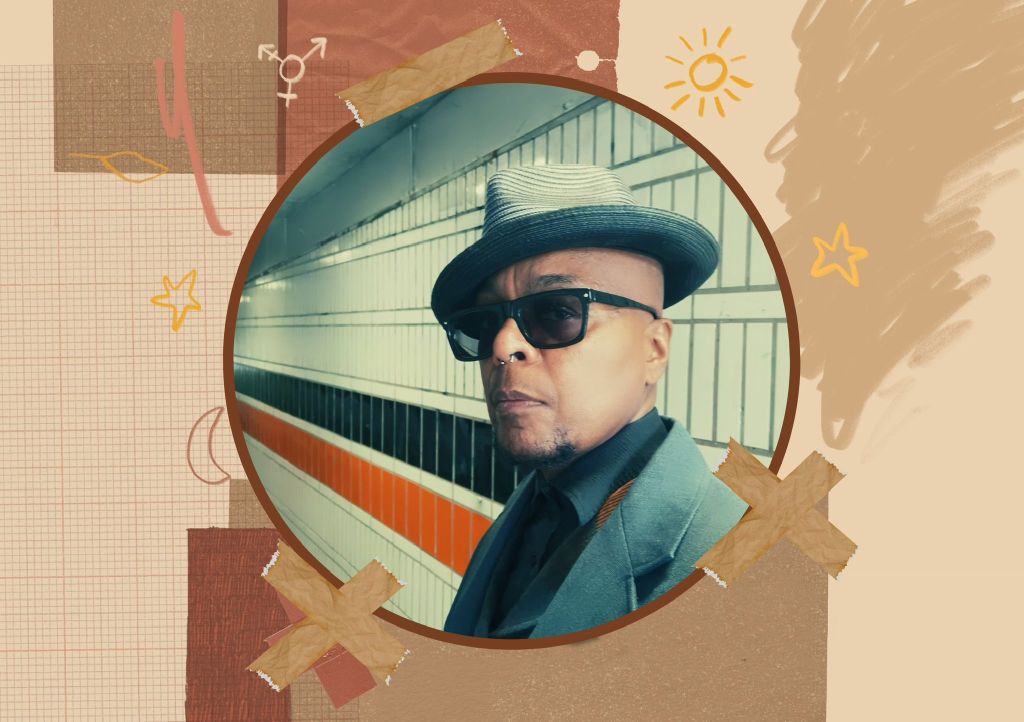
INDIGO: The guest for this episode is Campbell X. His work deals with queer memory, desire, and Blackness across the African diaspora. He directed the award winning queer, urban, romantic comedy feature film, Stud Life. He also directed the short films, Still We Thrive, about Black joy and resistance, and DES!RE, about yearning and lust for men, mascs, and studs. He has also directed the documentary VISIBLE, about reclaiming queer, trans, Black, Indigenous, POC, UK history. Campbell is currently in post production on his second feature film, Low Rider, a queer road trip which was filmed in the Western Cape region of South Africa, starring Emma McDonald and Thishiwe Ziqubu.
[upbeat drum based song]
LEO: This is Changing the Frame.
[upbeat drum based song fades]
INDIGO: Hello Campbell, thank you so much for joining us today. To start, I was just wondering if you could tell us about yourself and your background and yeah.
CAMPBELL: Myself, I am a writer director and my origins are complex because I am of Caribbean descent, African Caribbean, but that doesn’t really mean anything. The words are put on, you know, census and um, these kinds of ways of categorising us, but you know. One of the things that I embrace about being of Caribbean descent, and I often say, is that I’m descended from the people who, uh, survived the transatlantic slave trade. I’m also a descendant of the people who owned the slaves. And also, um, those are the European people. And I am descended from, um, the Indigenous people as well, who mostly didn’t survive their own holocaust, um, of invasion of, um, colonisers. But because my, um, ancestors are also Maroons and Haitians, they mixed up with Indigenous people when they escaped, so it came through my lineage as well. And I’m a sort of person that’s not really into positive representation. So I would also add that I’m a descendent of thieves and pirates and ne’er-do-wells too, um, you know, I have to acknowledge those people’s genes also are part of my genetics, not the whole heroic thing that sometimes when you’re from, um, communities that live in majority or marginalised, you feel forced to have to overcompensate by going, you might think we’re this, but we’re really good people too. I’m like, yeah, but we’re also evil gays.
LEO: What made you pursue a career in the film industries? How did you come into making films?
CAMPBELL: I actually trained to not make films. I trained to, um, be a camera person, a cinematographer. So, um, there were many internships and apprenticeship schemes to do that. So I went to film school, um, trained in, um, everything to do with cameras and, and worked as a camera assistant for many years and then decided when I saw the ways in which, um, stories were told from my identity perspective that were, you know, I felt, what’s going on here? Um, people are telling stories on my behalf and, um, doing us a disservice. So I decided there might be something to do with making my own perception of my communities. So basically Black and queer communities that I saw. So they’re not necessarily reflective of me per se, but they’re reflective of people I know in my community.
INDIGO: I’m so glad that you got into making your own films, Campbell. So, going into your films, like, how was it to get funding for, like, Stud Life, um, and also, like, writing, directing this, your first feature film, like, over ten years ago? Yeah, why, why did you set off to make it?
CAMPBELL: I set off to make it because, um, I wrote this film, I, I put it in for funding. It got rejected, and I thought, Hmm, why did it get rejected? This, this film’s banging, I thought to myself.
INDIGO: It is. It is.
CAMPBELL: But you know, like, Niecy Nash was like, I had to, I had to praise myself. I feel, I feel what she said, if you, um, listen to her acceptance speech at the Emmys. But… And I wrote to them and I said: Why didn’t my film get funded? And, I need to see the notes. Um, fortunately for me, they sent me the report and one of the main things they said was there wasn’t an audience for this film. And I thought, okay, okay, okay, well, there is an audience, there’s me and three other people, my friends. So I just, I don’t know, honestly, Indie, I don’t know what got into my head. I was like, nah, there is an audience. So I got some friends of mine who are actors to do a, uh, uh, a table read of the screenplay, they did kindly, and they gave me notes, which I incorporated into another table read, and I got more notes, and from that, I just decided to make it, and, um, 10 years ago, there wasn’t crowdfunding, there wasn’t social media, wasn’t the same, I think it was just Facebook and maybe Tumblr. Remember Tumblr?
INDIGO: Still exists.
CAMPBELL: Yeah, but not the same.
INDIGO: It’s not the same, no, it’s not.
CAMPBELL: You’re not the same anymore. That was our home. Until we got booted out. So, um, yeah, and you know, there was Myspace. It was fading by then. So it was just Facebook, and I decided to take up what was considered a new thing at that time, was crowdfunding. So, and because there wasn’t social media in the same way, I, I just put it out to my friends and then they shared it and then I got some money and I thought, ooh, I’ve got a bit of money. I can start to think of prepping. And then some beautiful people also came on board and said, we’ll give um, some donations and then other people donated their time. I mean, it was just bare, bare love, actually, bare love. Every location I went to, I said, I’m making an LGBTQ film. They were just like, come in, we’ll help you. And that was East London. So that was East London 10 years ago. I don’t know what it’d be like now, but there was a lot of love and community for doing what I wanted to do then. Not all the venues were queer. They were just, you know, like a restaurant on Green Lanes. Um, I explained some of them didn’t know what LGBTQ was, so I just said gay and then they knew. Do you know what I mean? It’s interesting about language as well. We use the language, but it’s not mainstream. So, um, yeah, people were very, very loving, very loving to help on that film, I have to say. And the actors, phenomenal, you know, um, we shot the film in 10 days because, you know, I had to because no money so you have to scrunch everything down so people don’t feel they’re losing their income in other places. And we managed it. It was brutal, but we managed it.
INDIGO: And you made a beautiful project.
CAMPBELL: Thank you.
INDIGO: Yeah. And how, how, how was it like directing a feature film? Like both Leo and I were talking about the, the little like video blog style with JJ and like all those little moments. Um. Yeah. Yeah. Do you want to talk a little bit about that? Like what, what were your considerations in the filmmaking style for the film?
CAMPBELL: Well, um, I wanted to put something in that represented the way studs were creating their own story online. So, okay, YouTube was the social media that was there and many people who are excluded from mainstream media actually use that um, well, more so then used YouTube as a way of telling their own stories. And so I wanted to incorporate that and honor that way of telling stories that was happening at the time online. And it’s, it has continued. So people do that on Instagram and on TikTok now in, in a major way. And I think it’s, to me, it’s, it’s the future. If we’re being excluded from mainstream media, we’ll find a way to tell our stories. And I also would encourage people to use whatever tools they have at hand, you know, like Malcolm X said, by any means necessary to get that story out. You don’t have to be funded by Netflix or, you know, the BBC or whatever to make a film that people will watch. You have to just have the hunger to tell a story. Um, which is what I did. And, you know, I wanted to make the story not a coming out story, because I was just like, uh that’s for straight people. Yeah, you want to know, like, this narrative where, you know, you start off straight and, you know, you find this person, um, or you start off cis and then you mutilate yourself on screen crying, you know, I’m not, I’m not about that life. Um, I think it’s, um, it’s like, what happens after you come out? That’s what I’m interested in. What’s our life like after you come out? And, you know, It’s interesting. In mainstream media, there’s very little of that, isn’t there? Isn’t that interesting?
INDIGO: Yeah.
CAMPBELL: What’s the joys? What’s the jokes? You know, Stud Life has a lot of jokes. So, what happens?
LEO: Stud Life made me laugh and giggle and cry all at the same time. The scene at the bar when they’re fighting over Elle, I was like, this is, this is absolutely peak cinema. Like the characters are so messy and complicated, but they’re so real. And I just felt very connected to them because of the like pieces to video that JJ does as well. Cause I’m like, I’m just watching this person’s life with all it’s messiness and like the grimy stuff and everything. Yeah, I really enjoyed it. I think it has so much love, and it’s a really good film, so.
CAMPBELL: Thank you, and you know, thanks, because it’s interesting. You all are the generation that would have been not old enough to be allowed in the cinema when it came out. Which is, I find very fascinating, because at the time when I made it, people were like, ah wah dis? We don’t know these people. Who are these people? They don’t exist. And so it’s very interesting that the world has caught up with Stud Life, like the conversations about polyamory, about being trans, you know, about, um, messy lives, you know, um, violence, kink, sex work, all these things are now part of mainstream queer discourse. They weren’t so much 10 years ago, and I was just making films with my mates, basically. This is my mate’s lives. So. I didn’t know my life wasn’t mainstream. I thought this was everybody’s life Until I made it and people were like I see I’ve never heard of people like this You know, so that was a surprise to me I didn’t know I was uh, I existed In a bubble within a bubble. I thought my bubble was bigger than it was. And actually I realised more and more my bubble, my bubble is actually quite tiny. You know, it’s a safe little queer inclusive, trans inclusive, sex work and sex positivity inclusive, and has always been. It’s not a recent thing. That has been my life all along. Yeah, I had no idea it was such a minority concern.
INDIGO: Um, you mentioned earlier that the funders said that there wouldn’t be an audience for it, but obviously there was a huge audience, and the film went to so many film festivals.
CAMPBELL: Yes.
INDIGO: How, how was that like?
CAMPBELL: Well, do you know what? When the first screening was in the Egyptian, in Los Angeles, it was for Fusion 2012, Fusion Film Festival. That cinema is, the screen is as big as a house. So I was freaking out because I wasn’t really sure how it would stand up to such a big projection. And, um, I don’t know how many people were in the audience, but there were a lot, and I was really freaked, I was scared, but also I was scared because the film is very much in London slang, it’s very much London, do you know what I mean?
INDIGO: Yeah.
CAMPBELL: And I thought, these yanks, they ain’t gonna get it. They’re on the big screen, all for everybody to see. It opened Fusion. I was, I was freaking out, but as soon as the film started and maybe like, you know, five minutes in, I relaxed because they got it. The audience got it. People, and it’s a very vocal audience there, so people were screaming, shouting, laughing really loudly, not like a British audience, which are like…
INDIGO: I love when audiences interact with the film, it’s so good.
CAMPBELL: It is very good. And so I relaxed and I thought, Oh, that’s interesting. They, they really get it because it is a universal story and it goes across all LGBTQ people in the diaspora. So it showed in Oakland as well in the cinema there. And the cinema was packed. People couldn’t get in. People were crying to get in. Eventually the um, organisers had to let them in and there was standing room only, literally. People were sitting down in the front, standing at the back, on the aisles, because they wanted to see the film. And this was in America, yeah? When it eventually showed at Flair, again, lines around the corner, the cinema was packed, we had a party, um, there was a thing called the atrium, it’s not there anymore at the BFI, but it was there back in the day, little tiny alleyway space. Which they allocated to the, the others, uh, to have the party. We asked for the big room. They wouldn’t have it. They were like, I don’t think many people will turn up. The people who were with the little clipboards at the entrance had to leave. They were crying because people were like, I need to get into this party. But it was, it was packed, absolutely packed, spilling out. We had an amazing time. I made little goodie bags with a friend. We kind of gave people goodie bags free, free little things. Um, Sh! that, um, sex club, sex shop, donated loads of stuff, you know, it was just again, so much love. And, you know, it’s been a lesson to me. Sometimes the people who give the money don’t know shit. They are so disconnected from audiences. They think they are connected, they are disconnected because they have other concerns. You know, they’re like, who’s the star? Who’s bleh? There were no stars in my film. T’Nia Miller became a star after Stud Life because T’Nia is an amazing actor, an amazing actor, amazing to work with, amazing human being. But T’Nia wasn’t a household name for Stud Life. And bless T’Nia, T’Nia took a risk with me. You know, it could have been a disaster, this little indie movie about queer stuff with all sorts of you know, unorthodox things happening in the film. T’Nia held the faith, and, you know, also Robyn, who, um, was, uh, her co star, and, um, you know, uh, Kyle Treslove, who was also her co star, you know, they held the faith. So, you know, I’m, I’m forever grateful for their contribution, because they, under very, very difficult circumstances, sometimes we just had to go for one take. Helped made that film come to life.
INDIGO: And for you. I know you’ve talked about the actors, but for you as well like how was that process of directing your first feature film?
CAMPBELL: Do you know it was very exciting. It was very exciting and also very stressful. It’s always stressful making a film, but I felt such love from community I can’t I can’t explain and overemphasise how that love really permeated through every single facet. Do you know what I mean? I hope we can tap into that still these days for anybody up and coming. And I try to, you know, help people as much as possible because I know how our work is seen mainstream wise and how we have to validate ourselves, actually, to make stuff. Otherwise, it won’t happen. It won’t happen.
LEO: Moving forwards with your career, you’ve had a commitment to keep telling stories about Black, Indigenous, queer people, and having your films accessible to watch for recording the podcast has been absolutely incredible. I wanted to thank you for that. Cause I really love what you make. A film that you’ve made more recently, it’s more like a documentary and it’s very interesting to me to talk about documentary versus fiction. So we’re going to get into that later as well, but I wanted to talk about DES!RE, which is a lustful and caring love letter to transgender and female masculinities, to trans men, transmasc people, studs, butches, to anyone subverting masculinity. And I wanted to start asking you by why did you choose to make this film in black and white because it’s a very striking film and I was curious about that.
CAMPBELL: Um, I chose to make it in black and white because I’m very much in love with a certain kind of fashion photography that Bruce Weber did and Peter Lindbergh . They use black and white a lot and the kind of blue note jazz vibe, it’s, um, you know, and Lin Sangster, who did the soundtrack, I wanted them to do very much a blue note jazzy feel, which they did. So it’s that vibe, that James Dean, that old school kind of masculinity, but underplayed by the modernism of gender fluidity and desire. So that’s, um, those were my thoughts.
LEO: That’s so cool. No, I like that. I like that. It subverts like the, the gaze as well of what it means to be masculine. And I thought the film was very full of vulnerability and just sexy vibes at the same time. Very hot, very steamy, but like very tender. One of the voices in the film It says a quote that I took a note of because it’s very good, um, I’ll read it out. It says, “There is something about a vulnerability that I am not willing to give to someone who doesn’t see me the way I am”. And your, the way you’re presenting these people, the light in which you’re presenting them shows so much vulnerability and love. And I wanted to know how it was to film with this cast of people, what were their relationships like? How was the process of finding people to film?
CAMPBELL: That’s a beautiful question. Um, again, made with my mates.
LEO: I thought it might be.
CAMPBELL: But, you know, the way I think about it, it’s like that was made in 2017. If I’m not making it, who the fuck is making it? Like, what is going on? That’s just a bit of a rant. What is going on, really? But also, we never see trans men in this country I’m talking about, in the UK, in mainstream, unless we are sort of criminalised or the sidekick. Not the main protagonist in our own stories, yeah? I mean, we don’t see trans women either. We just don’t see anybody who’s othered as the main, you know, and what I wanted to do was get, again, underneath the complexity of beyond identity, beyond our bodies, how do we yearn for each other? Because it’s one thing to speak about a identity, an identity, another thing to speak about, how do we negotiate the world with that identity? Because we’re in the world. We’re not in a vacuum, yeah? And vulnerability is key, I think, to intimacy. And I recorded the sound with them on my phone to create that feeling of intimacy, and with various people who spoke about how they wanted to be desired, while they were desiring trans men, non binary people, butches, studs, AGs, because those people are never put up as desirable anywhere. And somebody explained to me, it’s because men, unless they’re sort of buff athletic, aren’t put up as objects of desire. Femininity is put up as that, but not masculinity, and I thought, oh, that’s very interesting. So when you occupy that space, but I think it’s more complex if you occupy the space of um, betrayal of gender, then you’re actively punished for that, whatever that gender is. If people think you’re betraying it, you get punished. And I wanted to make a film where people were adored, actually. Adored for it. And it’s opening the London Short Film Festival this weekend.
LEO: Oh, nice.
CAMPBELL: Yeah. It’s in a program called I Like My Body When It Is With Your Body and it’s at the ICA this Friday.
LEO: I, I felt very loved by this film. I just wanted to say that.
CAMPBELL: Thank you. Thank you.
LEO: It’s very beautiful. I watched it first when I was going through the Otherness Archive way before we were like in talks about interviewing you and stuff. And it just really, really struck a chord with me. I don’t know. It’s just, yeah.
CAMPBELL: Thank you.
LEO: Touched upon the right places for me. Um, but yeah, I wanted to ask about Otherness Archive actually, because your practice also looks into archival, archival footage, the practice of archiving itself, and I wanted to know what kind of relationship you have with specifically the Otherness Archive, how do you feel about your film being there, and any other thoughts you might have?
CAMPBELL: Yeah, I mean, I loved my film being there. They asked me, you know, and I donated it. I didn’t I didn’t, I didn’t make that film to make money. I mean, I don’t make films to make money, which is probably my bad. My bad, capitalism. Um, I am an evil gay. Um, but I thought I own the rights to it. I can do with it what I please. So, I love the work they do. You know, and I’d been in talks with them before anyway, and when they asked, I was just like, yeah, have it. Do what you want with it. It’s there for a people to see. And I’m always worried about people don’t have money. How do they see things? You know, all that sort of stuff, which is the reality of our, our lives. And if you are queer, particularly queer, I use that word as it’s radical intent. You’re less likely to have money because your ethics, your politics places you within certain environments, which are usually not as well paid. And if you are queer and in the environments in which you are very well paid, usually you donate some of your income back, which is how some of my films get funded actually from those people who are like, yeah, I’ve got some money. What, what, how can I help you? Very kind and very ethical. So it works both ways. And in terms of my, my work is an archive in itself, because those people in DES!RE actually are people some of you might know, actually, who are in front of the camera, behind the camera, part of, you know, making the, um, manoeuvrings, like the animation is done by Neelu Bhuman, who’s also a filmmaker. So it’s archiving the work within the work, but archiving people within the work as well, so that we know we have always been here. So if it’s preserved in 90 years time, people know that we exist. Because my problem with where we are now is people fail to understand that whoever we are now existed a hundred years ago, may not have had the same words, but are there, and we don’t even have to go back a hundred years, could go back to the 90s. I looked at, because I’m giving a talk later about representation in film, part of the end of my talk is about Jaye Davidson. I don’t know if you know who Jaye Davidson is. He was in The Crying Game. Look at if you’re if you’re on Twitter,
INDIGO: I’ve seen the crying. Yeah. Yeah.
CAMPBELL: There you go. Jaye Davidson in 1993 went up for an actress and actor Awards 1993 but we’re still having the same conversation now. Yeah, people think the conversations are new. They’re not. They’re not new. They are current. What, what has happened is they are amplified on social media and then people think they’re new. No, they always, they always happened. In the 60s, there were the radical fairies who were gender non conforming. You have in the 60s, you know, Marsha P. Johnson, uh, Sylvia Rivera. They didn’t all call themselves trans, but we know what their identity meant. The thing is, we know, we see it. I can look in pictures and I can tell you who are the queers. And it comes to part, no seriously, we know, we have that in our bodies, and as queer people, I think we’re removed from our bodies by mainstream cisnormative society. As children, we know. We know a lot of things. But the knowledge is either beaten out of us or big brained out of us, for us to be disconnected from our bodies. And I know I spent years being disconnected from my body because I was being big brained and brainwashed by mainstream society, you know. But the vibes are all in here. That gaydar thing is real. It’s a vibration. We know it.
INDIGO: Yeah, I, I really loved DES!RE as well. And I love what you just said about archives and how it was basically archiving, you know, the lives of communities that we don’t really see in, in films and the mainstream media. And you also used the archives, I mean, that film, you made it yourself, but like, you’ve used archival footage in other films of yours, um, and I think Georgina Quach wrote a response to your film, Still We Thrive. The name of the response is The Power of Rating Our Histories. And in there, Georgina writes that Still We Thrive “serves as a corrective of centuries of systemic erasure, elevating the perspectives of those who experienced it to the cultural archive”. What was your decision behind, like, making this film, Still We Thrive?
CAMPBELL: That film was made under lockdown, and, um, you couldn’t really leave your house.
INDIGO: So you used the archival footage.
CAMPBELL: Yeah, but I, I like archives, I like, uh, found footage, I like reaching back into history to find ourselves. I really love that, you know, and I looked at lots of archives at the BFI, the Schoenberg, just what I could find and saw myself, Black queer person in the past. Not named, but I saw, I saw who they were, and then you research and you find, yeah, yeah, they were. And um, when we could get out, I got out for one day and I filmed the actors, they came. Oh my God, we had such strict COVID protocol then. So, you know, it was Michelle Tiwo, Don Warrington, um, Mzz Kimberley and Martina Laird, who who are the voices of the poems of Olive Senior, Langston Hughes, and my script, yeah? Very powerful voices to camera. Uh, the film is about memory. It’s about, do we remember as Black people, as Black queer people, that we have thrived, actually, in spite of everything? To remember that we have thrived, and many things are within our bodies. That we, just because we don’t write about it, they’re in our bodies anyway. So, it’s interesting about archives because, and it’s something for people to think about. I use some of my archives in it and some of the camera person’s archives. We as queer people don’t create enough queer archives. We rely on other people to do it for us. And then we have to pay them to access us. So, I noticed I had to pay these people to access images of Blackness in the past. Um, when I wonder if they paid any of the people for access to their images. Do you get what I’m saying? And again, it’s that colonisation of the image and exploitation. Our bodies are the land that is constantly colonised and re-colonised for capital gain. And I’m very much mindful of that when I use the archives, but that’s the only way I can access them, is to pay the colonisers. And Getty Images is one of the biggest of them all.
INDIGO: That’s why I really like the Otherness Archive and the Digital Transgender Archive, because they’re making queer things that have been written about us or, you know, shot, they’re making that available for us for free and, you know, for us to understand better our communities.
CAMPBELL: Yes, it’s very powerful.
INDIGO: Yeah, and I think it was great the way that you used the archives to make this film. And how, how was it like scripting it? So did you look at footage before, or did you create the script beforehand? What, what was that process like?
CAMPBELL: It was very organic. I worked with Ashitey Akomfrah from Smoking Dogs, who’s an amazing producer. Absolutely amazing. Loved working with him. I said I wanted these two poems. Olive is from the Caribbean, Langston Hughes is from America, so it was very diasporic. If we could get permission, I was going to base it off, off that, off those two poems. And so it was really inspired by the poems and then I did some research and found out about drapetomania, which is another big brain, big brain head fuck. Imagine slaves wanted to escape from being enslaved and psychiatrists figure out this mental illness called drapetomania, which is about the desire to escape slavery. You couldn’t make it up, but then, We have to realise a lot of what is considered medicine and science is white supremacy. And we really have to unpick a lot of these things in order to free ourselves from it. Even the trans-medicalisation is white supremacy. I always think, why are you asking me these questions? They’re based on a white, cis, het, middle class man. I’m not that. I’m a different man. You know what I’m saying? So what are we being measured by? Of course, if you’re enslaving people and you want them to stay enslaved, you would think it was mad they wanted to escape. So it was like, here is our escape. Here is where we said, no, we will thrive. We will create culture. We will create music. We will create beauty. You’re gonna love it. And that’s what, to me, African descent culture is, it’s taken over the globe. We’re all Africans, we all originated from Africa anyway, so people are just, to me, returning to the source. And that’s the come home. Come home at the end is for everybody to realise we’re all one people. We’re all one people. They want to divide us, the elites want to divide us. It’s, it’s, there’s, it’s going to change.
INDIGO: And with, with this film, I know you took it to loads of different festivals as well. And I know I read a little bit about Georgina Quach’s response, but um, how was it like screening it as part of Fringe of Colour? And what was the response like?
CAMPBELL: It was a wonderful response there. Many people attended the screening. And I think the thing is, even though the film is, appears to specify people of African descent, Black African descent, it has a universal appeal because I think people can see themselves in it for even their own personal loss of history and thriving, especially post pandemic, not post, you know, we’ve largely not, not been in lockdown. So I should say post lockdown because there’s been a lot of grieving post lockdown. In many ways, because I think people started to think about their lives, and many people lost lives. So, I think it resonates with people for various reasons. And some people pick up on the, um, Islamic introduction, the Adhan, which is a call to prayer. And that’s another archiving, because the call to prayer, the first call to prayer was by Bilal, a Black man. So it’s like saying, we were always there, we’re there in every religion. But also, a lot of people don’t realise a lot of the people came across as slaves were already Muslims to the Caribbean and to Latin America and North America.
LEO: I found the response from Georgina Quach and the little podcast bit that was also made in support of like your film screen at Fringe of Color, very beautiful. Yeah, I really enjoyed listening to it while I was on a walk around the neighbourhood. It felt very nice to like, learn more about your considerations for filmmaking.
CAMPBELL: Thank you.
LEO: And moving on, we’re going to talk about Visible, which follows the lines of documentation and archival. And I wanted to start talking about it by pinpointing the Rukus!? Is that how you pronounce it?
CAMPBELL: Yeah, Rukus! Archive, yeah.
LEO: So, you interviewed Ajamu. Ajamudhamu is a fine art photographer and the co-founder of Rukus!. And he talks about Black queer histories and how they get sanitised, which is one of the main ways Black histories and queer histories get erased. So, in the film, uh, the quote that Ajamu says is, what gets included in Black queer histories, but what gets excluded is almost more important. So, what was the process of making Visible like, and how was it like to work with other people looking into archival?
CAMPBELL: It was a very beautiful experience making Visible. The producer, Kayza Rose, who I have collaborated on, um, we ran a club called Family at Rich Mix in London as well. It’s just amazing, um, very supportive. And we worked together to get the contributors and those who could come on the day. I mean, there were other people we wanted, they couldn’t come on the day, but because it’s a again, very minuscule budget, helped by Duckie, that arts organisation, we managed to pull it off. So, Ajamu, I think, said a very critical thing, and it’s something I think about a lot. What kind of queer content, Black queer content, goes to the mainstream? We really have to question this, because very often we’re in the position of gratitude. Oh my god, they’ve got a Black queer person in a TV show. La la la la la. Usually that Black queer person upholds white supremacy through desire, many times. And through a narrative of the family that I come from is hostile to my sexuality. It’s so pervasive. We start to believe that is the majority, actually, because that’s all we see in mainstream TV. Also, we don’t see Black trans women. It was really incredibly affirming seeing Kokomo City, which was a very Blackety Black by D Smith. A Blackety Black show centering Blackness and centering Black trans women throughout the entire film and centering Black sex workers. We don’t see that in a really affirming, illuminating way. Those are the films that often, you know, get. sidelined to special interest. So we may know about it because we’re aficionados. I would love mainstream people to know about that as well. Mainstream meaning the wider LGBTQ people too, you know, because we’re being seduced by a particular image of ourselves that’s not ourselves, or is only a very narrow portion of ourselves, which leans into respectability politics. My films will never do that. I’m not into respectability politics because I think it doesn’t allow us to be free and it makes us feel like whatever we are feeling, we are the baddies. Do you know what I mean? We are the, the, the ones to be ashamed of. We have nothing to be ashamed of any more than anybody else. And so I’m very suspect of what gets plucked out to be held up and what gets hidden. And Ajamu was absolutely right to mention it because he goes on to talk about the shit, the gore, the filth, you know.
LEO: That was the other quote I had taken note of, but I was like, I don’t know if this is too long to maybe read, but I found it very interesting that it’s like, yeah, all the aspects that would make you inverted commas, bad, get like erased, like you have to uphold yourself in a very specific manner to be accepted and that’s just not sustainable or freeing in any way. So, thank you for talking about that. It’s important.
CAMPBELL: It is, and I wonder if the increase in mental health is also to do with that. We’re seeing so many sanitised images on social media about what we should be. It’s only a frame. It’s a curated persona that then we think I’m not that person. I must be the utter worst person ever. I think it’s very damaging and we need to undercut that with our work as well.
LEO: I know we mentioned a little bit already about documentary versus fiction and stuff but if you would like to develop and how your own documentary making versus fiction making feels what are your different considerations for each thing?
CAMPBELL: You know, there’s not any different considerations, but what I realised for myself is developing my voice. I’m developing a voice, which is neither documentary or fiction because our lives are not out there to be seen, so sometimes it’s easier to fictionalise it, but incorporate a kind of realism to it, which could be documentary style or whatever. And I’m still figuring that out, like how to make our lives that are watchable. Of course, if you make a film, you want people to watch it. You want people to get something from it. And I want queer people from my films to feel affirmed more than anything else to see themselves in the films and think, I am okay. I’m doing okay. Whoever I am. So it doesn’t mean I’m not going to show the complex sides to us that are messy. I love messiness. When I hear about messy stuff, I think, Oh, good, a human being. I love that. You know, let’s see how we can be gentle with that human being who is messy. That’s always my thing, not to uphold them or punish them, but to understand and care for them, which means to care for us. And hopefully my work can do that. That’s my aim, really. Oh, thanks, Leo. Thank you.
LEO: A detail at the end of the film, uh, reads “So many voices are missing. All of your spirits were with us in the making of Visible. We will create future editions, including more stories”. I really enjoy that. I love the promise of a future together, and I just wanted to ask if there’s any kind of like work in motion. We’re aware that you’re busy with making a feature and it’s probably very time consuming, but are there any specific times as to when you would maybe produce more Visible filmmaking?
CAMPBELL: It’s a good question, actually, and I am thinking about doing something on film, because I miss working on film, and, but film is very expensive. But, you know, we spoke about this Indie, you know, it’s like, how, how do you, how do you use the medium in a way that’s really effective? And I really like using voice and imagery, you know, counter oppose and thinking how to make the imagery. And uppermost in my mind is thoughts on colonisation because I realise while we think of certain works, let’s say film works that were made in the 40s, 50s, 60s, my people were colonised. You know, what does it mean to look at these works again through the praxis of thinking this was during colonisation times when Britain had an empire and thought it was the bee’s knees. So it’s probably something around that. Very short again because the longer a film is, the more money it requires, the more resources. But just kind of thinking through that.
LEO: That’s fun. I’m excited.
CAMPBELL: Thank you. Thank you. I’m excited. But also the other thing is thinking about queer bodies and how do we move beyond trans and cis as definitions, which is what DES!RE was trying to do and a lot of people didn’t like it because of that because they thought, why are the men with the non-binary? And I was just, I don’t know, I don’t know. But it’s like, how do we move beyond these borders of bodies? Because desire and love crosses those boundaries all the time. Either race, racial, nation, class, how do we talk beyond bodies through love? That’s one of my things I want to explore as well.
INDIGO: That’s really beautiful what you just said. I know that your second feature film that you’re making now, I know it’s a road movie and there is a couple?
CAMPBELL: Well, there’s um, the woman who is a queer, mixed heritage Black woman who goes to South Africa to find her dad. On the road, um, she meets a trans man. Um, Who is Zulu, Black South African, and he says I’ll take you to your dad, but a series of adventures, mishaps, and bad stuff happens. This is my film, bad stuff has to happen. And bad queer. And she is messy because she is grieving so that’s as much as I can say, so it needs a lot of messiness on her part.
INDIGO: I’m very excited to watch it, and I know you’re currently on the editing stage, so, but as soon as you’re done, please send it to me, because I’d love to watch it.
CAMPBELL: It’s taken the longest while, it took seven years to develop, two more years to film and edit. I’m telling you.
INDIGO: Wow.
CAMPBELL: That’s why they go, Oh, your first feature at 19? Hello. Because you can, everything takes so long. By the time they’ve developed it, they’re like 30. Do you know what I mean?
INDIGO: It’s a long process. But how, how was directing it this time around? In comparison to Stud Life, I know you had more days because you had…
CAMPBELL: Seven more days.
INDIGO: seven more days, yeah. How was it directing this feature film differently than Stud Life, which was made over 10 years ago? And how do you think your film practice has evolved throughout the years?
CAMPBELL: I think I’m still very actor focused in my work. And obviously, because I know about cameras, I know a lot about cinematography. But, um, the, the producer in common, Stella Nwimo, who worked with me in Stud Life and actually fought very hard to get Low Rider, it’s the name of the feature, financed. So, you know, gratitude for her, you know, sticking it out actually all these years. But, uh, the difference is, is that we’re shot in a different country and shooting something in South Africa, I tell you what was different the culture. In South Africa, people do not moan. People do not moan. Whatever’s thrown at them, they don’t moan. And I was like, why aren’t people moaning? They, they were like, you don’t know our life. And they’d show me, they’d have a gun in their car and shit. I’d be like, okay. Thank you. Whereas here, film crews, not on Stud Life, but I’ve worked on mainstream film crews, people just moan. They want more, they want more. It’s such a privileged set of people, actually. Most are white, cis, and het. They fucking ruin the fucking time. And I’m like, mm, you know. So, on my films, I think people come with love. Like on Stud Life, people come with love. Visible or Still We Thrive, people come with love, yeah? And on Low Rider, people came with love. It’s almost like you have to opt in on working with me because you know it’s not, you know, this big blockbuster thing, yeah? You’re doing it for love. And a lot of people came up to me, and some of them have trans kids, some of them were queer. They started to reveal themselves in ways they hadn’t before, and I think felt safer than they had before. And also, we’re living in a time where you can vocalize those things. Ten or twelve years ago, some people on the set, they were queer, but they weren’t out. And now they would be out. Do you get what I’m saying? 12 years is a long time. It’s a long time, really, you know. And, yeah, how, how, how we’ve advanced in some ways. So, it was financed by the BFI, who wouldn’t have looked at me, even after Stud Life. But that’s a whole nother thing about The BFI, which you must have about, you know, in Scotland, similar things. I think there needs to be a shake up in this country. We’re really far behind. Whereas, you know, South Africa, in their constitution, has rights for LGBTQ people. The first country to do it. So In some ways, it’s very advanced, and I benefited from that being there.
LEO: That’s lovely. I’m very glad to hear of all the support your work has received through the years as well. Because Stud Life receiving that, like, clamouring response with people queuing up to watch it, and like, you getting things in kind and with love from people to develop your second feature as well is very good. Actually kind of segues way into my next question a little bit again about funding. Because obviously, you mentioned you didn’t get any funding for Stud Life, and I wanted to know if beyond the support people have given because of love and passion, if you’ve applied again for funding if you’ve gotten anything at all or if it’s just…
CAMPBELL: You know what Low Rider was um, the funding was sought by my producers, you know, they worked very hard to do that. I I think if you have to work too hard to get some money that is due years anyway through reparations, it’s not worth the effort. I really think we’re playing, we’re playing with minoritized people’s lives right now and finances and institutions should bend over backwards actually to finance work that is traditionally marginalised in mainstream culture and they’re not doing it. What people are doing is fawning to people who already have resources. And what I’ve noticed, the trend in the industry is upper class white people who are Oxford or Cambridge educated getting leaps ahead. And it’s got worse. I’m just talking about white people now. White working class people are being left behind in this industry. Why? So nevermind people who are queer of working class or of color, because they’re white, non binary upper class people. All right. You look at those non binary actors in Britain who are white, check out their credentials. You’ll find they’re not of, they’re not class warriors, and they’re not of our class. So we need to kind of start to deconstruct these things in a revolutionary way, and not just go, oh, representation. Who is being represented? Whose interests are being served? Not ours. If we are forced to be silent around politics in vis a vis obtaining funding, that is a problem. It’s a problem for marginalised people who have had to protest to get somewhere, human rights and finance. It’s not on. It’s not on. So, I am very outspoken. I’m very loudmouthed, so.
LEO: I think it’s, I think it’s good and important that you are outspoken.
INDIGO: I know we spoke a little bit about Fringe Of Colour earlier.
CAMPBELL: Wonderful, yes.
INDIGO: Yeah, I feel, I love Fringe of Colour. I think they’re a great festival. And your films have also been screened at other festivals, such as SQIFF.
CAMPBELL: SQIFF!
INDIGO: Yeah, I think all of your films have been screened at SQIFF.
CAMPBELL: Absolutely.
INDIGO: If I’m not mistaken.
CAMPBELL: Yeah.
INDIGO: And how have you found working in the festival circuit?
CAMPBELL: The festival circuit is where my audience is, actually. And it’s been wonderful. I have, um, now a relationship with many programmers, which I built up over the years. And also, to be fair with Peccadillo Pictures, who distribute Stud Life, who came on board, you know, very early on. So, again, everything takes time, though. But, I think for me, I’ve been resolute in my commitment to telling queer stories of whatever form the queerness is. So, I think audiences are beginning to understand the necessity for that, because they’re seeing how we get killed off very quickly in mainstream programs. Or, when we are the protagonists in mainstream programs, it gets cancelled after one season. Do you know what I mean? So, I think people are getting wise, because they’re seeing patterns now. So thanks, Indie. I mean, you’ve always been very, very supportive. SQIFF has been supportive, and Visible opened SQIFF, actually.
INDIGO: Yeah, in 2018, right?
CAMPBELL: Yeah, yeah. And then we went on tour. It was, um, it was magic. Absolutely magic. And that’s, in a way, why I do the work. Because it’s amazing to talk to audiences, find out where they’re at, what they really want. You know, these things are important, because I don’t just make films for the air. I make films for you, for other people. And I have to keep up with how things change over the years. Like what are, you know, your concerns? What makes you passionate? What makes you angry? What makes you sad? What makes you feel desired and loved? Each generation some things threads are the same but circumstances change things like the cost of living crisis, the climate disaster, the length the Tories have been in power. These things add up, you know, which weren’t adding up 10 years ago. Now they’re really adding up. Do you know what I mean? The war in Gaza, all these things, Congo, Sudan, it’s all adding up on us now. You know?
INDIGO: Yeah.
LEO: Are there, it feels like such a move of conversation, but we’re getting towards the end and this is like the kind of like more decompression stage of the interview. Uh, are there any fun anecdotes from producing any of your films that you would like to share with us?
CAMPBELL: I think when I’m making a film, I’m so focused. I can’t think of anything else. And people tell me, Oh, this was happening while you were directing, this was happening. And I’m like, was it?, So very often people are fucking, well, I didn’t know. I only knew after they decided to tell me, but I’m just like, I’m like that. I’m literally on the shot the whole time. I can’t think of anything else. It’s just, and because I don’t have a lot of time to do it.
INDIGO: What other creative practices are you interested in?
CAMPBELL: I’m actually, I’m, I’m, I’m interested in photography. I’d like to, I have a stills camera and then I went to the still shop and they were like, we don’t make those cameras anymore. Olympus isn’t made anymore. So they were like, yeah, we might use it for parts. So yeah, I want to do more stills, like, uh, film stills because it helps you to really know about lighting because you have to control the lighting. You have to understand the lighting. It’s not like you press the thing and it’s automatic and also developing the film stills. I’d like to go back to that and just. re learn a few things. I’d really love to learn how to make shoes. Nice shoes, you know, custom made. But it’s quite hard, and I looked it up, it’s really expensive to learn.
LEO: I’m pondering the like, options of shoemaking now, like, the customisation, the materials, the like, durability, all the stuff that you could like, learn about it, that’s very fascinating.
CAMPBELL: It is. Or going back to like, ancient ways of making shoes, because they must have had a way to make them last through whatever weather, you know.
LEO: What advice would you like to share for people who are just getting started with filmmaking?
CAMPBELL: Get a mentor. Get a mentor. Get a mentor. Get somebody who can hold your hand and show you the ropes and tell you the truth. I mentor people who want to work in mainstream as well and just, you know, guide them through and they’re doing it. I think it’s important that you know where you want to be. If you want to be in the mainstream, you’ve got to fix your mind to that. If you want to make indie, you’ve got to fix your mind to that. The twain doesn’t meet. So, because you do have to dedicate and commit, um, that’s the thing about filmmaking. It is, it is tough work. So, get a mentor.
INDIGO: That’s a great advice. I recently did a, it was last year? I did like a four week experimental film course, type of thing. And, and the person that runs it is kind of my mentor in a way, but like, I can ask loads of questions and it’s, it’s a safe environment to do that. And you can grow a lot from a mentor. You can learn loads from a mentor. So I love that. I know you’ve already answered this, but are there any new projects in the horizon? Are you making anything else apart from Low Rider at the moment? What’s coming next?
CAMPBELL: I need to pay rent. That’s what’s coming next! No, no new projects at the moment. I am developing two secret projects, which I’m not allowed to say, but they will be, obviously, Black queer led. That’s all I can say. So, yeah, my agent has given me a kick up the arse.
LEO: We’ll have to keep so, like, eyes peeled waiting for announcements and everything, but that’s very exciting. Just a little crumb of information.
CAMPBELL: I know, a little breadcrumb trail.
LEO: Do you have any media, and this could be books, podcasts, TV shows, films, you know, anything. Could be queer, doesn’t have to be, that comes to mind that you would like to recommend to our audience?
CAMPBELL: Yeah, two podcasts, the Two Twos podcast, they’re amazing, absolutely amazing. Just, they’re on Instagram. I love them. And Busy Being Black, which you probably know about anyway. I’m on that. I’m not on Two Twos yet. I say yet, but they’re really good. They’re really good. People need to read all of bell hooks, and all of Audre Lorde, and all of James Baldwin. And just not be quoting a meme, the end. I recommend, um, Audre Lorde’s essay “on the erotic”, which is phenomenal. It’s very powerful. Also, Stone Butch Blues, which is available free online. I recommend people look at Looking for Langston, the film, and The Homecoming, Ajamu’s film, with Topher Campbell. And Queen of My Dreams by Fawzia Mirza, an excellent film. Um, The Aggressives, they’ve just done a follow up, The Aggressives: 25 years later, which I haven’t seen. Obviously, Kokomo City. Watermelon Woman.
INDIGO: Thank you so much for joining us.
CAMPBELL: My pleasure, my pleasure.
INDIGO: It’s always great talking to you.
CAMPBELL: Same here, same here.
INDIGO: And please move to Glasgow.
LEO: Please come through. Thank you, Campbell.
CAMPBELL: Thank you very much. I appreciate the time. Thank you and um, have a brilliant day.
INDIGO AND LEO: You too.
[upbeat drum based song]
INDIGO: I loved this conversation with Campbell. It was very special to have him join the podcast as a guest.
LEO: Find out more about Campbell X’s work via his website linktr.ee/CampbellX his Twitter @CampbellX and Instagram @CampbellX as well. All of these links will be listed in the episode description for your convenience.
INDIGO: Thank you so much for listening to this amazing episode, and stay tuned for our following episodes next month
[upbeat drum based song]
 Changing The Frame
Leave a comment